


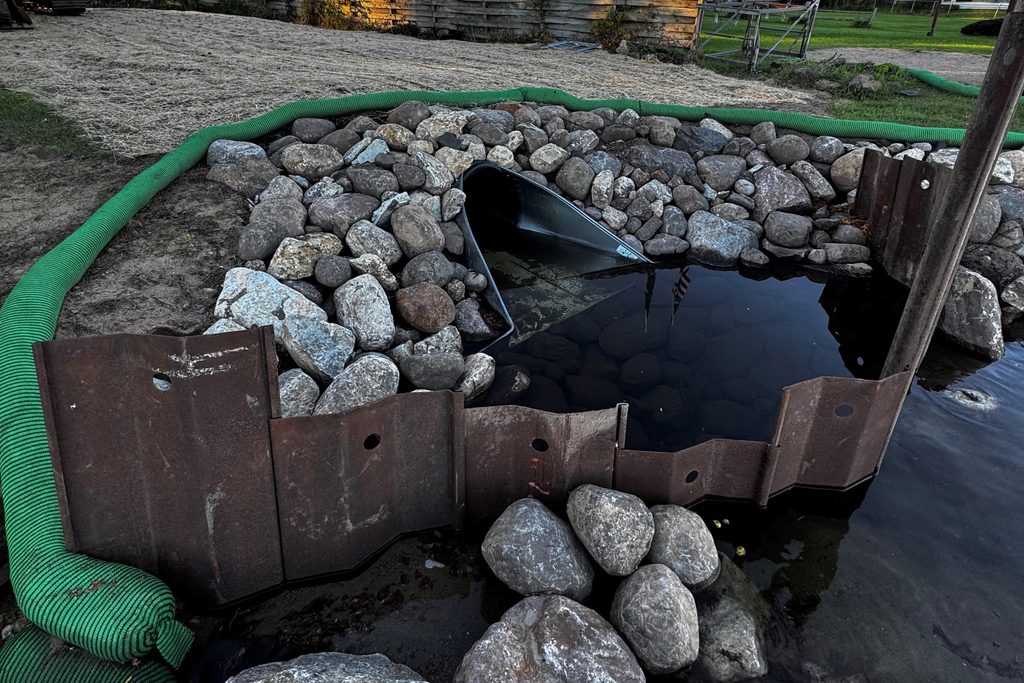
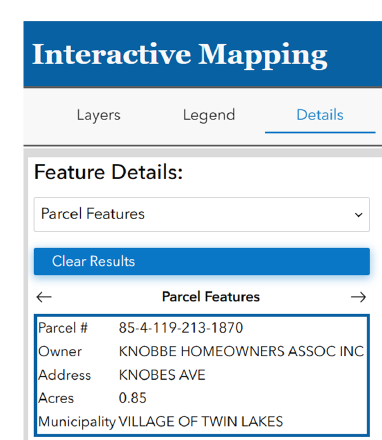
TWIN LAKES, Wis. — A stormwater construction project in the Village of Twin Lakes, originally estimated to cost $67,485, was completed without the required Wisconsin Department of Natural Resources (DNR) permit, in violation of state law, according to a DNR official. The Knobes Avenue project was one of four proposed stormwater improvements with a combined estimated cost of $173,895. The project, which involved installing a new stormwater outfall structure into Lake Mary near the Knobes subdivision, was constructed in September and October, even though the state had not authorized the work. Now, the Village’s contracted engineer has accepted responsibility for the permitting violation, but newly obtained emails raise serious questions about how construction was allowed to proceed while the DNR was still processing the permit application and soliciting public comments.

The controversy came to light after Twin Lakes resident Dr. Bryan Neal began questioning the status of the project’s DNR permit. Neal, who has been closely following the project, discovered that construction had already been substantially completed despite the DNR’s permitting process remaining unfinished. His inquiries eventually prompted a DNR official to acknowledge that structures had been illegally placed on the bed of Lake Mary.

On October 29, 2026, DNR official Sonya Ponzi responded to Neal with a strongly worded email confirming the violation. “Thank you for bringing this to my attention. I was never made aware that this project started or that it was completed,” Ponzi wrote. “This project was completed without an approved permit, which is a violation of s. 30.12, Wisconsin Statute. The structures shown in the photo were illegally placed on the bed of Lake Mary.”

Ponzi added that she would be working through the DNR’s enforcement process with the Village and its consultant to bring the site into compliance with state law.

According to Village Administrator Laura Jager, the Village Board approved the project at its July 20, 2026, meeting. However, village records identify $173,895 as the combined estimated cost of four stormwater projects, including the Knobes Avenue project, which was estimated at $67,485. Bradford Construction was awarded the construction contract. According to Village Administrator Laura Jager, construction began around September 22 and was substantially completed around October 9. However, photographs taken by Neal on October 2 show substantial construction work already completed, including newly installed stormwater infrastructure and restoration work near the lake.

Additional questions have emerged about how the stormwater projects were approved for funding. In an August 4, 2026, email, Twin Lakes Village Administrator Laura Jager acknowledged that only one of four stormwater projects approved at the Lake District’s annual meeting had previously been recommended by its Steering Council. The Knobes Avenue project was not among those previously recommended, although Jager maintained that approval by the district’s electors was sufficient for the projects to proceed.

Documents from the August 1, 2026, Lake District annual meeting reveal conflicting cost estimates for the Knobes Avenue stormwater project. A presentation listed the project at $34,000, while an August 3 village email identified its estimated cost as $67,485. That same email listed four stormwater projects totaling $173,895. The documents do not explain why the Knobes Avenue estimate differed by $33,485, and the project’s final construction cost remains unconfirmed.

The project involved replacing approximately 222 linear feet of existing 30-inch corrugated metal storm sewer pipe with new 30-inch high-density polyethylene pipe, along with a new metal end wall and riprap. The outfall discharges stormwater into Lake Mary, making the project subject to Wisconsin’s Chapter 30 waterway permitting requirements.

What makes the situation particularly troubling is that the Village’s engineering consultant was aware of the permitting requirements months before construction began. Correspondence reviewed by Kenosha County Eye indicates that the DNR had explained the need for an individual permit well before the contractor started work.
On June 17, 2026, Town and Country Engineering representative Frank Brey contacted the DNR concerning two stormwater projects in Twin Lakes. One involved a smaller stormwater pipe, while the Knobes subdivision project involved a 30-inch pipe discharging into Lake Mary. Brey specifically asked whether a Chapter 30 individual permit was required for the larger project.
Ponzi confirmed that the 30-inch project required an individual permit. That communication occurred approximately three months before construction began.
On July 27, the DNR acknowledged receiving the permit application and advised Village public works personnel and engineer Gregory Droessler that the application remained under review. The DNR explained that a decision would be made after the required review process was completed.
Then, on August 5, Ponzi contacted the Village’s public works department and Droessler with several questions concerning the proposed project. She asked about the removal of existing structures, installation methods, erosion control measures, and other construction details. The DNR placed the application on temporary hold pending additional information.
By September 22, according to the Village’s own timeline, construction was underway. Yet the DNR still had not issued the required permit.
On September 29, Ponzi emailed Droessler indicating that the application could move forward in the permitting process. She directed the engineer to review the notice of pending application and explained that public notification requirements still had to be completed.
That same day, the DNR issued a letter addressed to Twin Lakes Public Works representative Al Stolp outlining the remaining requirements. The letter explained that Chapter 30 of Wisconsin Statutes requires the public to have an opportunity to comment on individual permit applications before the Department makes a final decision.
The Village was instructed to publish the notice in a local publication, provide proof of publication, and distribute copies to designated parties. Those requirements were still being addressed even though construction had already begun.
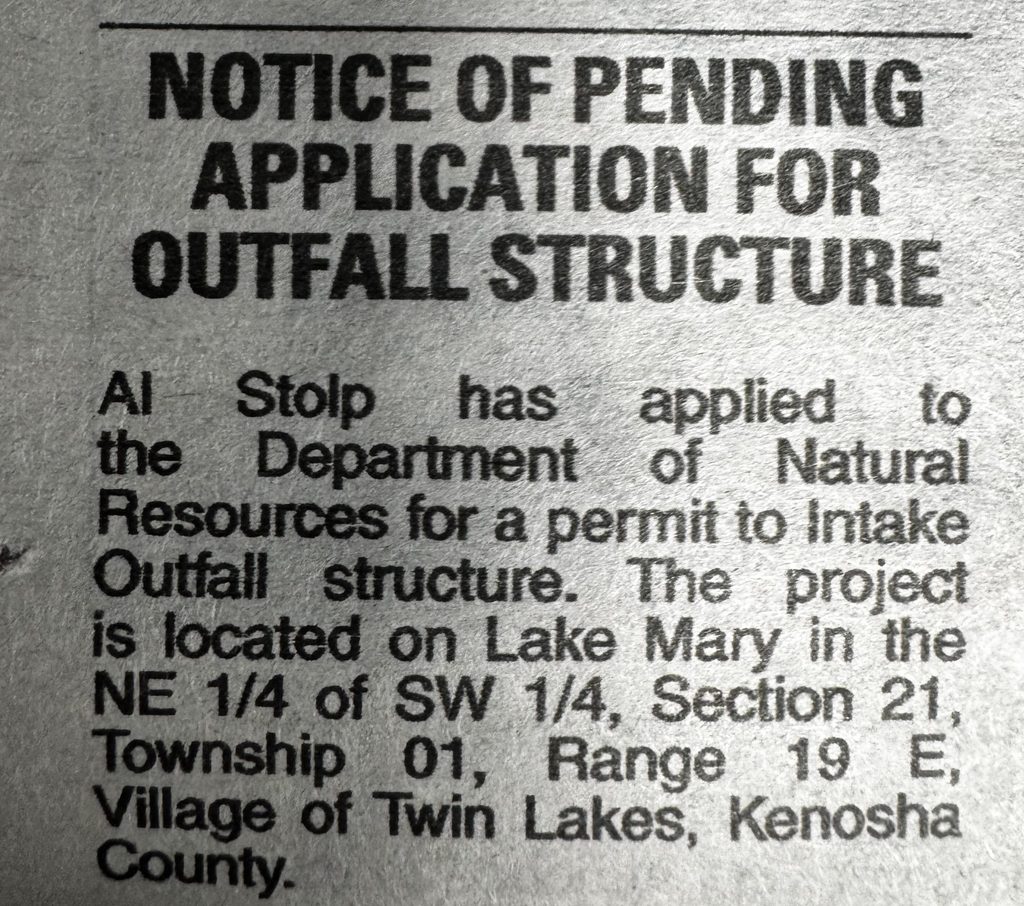
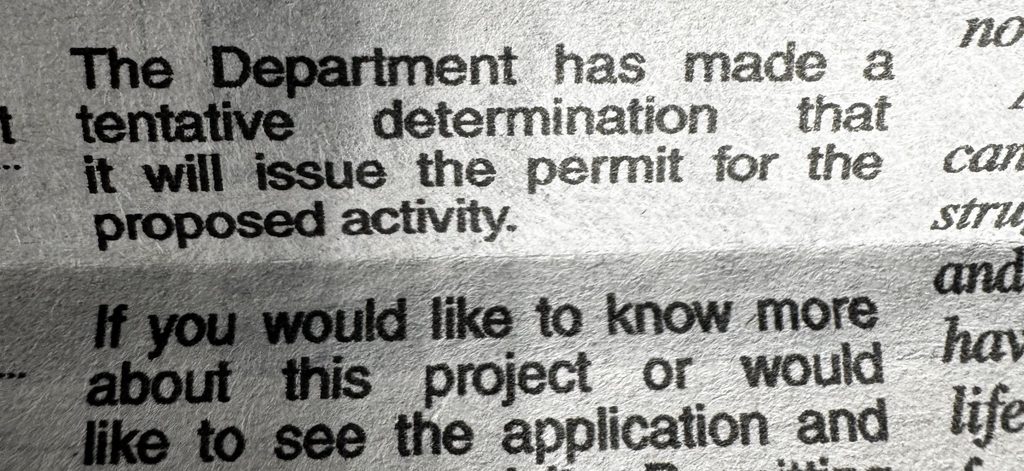
The public notice was subsequently published in the October 9, 2026, edition of The Report, a local publication serving western Kenosha County. The notice informed residents that the DNR had made a tentative determination to approve the proposed outfall structure and explained how members of the public could submit comments or request additional information.
There was just one problem: According to Jager’s timeline, the project was already substantially completed around the same date that the public notice appeared. Residents were being invited to participate in a permitting process for construction that had already been performed.
Even more questions arise from an October 22 email exchange between Droessler and Ponzi. By then, the Village acknowledges that the project had been substantially completed for approximately two weeks.
On October 22, Droessler emailed the DNR, copying the Village’s public works department, and wrote, “Attached is the notice of posting, please let me know if there’s anything else you need to finalize this.”
Ponzi responded that the notice had been uploaded to the permit file and explained that the public comment period would end at the end of October, after which the permit could be issued.
At that point, the project had already been substantially completed, according to the Village Administrator’s own account. Yet the correspondence reviewed by Kenosha County Eye contains no indication that Droessler or Village public works personnel informed Ponzi that construction had already taken place.
That raises an obvious question: If the engineer was still communicating with the DNR about finalizing the permit on October 22, why was the DNR apparently unaware that the project had already been built?
Neal believes the correspondence raises serious questions about what Village officials knew and when they knew it. He has been closely examining the project’s timeline, public notices, and communications between the Village and state regulators.
Neal’s photographs dated October 2 show the new outfall structure, rock reinforcement, and other stormwater improvements already in place. The photographs are particularly significant because they establish that substantial construction had occurred while the DNR’s permitting process was still underway.
On November 3, following questions from Kenosha County Eye, Village Administrator Laura Jager provided a detailed response explaining the Village’s position. Her explanation confirmed that construction had begun before the DNR issued the necessary permit.
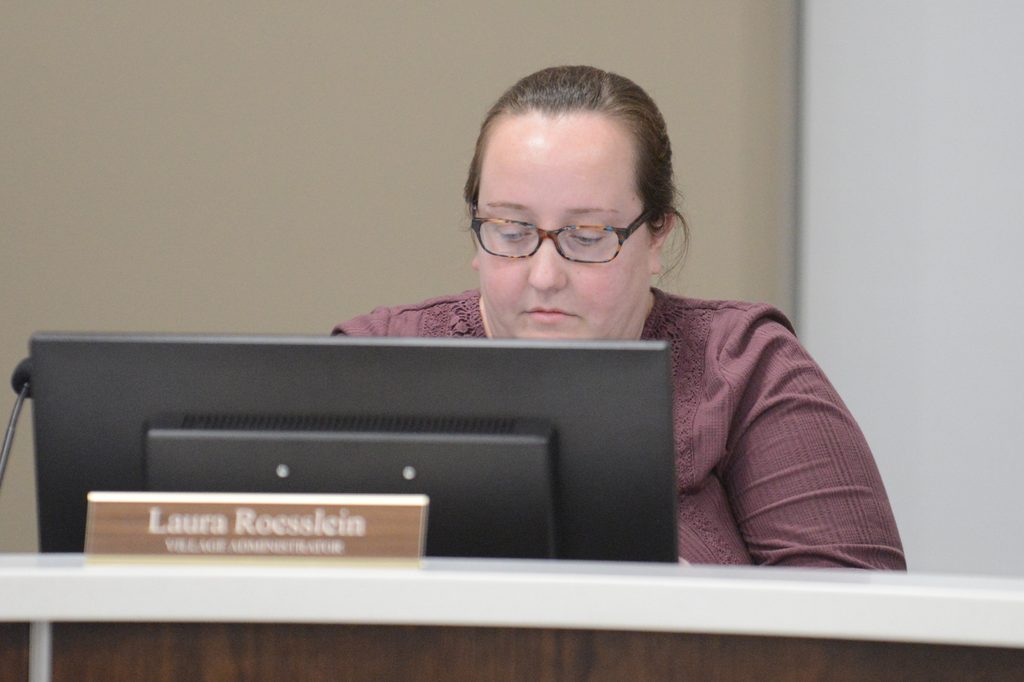
“The Village relied on its contracted Village Engineer to coordinate the necessary permitting and oversee construction of the project,” Jager wrote. “Our Village Engineer has acknowledged that construction began before the required DNR permit was issued and has accepted responsibility for that oversight.”
Jager said Village representatives had met with DNR officials earlier that day to discuss the permitting violation and possible resolution. According to Jager, the DNR indicated that it anticipated issuing the required permit, potentially later that week, because the completed work conformed to the permit conditions.
She also said the DNR expected to allow the existing structures to remain in place, although final confirmation was still pending. That would mean the project could potentially remain as constructed despite having been installed in violation of state permitting requirements.
Jager disclosed that the premature construction would result in a $1,500 after-the-fact permitting fee. She said the Village Engineer had agreed to cover that expense and any other costs associated with beginning construction before receiving the permit.
“The Village takes this matter seriously and will continue working cooperatively with the DNR to bring it to a resolution,” Jager wrote.
The Village’s explanation, however, leaves several important questions unanswered. Jager did not identify the individual who actually authorized Bradford Construction to begin work, whether any Village officials knew the permit remained outstanding when construction started, or why the DNR was not informed that construction was underway during the permitting process.
The distinction is important because accepting responsibility for a permitting oversight does not necessarily establish who made the decision to proceed with construction. The Village has not yet provided KCE with a notice to proceed, construction authorization, or other documentation identifying the individual who approved the start of work.
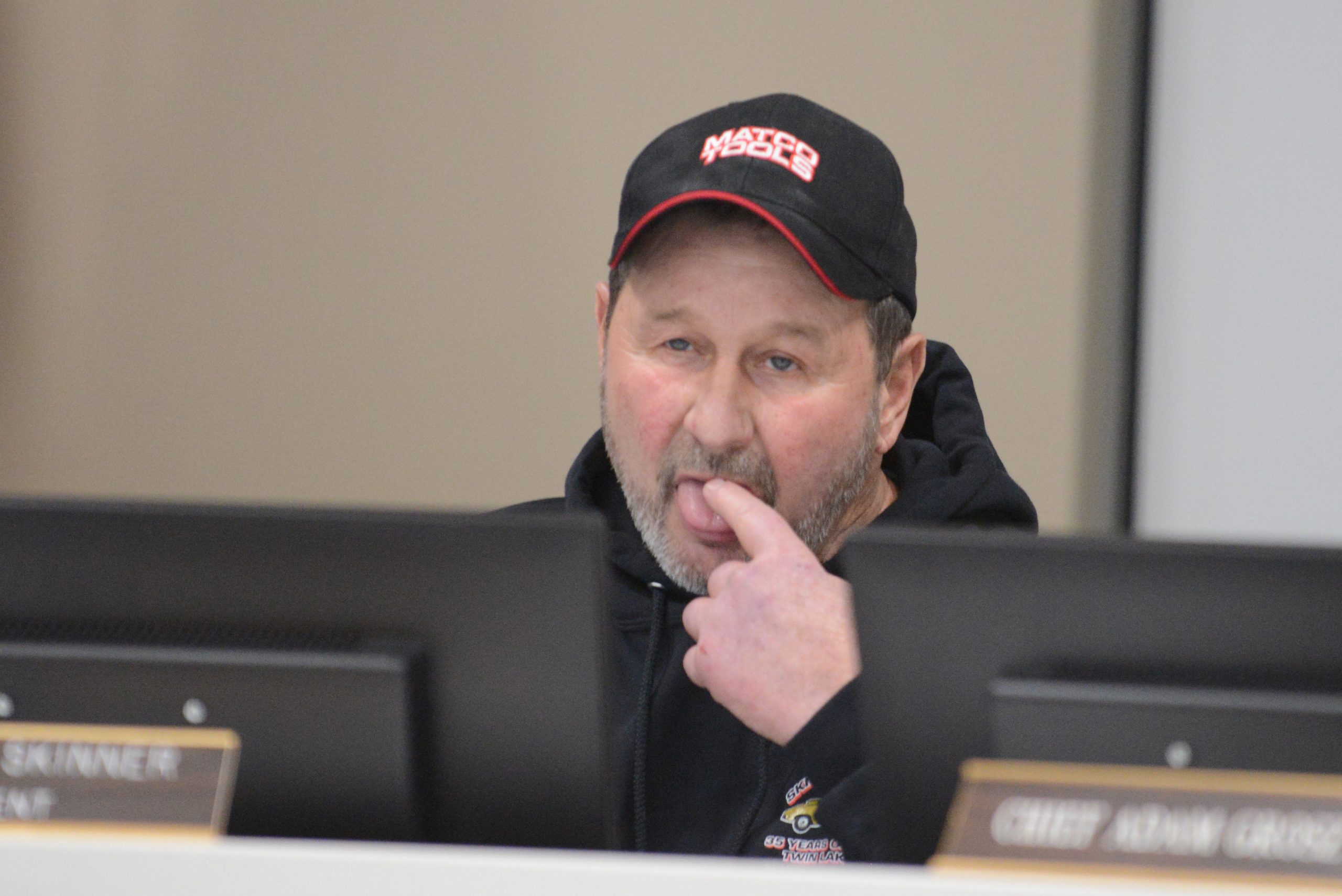
KCE also contacted Village President Howard Skinner (D) and Trustee Kevin Fitzgerald (D), providing both officials an opportunity to address the controversy and answer questions concerning their knowledge of the project.
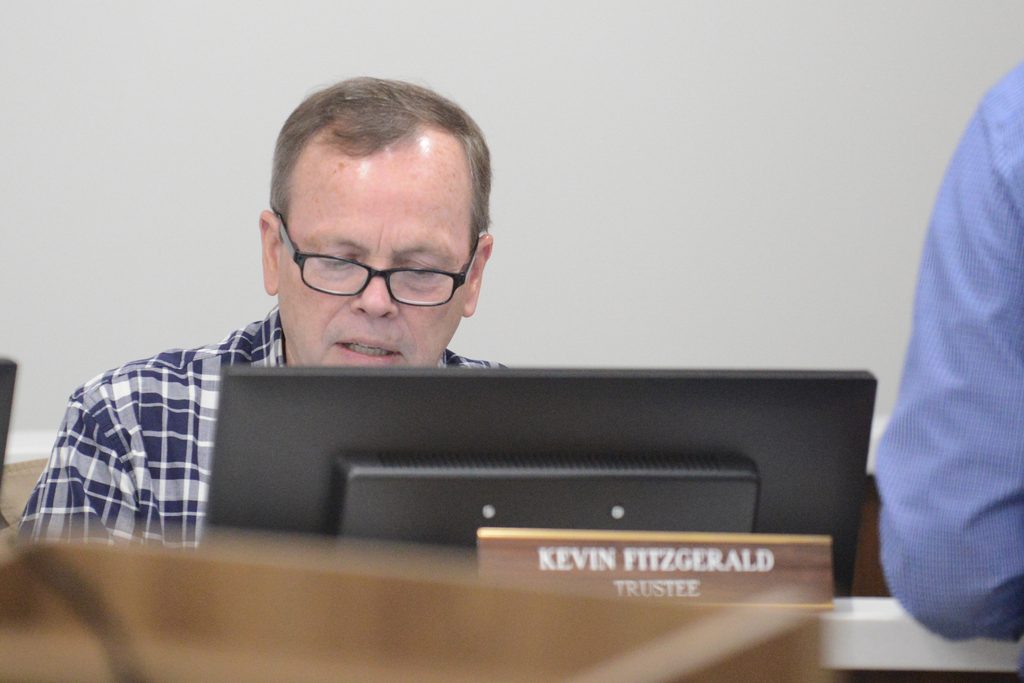
Fitzgerald initially indicated that he would respond later that evening. In a subsequent email, he said he had reviewed Jager’s explanation and did not have anything further to add.
“Obviously we’ll look at putting some things in place to hopefully not have this happen again,” Fitzgerald wrote.
Fitzgerald also said he had been unable to attend the November 3 meeting with DNR officials. His response did not identify who authorized construction or whether Village leadership knew the project was proceeding without the necessary permit.
Neal has questioned whether Village officials higher up the chain of command may have been involved in authorizing the work. He has specifically raised questions about Skinner’s (D) possible involvement, although he acknowledges that his suspicions are speculative. The documents reviewed by KCE do not establish that Skinner (D) personally authorized construction or knowingly approved work without a permit.

Another unresolved issue concerns the actual specifications of the stormwater structures installed during construction. Neal previously questioned whether certain components were smaller than originally specified, suggesting that 18-inch sumps may have been installed where 24-inch sumps were called for.
KCE asked Jager to address those concerns, but her November 3 response did not provide the requested measurements or explain whether any changes had been authorized. It remains unclear whether the installed structures match the original engineering specifications.
KCE also asked the Village how much money had been spent on the project, whether taxpayer funds were used, and whether the Village intended to pursue additional financial or contractual remedies against the engineering consultant or contractor. Although Jager described $173,895 as the base contract amount, village records identify that figure as the combined estimated cost of four stormwater projects, with the Knobes Avenue project estimated at $67,485. Jager also confirmed the engineer’s agreement to cover costs associated with the premature start, but she did not provide a final project cost or payment accounting.
Jager said Village Clerk Sabrina had begun working on KCE’s request for contracts, engineering plans, change orders, and other project records. She explained that gathering and reviewing those documents would take additional time.
The DNR’s October 29 determination establishes that the project was constructed in violation of state permitting requirements. However, the Village’s November 3 account suggests the matter may ultimately be resolved through an after-the-fact permit and payment of additional fees rather than removal of the structures.
Whether the DNR has formally issued that permit, concluded its enforcement review, or imposed any additional conditions has not been independently established by the correspondence reviewed for this story.
The circumstances also raise questions about the purpose of the public comment process. Residents were invited to comment on a proposed project while construction was already underway, and the Village acknowledges that the project was substantially completed around the time the public notice appeared.
The DNR’s permitting process is intended to allow agency review and public participation before regulated construction occurs. In this case, those procedures were not completed before the physical work took place.
For Neal, the issue extends beyond the $1,500 after-the-fact permit fee. He wants to know who made the decision to proceed, who knew the permit had not been approved, and why the Village’s own oversight procedures failed to prevent the violation.
Those questions remain unanswered despite the Village Engineer’s acknowledgment of responsibility.
Kenosha County Eye will continue reviewing the project records and DNR correspondence as they become available, including any documents identifying who authorized construction, what Village officials knew before work began, and whether additional enforcement action will be taken.