


(File Photo by Kevin Mathewson, Kenosha County Eye)
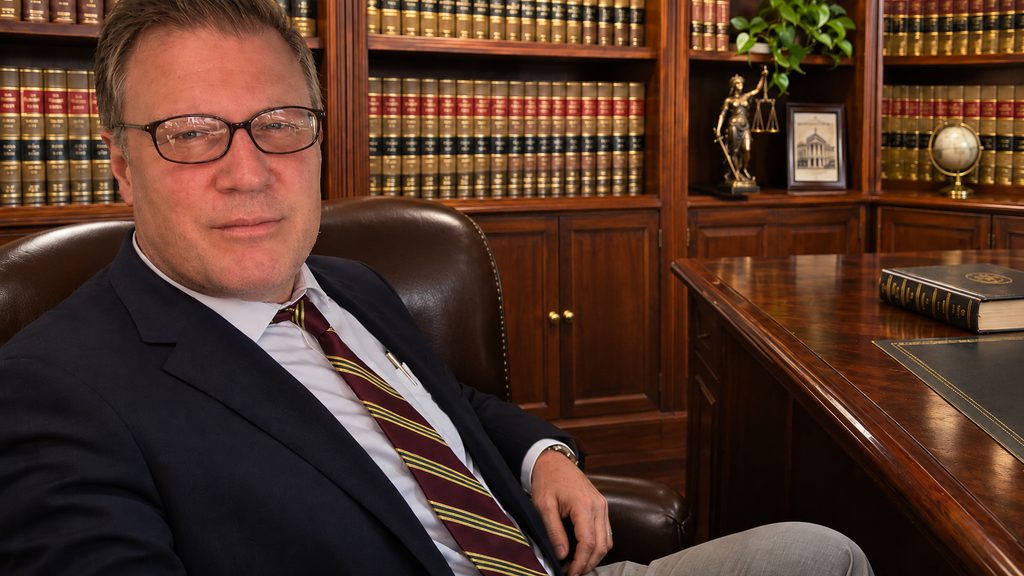
KENOSHA, Wis. — Criminal defense attorney Michael Cicchini has hit a milestone that few law professors, and even fewer practicing lawyers like Cicchini, ever reach: his 50th law review article. His latest effort, titled What is a Guilty Plea?, was recently accepted for publication by the Baylor Law Review. Published at one of the nation’s top-ranked law schools, this placement is among his best, sitting right alongside his articles in the Washington & Lee Law Review and the Fordham Law Review.
KCE previously reported on some of Cicchini’s jury trials and also some of his other writing, including his recent article on the history of the judiciary and his cynical, Ambrose Bierce-inspired Devil’s Dictionary of Criminal Procedure. “That one was definitely a one-off, but it was a lot of fun to write,” Cicchini said of his Devil’s Dictionary article. “I’m entitled to a stylistic rebellion now and then,” he added.
Cicchini has carved out a national reputation as a defender of procedural rights, a critic of prosecutorial and judicial misconduct, and a voice of reason for legal reform. But instead of drawing inspiration from other lawyers, he looks to non-lawyer writers such as journalist Ambrose Bierce, author Christopher Hitchens, and philosopher-historian Matthew Stewart, he said.
Cicchini’s subject matter, however, is strictly criminal procedure. His 50th article tackles a courtroom problem that frustrates defendants, defense attorneys, and even judges: prosecutors reneging on plea bargains. (KCE recently wrote about one such case, but in that situation karma prevailed: after reneging on the plea deal, the prosecutor’s office lost the jury trial and got nothing.) Cicchini’s article, backed by sound legal theory and extensive case law and statutory citations, offers a novel, but rock-solid solution to the problem.
The pre-publication version of his 50th paper, What is a Guilty Plea?, is currently available for early reading on the Social Science Research Network. After it goes through Baylor’s editing process, it will officially appear in an upcoming issue of the Baylor Law Review. Links to all 50 of Cicchini’s law review articles, organized by topic, are available free of charge on the articles page of his website.
When asked if he had plans to celebrate milestone, Cicchini thought for a moment. “I don’t. But article number 50 is a big deal. I should at least go to a local pub, have a whiskey, and mull over some ideas for article 51.”