



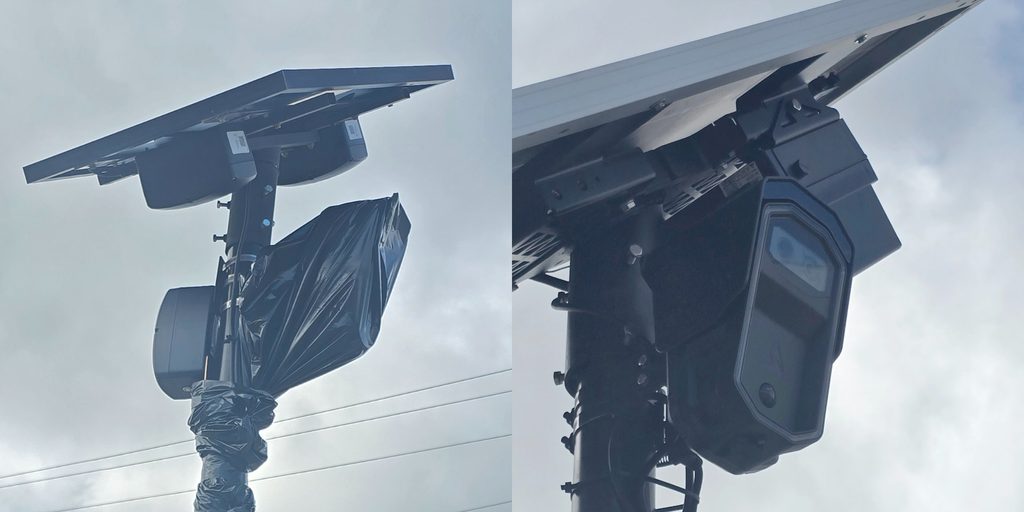
(Cell Phone Photos by Kevin Mathewson, Kenosha County Eye)
Can you tell from the photo above which camera is Flock and which camera is Axon? Well… this is a tough one. One has a garbage bag covering the camera. The other one doesn’t. Other than that — good luck. These two cameras are on 56th Street, just east of Green Bay Road in Kenosha. Today, I pulled over to take a photo of them side by side, and while I was standing there, a man driving past rolled down his window and yelled, “Tear it down!” I laughed… but his unsolicited commentary probably says something about how recognizable these cameras have become.

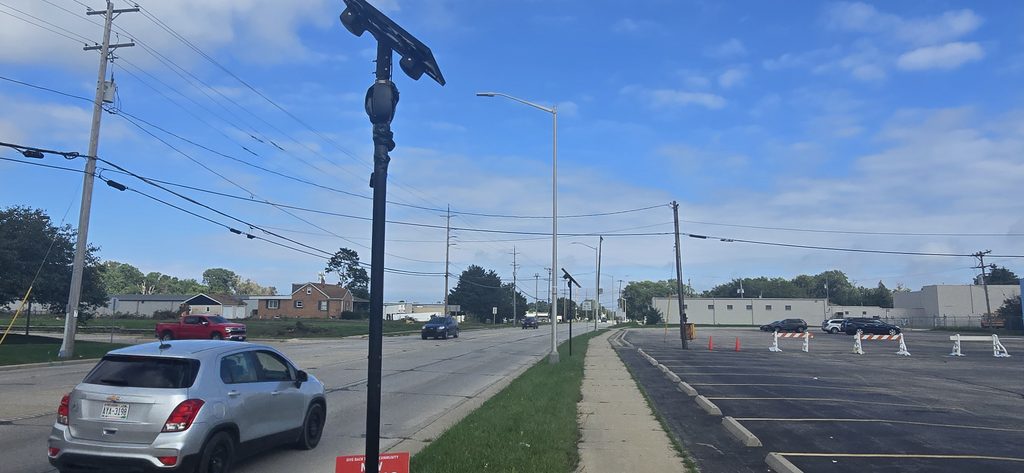
(Cell Phone Photos by Kevin Mathewson, Kenosha County Eye)
One is Flock. The other is Axon. Different logo. Different company. Same basic technology. They’re Automatic License Plate Readers, or ALPRs, which photograph license plates and vehicles traveling on public roads and create searchable information that law enforcement can use in investigations. Flock has become a household name around here, but Flock is just the brand — and replacing Flock with Axon doesn’t mean Kenosha is getting rid of ALPR surveillance.

Kenosha Is Doubling Down
In fact, the City of Kenosha is doing the opposite. Mayor David Bogdala and the Kenosha City Council recently approved spending hundreds of thousands of dollars over the coming years on Axon license-plate-reader cameras as part of the city’s new Axon agreement. Kenosha isn’t ripping out Flock cameras and returning our streets to the way they were before ALPRs. It’s ripping out one company’s cameras and replacing them with another company’s cameras.


That’s an important distinction because “Kenosha Police ending Flock” sounds like the city is backing away from this technology. It isn’t. The city has made a substantial new financial commitment to continue it. Flock out. Axon in. The cameras stay. The license plates keep getting photographed. The searchable records remain part of modern policing. Meet the new boss… same as the old boss.

These Cameras Solve Crime — And I Used To Support Them
For a long time, I supported ALPR cameras because they solve a hell of a lot of crime — and nobody can honestly deny that. They locate stolen vehicles, help find wanted suspects and can identify vehicles involved in serious crimes incredibly quickly. Racine County Sheriff Christopher Schmaling’s office recently cited cases in which ALPR technology helped deputies locate a homicide suspect approximately 20 minutes after a shooting, identify a driver accused of pointing a gun at juveniles and dismantle a nationwide identity-theft operation.

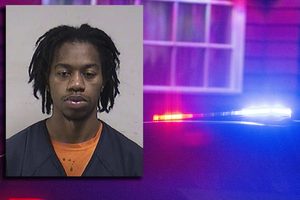
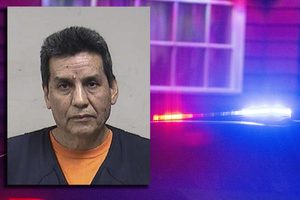
But I’ve changed my mind — not because the cameras don’t work, but because we’ve seen what can happen when people entrusted with these incredibly powerful databases allegedly misuse them. Deputy Frank McGrath and Deputy Emil Ortiz changed the way I look at this technology. So did the responses when alleged misuse was discovered. When law enforcement can potentially determine where someone’s vehicle has been and that power is abused, “trust us” isn’t enough.

There Is A Way I’d Support Them Again
I would support ALPR technology again if lawmakers actually put teeth behind the safeguards. Change state law. Change federal law if necessary. Make intentional misuse of these systems a clearly defined crime with serious consequences, and take away the ability of prosecutors or sheriffs to simply decide that nothing meaningful should happen when the evidence establishes an intentional misuse.

I don’t want accountability for this kind of surveillance power depending on the discretion of Racine County District Attorney Patricia Hanson or Kenosha County Sheriff David Zoerner — or, frankly, whoever holds those offices 20 years from now. If government is going to possess this extraordinary ability to track vehicles belonging to innocent people, the law should mandate consequences when a government employee intentionally abuses that ability. That’s the deal I could support: keep the technology that solves crimes, but make the safeguards just as powerful as the technology.

KPD Hasn’t Been Accused Of Misusing It
There is also an important distinction involving Kenosha Police. Kenosha County Eye is aware of no KPD officer accused of misusing Flock or a similar database, and Police Chief Patrick Patton has told us his department has not identified misuse by its officers. His approach to these concerns has also been far more serious than some of what we’ve witnessed elsewhere.
But that’s exactly why the safeguards need to be laws rather than promises. Patton won’t be chief forever. Today’s officers won’t be there forever. Today’s district attorneys and sheriffs won’t be there forever. Surveillance infrastructure can remain in place for decades, and the protections need to survive the people currently running the agencies.
Racine’s Warning Shouldn’t Be Ignored
This week, Racine County Sheriff Christopher Schmaling ordered the immediate removal of his department’s Flock cameras after saying his office learned Flock appeared to be collecting and retaining information beyond what the Sheriff’s Office understood or agreed to. Racine County says it believed information would be retained for 30 days, but subsequently learned Flock appeared to be collecting additional information, monetizing certain data through third parties and retaining secondary information for five years.
Schmaling called the situation potential “mass surveillance” and said Flock may have used public safety as a “bait-and-switch” to build a massive surveillance and data-collection system. Importantly, Schmaling isn’t abandoning ALPR technology either. His office plans to explore other vendors, saying the technology remains valuable when paired with proper accountability and safeguards. His conclusion was simple: “The technology did not fail the public. Flock failed the public.”
Maybe Axon will be better. Maybe Kenosha will impose tighter controls. I hope both are true. But let’s not pretend Kenosha just got rid of Big Brother because the word “Flock” disappeared from the camera.
Look again at the photo from 56th Street. One camera says Flock. One says Axon. One has a garbage bag over it. Different company… different logo… same basic surveillance technology.
Kenosha didn’t get rid of it.
Kenosha spent hundreds of thousands of dollars to keep it.
Meet the new boss… same as the old boss.















18 Responses
I agree. Keep the cameras; they solve crimes. BUT we must have clear state or federal laws clearly defining misuse and not leave it to someone’s discretion.
Unfortunately, these are a necessary evil in today’s society. But should need a warrant to access, no exceptions.
“Those who would give up essential Liberty, to purchase a little temporary Safety, deserve neither Liberty nor Safety”
– Ben Franklin
Bootlicker!
Why does law enforcement need them without a warrant? Let’s require a judge to sign off on requests for the information or District attorneys! If we limit who has access and how that access is granted then we lower substantially the potential for misuse? Then when the information is need a senior member of the law enforcement agency ie: supervisor can access the information after the Da approves! So yes a phone call to the da to authorize the supervision to access the site. ( checks and balances )
Why does law enforcement need them without a warrant? Let’s require a judge to sign off on requests for the information or District attorneys! If we limit who has access and how that access is granted then we lower substantially the potential for misuse? Then when the information is need a senior member of the law enforcement agency ie: supervisor can access the information after the Da approves! So yes a phone call to the da to authorize the supervision to access the site. ( checks and balances )
Unfortunately Axon is the same as Flock. In fact all ALPR’s don’t just take pictures. Vehicles are recorded and uploaded to their network not the municipality.
Here’s the independent, non-vendor picture — including the parts vendors don’t advertise.
Effectiveness — independent academic studies (not Flock-funded)
• Randomized controlled trials found no reduction in auto theft or overall crime when ALPR-equipped patrols worked hot spots (Lum et al., 2011, part of an NIJ-funded evaluation)
• A follow-up randomized trial found more stolen-vehicle recoveries and arrests, but theft rates themselves didn’t drop (Taylor, Koper & Woods, 2012)
• The Atlantic City fixed-network study: clearance rate improvements for shootings, robbery, and auto theft were not statistically significant, and violent crime overall did not fall
• A 216-agency study using Flock’s own deployment data (not funded/framed by Flock, published on CrimRxiv) found an 11% drop in motor vehicle theft — the strongest independent causal estimate, but note it’s specific to vehicle theft, not crime broadly
• Researchers reviewing the field bluntly stated: “there is little evidence that ALPRs reduce crime and even less is known about their impact on solve/clearance rates.”
Accuracy problems — this is where the real negatives are
• A Vallejo, CA police-run study found up to 37% of ALPR hits were erroneous — nearly a wrongful-hit-in-3 rate, cited by the Brennan Center
• EFF documentation found ALPRs misread the state on the plate in 1 in 10 reads, separate from other read errors
• Flock’s own marketing claims 93% accuracy — meaning even by the vendor’s own number, roughly 1 in 14 reads is wrong, and independent field data suggests it’s worse
Real-world harm from those errors
• The Institute for Justice documented at least 27 cases since 2018 of people wrongly pulled over, detained at gunpoint, or jailed due to ALPR misreads — most since 2023 as deployment scaled
• In nearly two-thirds of those cases, officers had already drawn weapons before discovering the error
• Cases include a family detained at gunpoint with an infant in the car, a 12-year-old placed in a patrol car, and a San Francisco settlement of $495,000 over a wrongful gunpoint detention
Civil liberties / oversight problems
• The Brennan Center notes ALPRs collect data on every passing vehicle indiscriminately — the vast majority of scans involve people never suspected of anything
• Accountability policies are inconsistent and often ignored; documented cases include an officer using the system to stalk an ex-wife, and data shared with federal agencies despite promises not to
• Network scale (80,000+ cameras, thousands of interconnected agencies) means a single query can pull nationwide movement history on one plate, raising concerns beyond ordinary policing use (e.g., cross-state tracking relevant to abortion-related prosecutions)
Bottom line, unbiased: The strongest independent evidence supports a modest reduction in motor vehicle theft specifically. Evidence for clearance-rate improvements on other crimes is weak or statistically insignificant. Meanwhile, accuracy studies from police departments themselves (not critics) show error rates far higher than vendors claim, and those errors have produced real gunpoint detentions of innocent people, disproportionately documented among Black motorists in the EFF cases.
Some [a lot] of people use guns for bad things. Get rid of all guns because of that? Guns stop bad guys. These cameras stop bad guys. Because a few idiots use the technology to be creeps, we should get rid of them? No. When Flock sells the data it collects to third parties, there’s your problem. Ask our administration to back laws prohibiting that. But it will fall on deaf ears.
If we need cameras, they should be on a local network with firewall protection. Locally owned with local accountability. Something in my gut tells me that large companies like Flock don’t care about our privacy, only money. They’ll sell all the information they collect.
Maybe instead of paying for these “big brother” cameras they could try improving some infrastructure and landscaping instead. As usual they keep pissing away money on pet projects like this. This city looks like crap to visitors and residents alike. Many of our streets are in embarrassingly poor condition with weed filled cracks, potholes, sunken concrete and manhole covers. The city doesn’t take care of its own property, likes to blame homeowners, yet they remain selective with their ordinance enforcement.
The problem isn’t the cameras. It’s misuse of the data collected by the cameras. Do we ban guns because they are misused? No, we punish the person who misuses it. Don’t throw the baby out with the water. That said, having read Sheriff Schmaling’s warnings about the specific company, I agree with him: Get the Flock out of here! 🙂
“I don’t care about those cameras because I don’t do anything wrong.”
Just wait until “wrong” becomes something you are doing.
I have requested County Board Supervisor Stephanie Knezz to refer the Flock camera issue to the Judiciary and Law Enforcement Committee of the County Board for a review and report to the Board The Flock camera issue is straight out of Orwell’s 1984 book.Do we want to go that direction as a society? TERRY ROSE
Unfortunately many are unfamiliar with George Orwell. Terminator might be a more up to date analogy.
“Those who would give up essential liberty to purchase a little temporary safety deserve neither liberty nor safety.”
~Benjamin Franklin
A precursor of Palentir’s ultimate technological objective: realization of a “Samaritan” equivalent as portrayed in the former CBS series “Person of Interest”. As the population grows faster than the economy’s capacity to absorb it productively, violence increases generating an existential mass desire for government ensured security and physical safety that quickly overshadows the desire for freedom. The answer is “Yes”. That is the direction an unwitting majority want society to follow.
No surveillance state! Stay out of my business.
Great work. I read that Axon was just waiting for Flock contracts to be cancelled so it could step in and claim their system was so much better. It’s almost bait and switch. All at our expense.
You could sit at home, and do like absolutely nothing, and your name goes through like 17 computers a day. 1984? Yeah right, man. That’s a typo. Orwell is here now. He’s livin’ large. We have no names, man. No names. We are nameless!”