



(Photo by Kevin Mathewson, Kenosha County Eye)
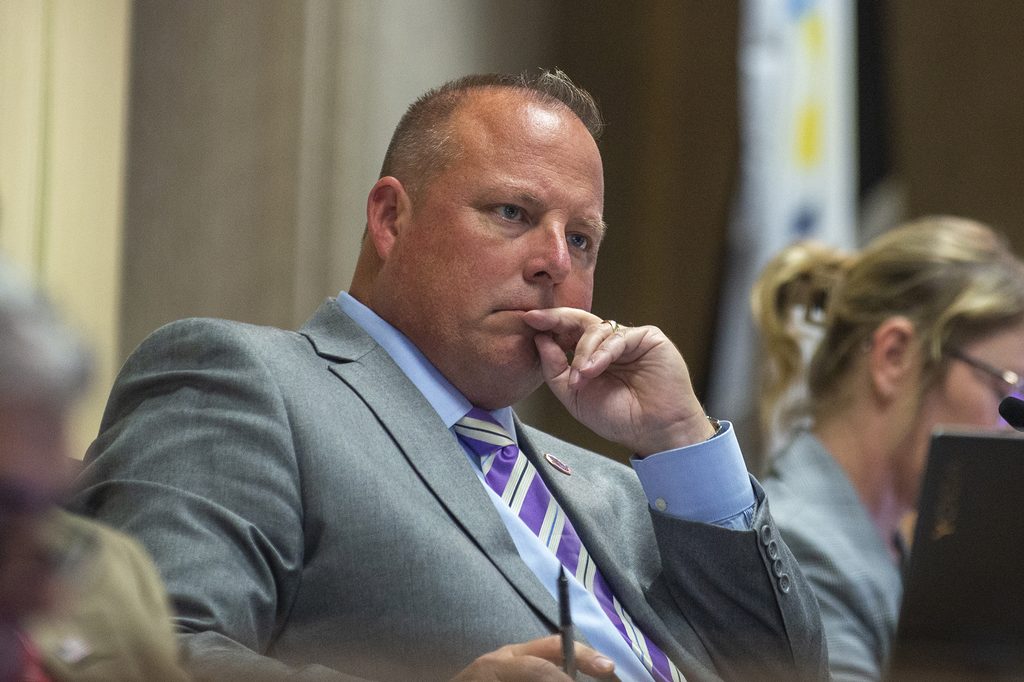
KENOSHA, Wis. — For months, Kenosha-area residents have packed government meetings to deliver essentially the same message about Microsoft’s proposed hyperscale data center: slow it down, study the consequences and, in many cases, stop it altogether. That message continued Wednesday night at the Kenosha Common Council meeting, which was held at 7 p.m. Wednesday instead of the council’s usual Monday meeting date because of the holiday. The official agenda listed citizen comments, and the meeting transcript shows 31 speakers had signed up. The council ultimately had to extend the normal 60-minute citizen-comment period by another 30 minutes so the remaining speakers could be heard.

The handwritten signup sheets show that the overwhelming majority of those appearing listed the data center as their subject. A handful spoke about other matters, including police conduct and paratransit. Not one person who spoke about the Microsoft project voiced support for it.

Several speakers directed their remarks specifically toward alderpersons, arguing that they are independently elected representatives and do not have to follow Mayor David Bogdala’s position.

(Photo by Kevin Mathewson, Kenosha County Eye)
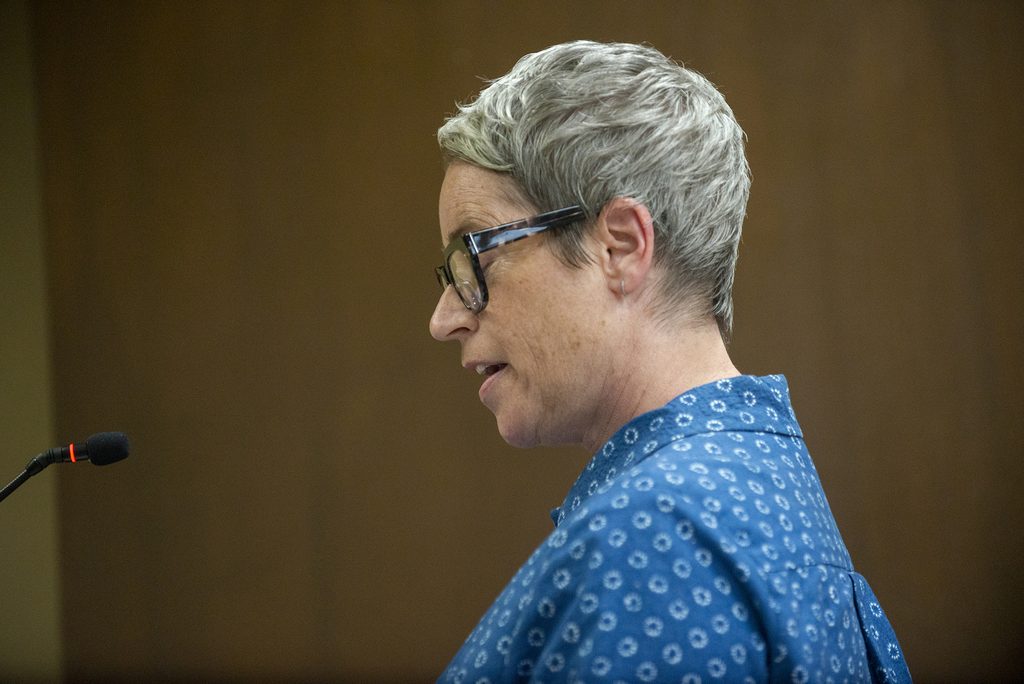
Kimberly Laska, whose home sits near the proposed development, opened the evening with perhaps the most visual message. She brought a drawing depicting her house being carried away by balloons, inspired by the Pixar movie “Up.” “This is my exit strategy when Microsoft begins construction on their proposed data center,” Laska said. She then asked a question that, in different forms, residents have repeatedly raised during the months-long controversy. “How far out do I need to go to get away from data centers?”

“The Forests Don’t Have Lobbyists”
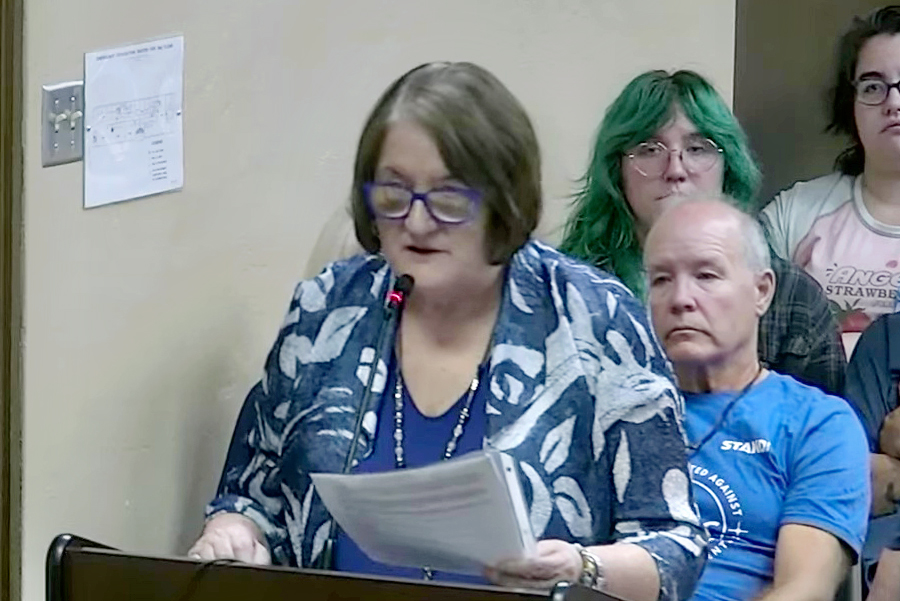
Jeri Moore urged the council to support a moratorium, describing many of those who have repeatedly appeared at meetings as “accidental activists.” “For the forests don’t have lobbyists, the wetlands can’t stand at a podium and explain why they matter, the owls don’t get a microphone,” Moore said. She said residents had assumed the responsibility of speaking for land and wildlife that cannot advocate for themselves. “We understand technology has a place, but at some point humanity started confusing progress with removing every last wild thing until nothing remains except servers, parking lots and convenience,” Moore said. “The earth doesn’t need more people trying to conquer it, it needs more people willing to protect.”

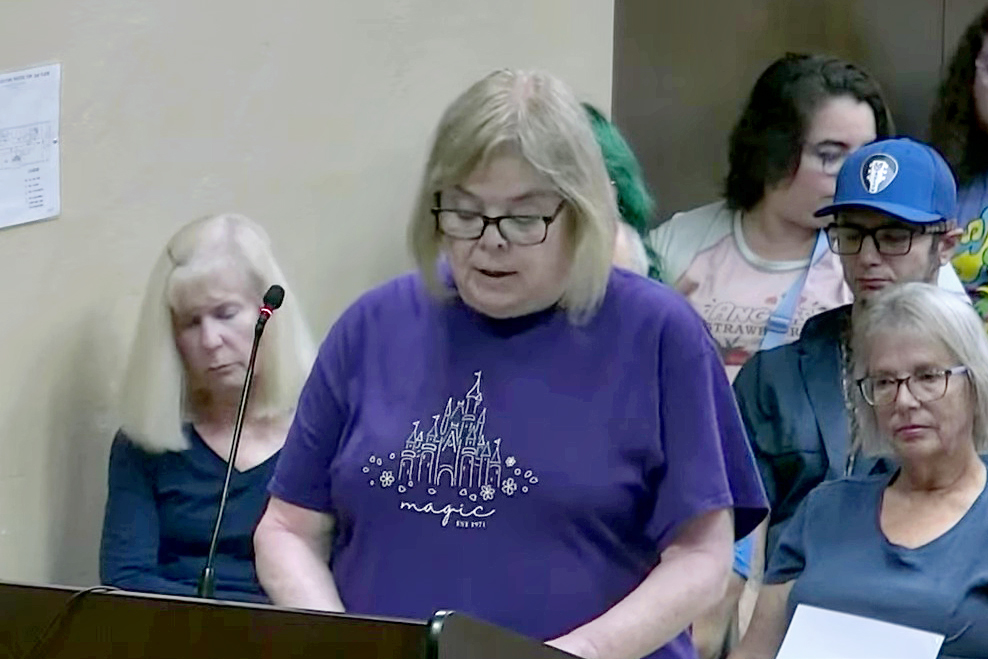
“What Is The Rush?”
Cheryl Swiatko framed the request more narrowly. She told council members residents were not asking Kenosha to abandon business or technology, but to stop moving forward until unanswered questions are addressed. “What is the rush?” Swiatko asked. “If this venture is truly beneficial and safe for Kenosha, then a temporary pause should not threaten it.” She added, “We have one chance to get this decision right. Slow down, demand transparency, protect our taxpayers and resources, and make sure that our city, not an outside corporation like Microsoft, controls our futures.”

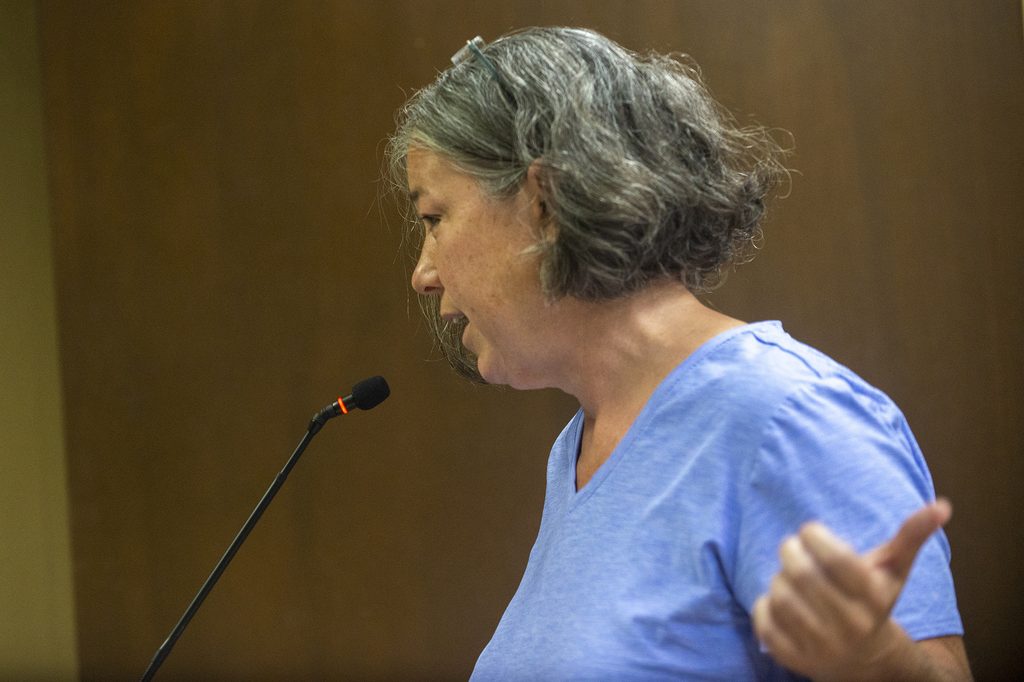
(Photo by Kevin Mathewson, Kenosha County Eye)
Kellie Foglio said one of her biggest concerns came from listening to Bogdala discuss potential benefits of the project. “What really threw me is that it sounds like the decision is already made, and it’s just the details being worked out,” Foglio said. “That’s a problem for me.” Foglio said she had been golfing earlier Wednesday with a friend who sits on the opposite end of the political spectrum from her. When she told him she had to leave to perform her “civic duty” and speak at the council meeting, she said he told her the data center was one issue on which they agreed. “This is the one thing we agree on. Everybody I know agrees on this,” Foglio recalled him saying. “We do not want data centers.”

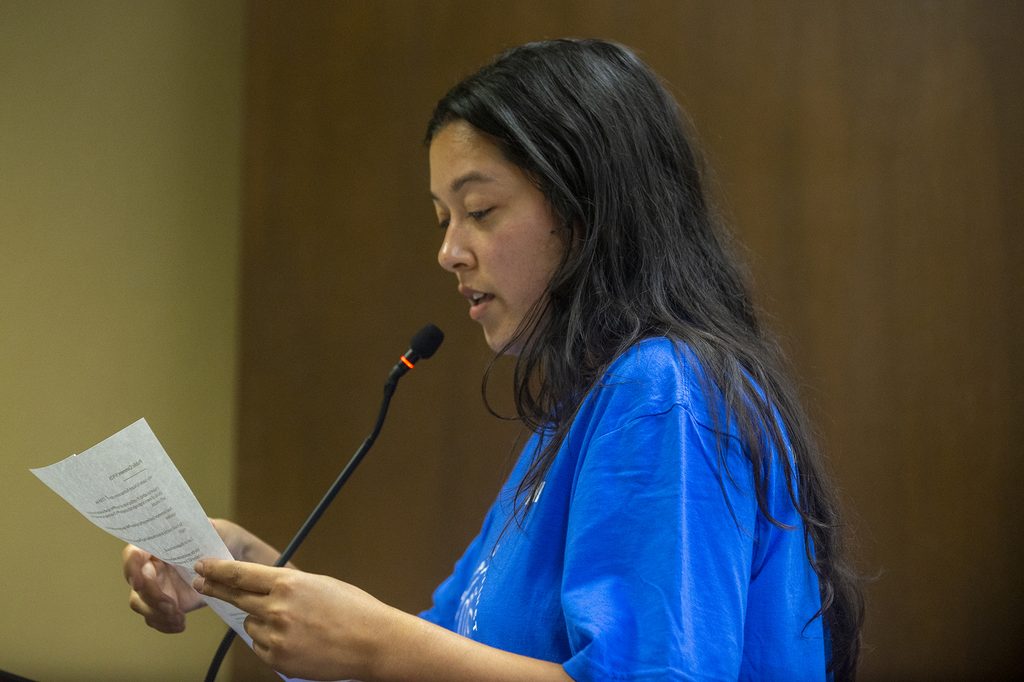
(Photo by Kevin Mathewson, Kenosha County Eye)
A Question Of Legacy
Niamh Rahman said she has struggled to find anything new to tell the council because residents have returned so many times and approached the proposal from so many different angles. “It’s getting harder and harder to come up with something fresh for this council,” Rahman said. She challenged council members to consider what their decisions will ultimately say about them. “What stays is your legacy, your choices, the consequences of your actions, your words, or lack thereof,” Rahman said. “So what will you stand for? What will you leave behind? How will you choose to be remembered?” Rahman told council members it was still possible to change course and exercise “independent thinking.”

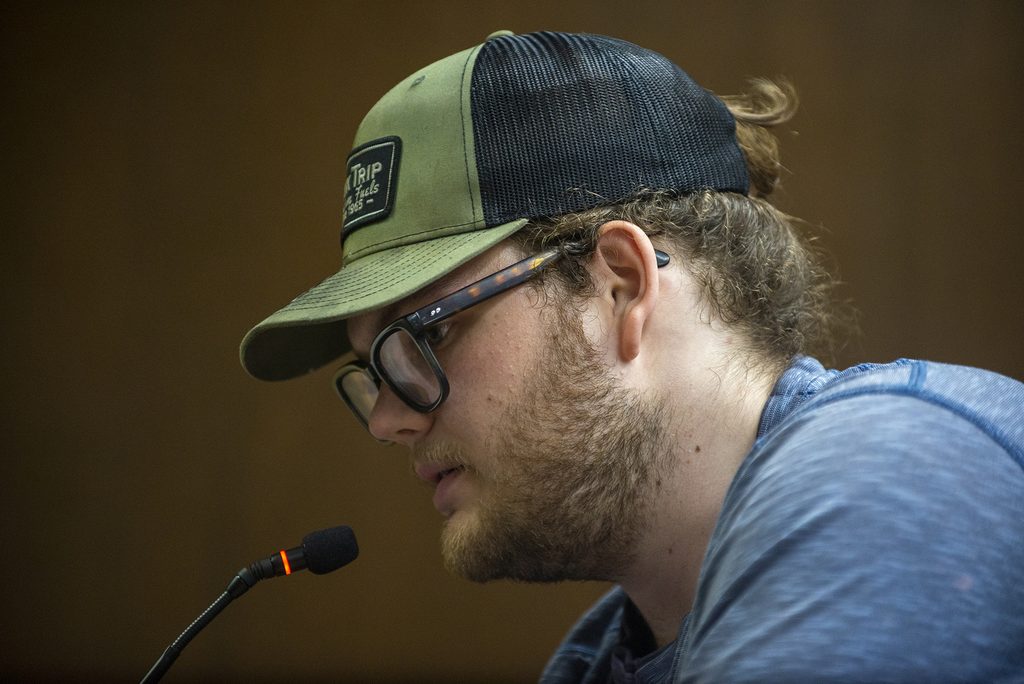
(Photo by Kevin Mathewson, Kenosha County Eye)
“Tomato-Headed Freak”
Not every speaker chose diplomacy. Colton Roberts reminded Bogdala and the council that during an earlier appearance he had called the mayor a “tomato-headed freak.” “I know I ruffled quite a bit of feathers last time I came up here when I mentioned my personal belief in the fact that I think the mayor is a tomato-headed freak,” Roberts said. “I still stand by that opinion.”
Roberts then turned serious, repeatedly asking council members how much potential risk residents should be expected to accept in exchange for tax revenue and jobs. “How many corpses must we put in the ground before any one of you decide maybe, maybe for an iota of a second, profit should never come first under any circumstances?” Roberts asked. “How many must starve to feed the machine of the AI data center? How many millions of gallons of water must we lose before the question appears in anyone’s head of, was this worth it?”
(Photo by Kevin Mathewson, Kenosha County Eye)
Doctor Challenges Council
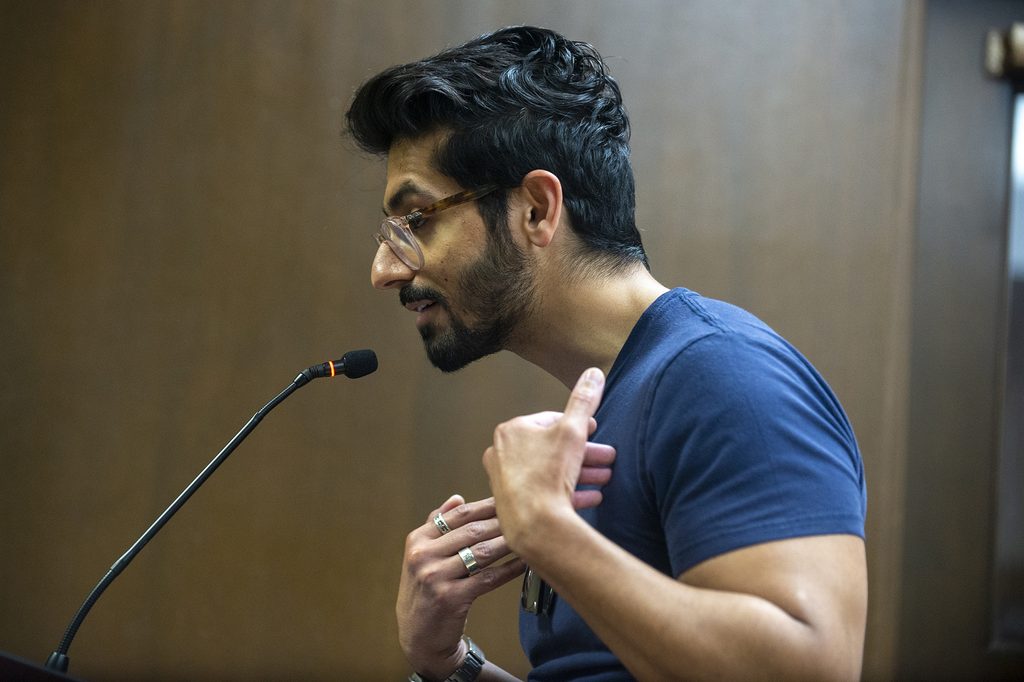
Dr. Ghazan Mian told council members he attended UW-Parkside for undergraduate studies, UW-Madison for medical school and spent three years in Milwaukee for residency before returning home. “All that so I could come home to Kenosha, my home, and advocate for the health of this community,” Mian said. Mian told the council he believes data centers present health concerns and challenged anyone who disagreed to speak with him afterward. “The majority does not want this. You’re our representatives. You also should not want this,” Mian said. He also criticized the repeated requests from the dais for the audience to refrain from applauding. “I’d also ask that instead of using the power to stop us from, like, clapping for five seconds, you use that time to actually think about what we’re saying to you,” Mian said.
(Photo by Kevin Mathewson, Kenosha County Eye)
“You Don’t Need To Listen And Obey The Mayor”
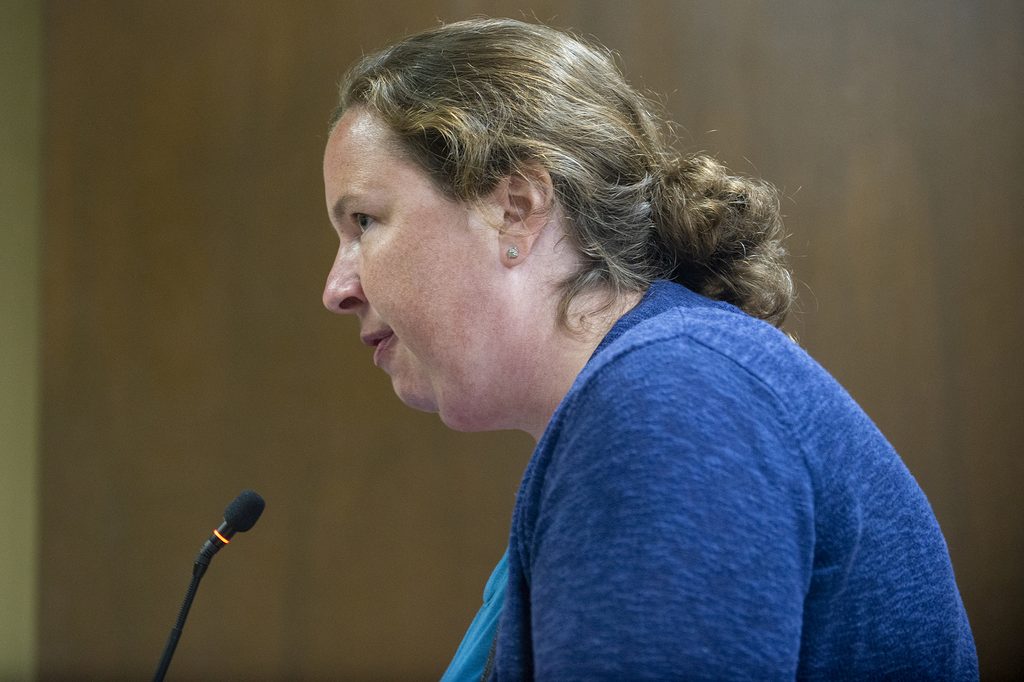
Rachel Kirschner, of the Town of Paris, said Wednesday was approximately her fourth time appearing before the council to oppose the project. “I know where the Mayor stands, but I do not agree. I follow logic and reason,” Kirschner said. She then turned her attention directly to the alderpersons. “You have your own voice. You don’t need to listen and obey the Mayor. You may have more experience and knowledge than he has,” Kirschner said. “I want every alderperson at the end of this meeting to speak up and say where you stand.” Kirschner even supplied them with potential answers, beginning with the simplest: “I don’t want a data center in Kenosha.” Her remarks captured a recurring frustration Wednesday: residents said they continue attending meetings, researching the proposal and demanding a moratorium while increasingly believing the ultimate decision may already have been made.
(Photo by Kevin Mathewson, Kenosha County Eye)
“We’re Real People”
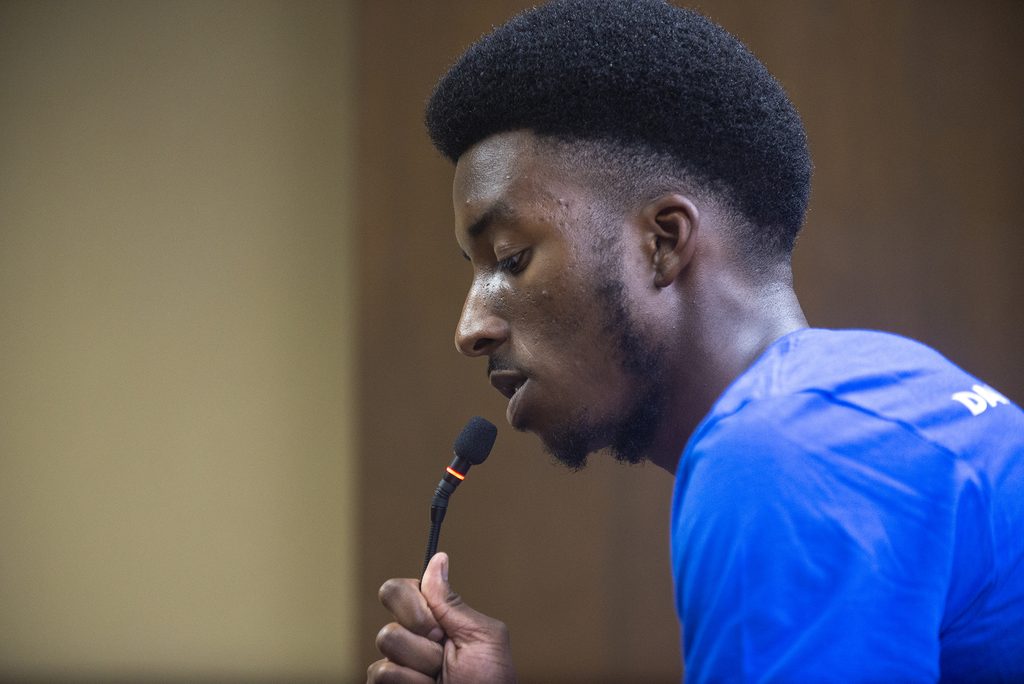
Christopher Lyons reminded the council that the people returning meeting after meeting are not simply showing up to create a spectacle. “We’re not just performing. We’re real people with real lives and real experiences,” Lyons said. He said citizen comments are one of the few ways residents can directly confront elected officials and demand accountability. “What you’re seeing here is bigger than a Microsoft data center,” Lyons said. “What we’re seeing here is a domino waiting to be knocked down.” He urged alderpersons to support a one-year moratorium and oppose the project when it eventually comes before them.
For more than an hour Wednesday, residents raised concerns about water, electricity, pollution, noise, wildlife, jobs, government transparency and the long-term consequences of bringing a hyperscale data center to the Kenosha area. Their arguments varied dramatically in tone, from Laska’s balloons, to Moore’s appeal for the natural world, to Roberts’ insult of the mayor, to Mian’s medical concerns and Kirschner’s direct challenge to the council. But the central message was remarkably consistent: residents who appeared before the council want city officials to stop or pause the project, and many said they increasingly believe their repeated appearances may not alter what happens next.















48 Responses
Is this the same guy who’s endorsing the Liberal candidate for governor—yet hasn’t fixed a single pothole since he took office?
I am curious if anyone had any concern when he was endorsed by a liberal in the first place. Or because the outgoing mayor had enough goodwill locally it didnt seem an issue. I found it strange then. But this project was already underway by then and I figured that explained the endorsement.
Who’s the liberal candidate? All I’ve seen are establishment politicians. Both Dem & Rep options are dirty ASF, both support data centers and flock cameras. They’re all gross.
He turned into a disappointment very quickly.
Kevin, can the city budget be published as a public record on KCE? I’m curious how they spend/waste our money and why this city looks like crap.
City budget is available to view on the city website. 2026 budget: https://www.kenosha.org/Document%20Center/2026%20Adopted%20Budget.pdf
If they were building a free abortion clinic would they tell the council to “slow down”? All I would ask of the city is to mandate that any update/infrastructure cost concerning the electrical grid be paid by the data center in perpetuity. Also the cost so there are no increases in consumers energy bills due to competing for the increased power demand. Write this into any contract “forever”.
What about the increase to your health insurance? The gas plant proposed to support the data center will add over a $1 billion dollars in increased health care costs.
My internet says 2 billion…
my googler said it would increase healthcare costs by eleventy billion.
You can’t just throw out a number. How much does each golf course increase the cost of healthcare with their water and fertilizer use? Ulines beautifully manicured grounds? How much did the democrats burning and pillaging during the Kenosha riots increase healthcare?
Read: https://www.wpr.org/wp-content/uploads/2026/03/Foundry-Ridge-Red-Oak-Ridge-Analysis_2026_02-2.pdf
Why even mention a private healthcare issue with a public impact issue? Data centers have a ridiculous amount of tracked and verified issues – and the thousands across the country have yet to produce a single outcome that benefitted the community it was built in. The contracts are worthless to the locals. The only people building one is worth it for are the corporations and the city officials signing NDAs while getting their palms greased.
Question- who verified and where are these ridiculous verifications found? I can find verified and ridiculous verifications saying the opposite. Its obvious you are speaking with your emotions more than facts.
We can no longer verify unless visually being there and seeing impacts. People can and do write non truths as well as truths and unfortunately we chose sides and fight like it matters.
You can find where burning fossil fuels is healthy? I would love to see that.
Welp, thats why you invest in the stock market. Evilness averted……You can make a return on your investment just as anyone else can. (Just not as good as a congressman with their insider trading). Walk over to the closest mirror- That’s the only person holding you back from risking your own personal funds and earning a potential return.
The Mayor is a good guy. People hate on whoever is in his position. He cant win
When you make bad decisions, people show up and let you know.
I just remember that with Antaramian, Bosman and others in the past, my car didn’t take such a beating on Kenosha streets and the place looked better.
You cant honestly be serious thinking the most recent mayor is bow blamed for bad roads that he had dumped on him? It will take time to repair these roads thay have been badly neglected starting mainly with Bosmans administration
Funny. I hear hes a douchebag.
If he’s such a good guy, Bogdala should oppose the data center, instead of taking the Microsoft payoff he’s getting to push this garbage.
Publish an article from the alderperson perspective.
I have no skin per se in the game but every person, every kid and everyone i see walking has a phone buried in their face. People want AI and social media but not in my neighborhood.
What about the casino? What about the raw sewage dumped in lake Michigan when it rains because the underground pipes cant handle today’s population and too expensive to repair. Where are are the people fighting against that?
I get it… but we have become a what’s in it for me society but dont you dare inflict your desires or ” needs” on me and my social media loving world.
Carry on fighters but they follow the money and the stench of politics is in all municipalities. Its all about cash, I’m mean look at the tons and tons of money the casino will bring!! HA
I still remember when gambling and the lottery passed by referendum. The said our property tax would be cut in half. The lottery credit only reduced taxes by a small percentage, out of state property owners sued for their share and that small percentage was cut in half again. Don’t forget about how the dog track was going to grow Kenosha. Now we have a casino on the way? I expect taxes to increase in order to support and clean up after the lowlifes that come to Kenosha, lost everything and are too broke to leave. This place has become nothing but a huge distribution center.
Notice how the Mayor wants to dump the Casino and the Data Center on the west side of the Interstate.
As long as the money was delivered by the semi trailer load, I’d be glad to see a small data center go in instead of the casino. In the same location and powered by small nuclear reactor. 😝
I have foreskin in the game. I always win
Humm mmm are they connected?
Build the data center 10 feet taller
Infrasound goes thru concrete.
So watch your farts! They are detected.
I suspect the decision has already been made, hopefully for tax revenue and not for personal benefit. All these town halls are just for show, to pretend that our opinions matter. The train has already left the station.
Not town halls – just their regularly scheduled common council meeting. I would love to debate Mr. Bogdala in a town hall forum – he would get crushed.
Just wait. We will jump out in front of the train. And the train won’t be able to move forward.
All a show. The data center will be built because money talks and the system is corrupted. Bogdala is just the latest grifter looking for his payday like all assclowm fake patriots
Protest all you want. Nothing will change sheeple
Guessing you and the other meat heads on here have no idea what a data center is or why it uses ungodly amounts of water and electricity. I dare you to actually look it up (try Google, not the Fox News site) and actually educate yourselves.
Data Centers do nothing good for us. Just payouts to the politicians to let it happen. They trash the environment and grow to eventually take over more and more land.
Thank you Captain Obvious. I’m not for them and I’m not against them but there is nothing you or I can do about them being built somewhere, correct? Sooo just not in Kenosha but its not your problem if built elsewhere???
I couldn’t do anything about the thousands illegally crossing borders either and that cost too.
Everyone is being forced into AI wether you want it, like it or hate it. Welcome to what we have created with money being the base for it all.
Its funny how you say to Google. That search engine is driven by AI which is a major part of why they are being built.
Hang on tight cause its only just begun…
Do any of you really believe that tomato head has your best interests at heart? Never trust a politician.
Many times over last 50 years I have been asked, “why do you still live in Kenosha?”. I have always replied that there will come a time when I will have to defend the largest body of fresh water on earth. I was not kidding and that time has come. If you have not had the opportunity to visit what was supposed to be Foxconn, now a data center, you must. IT IS HIDEOUS!!!!!!!!
I’m in my mid 40s. My father has told me since I was a teen, war is now fought over oil, but in your generation it will be over water. And guess where we live. The largest fresh water source in the world. We need to protect our great lakes, as well as our small ones.
They don’t plan on stopping the data center from being built. The money is to good for them and the plans they already have set in motion. Just like the city admin position is already going to chief patton. What a corrupt city to live in. #boysclub
Not a done deal until they break ground. They haven’t even torn down the homes yet.
The people all pictured “complaining” about the supposed disaster that data centers are, were most likely the same people who thought Dr. Mengele(Fauci) was right about everything regarding covid.
Yikes, uninformed dolts.
Or maybe the person who posts no facts is the uninformed one.
Given the choice, would you prefer living next to a data center, or a homeless shelter?
100% a Homeless shelter. Microsoft build a homeless shelter there!!!!!
Data center all day long.
Sounds like a bunch of TDS deranged whinners, screeching about their feelings with absolutely ZERO actual evidence to back their claims.
So why is it that a certain political party that defends child murderers, child molesters, Rapists, Pedophile GROOMERS and Communism are all against Data Centers?
MEDIGEN II