



KENOSHA, Wis. — Kenosha Unified School District (KUSD) is one of just 31 school districts participating in a national pilot program designed to change how high school students learn mathematics. The innovative program, already being taught at Harborside Academy, focuses on real-world problem-solving, statistics, and critical thinking skills intended to better prepare students for college and careers.

The course, called Integrated Statistics and Quantitative Reasoning (ISQR), was developed through a partnership between WestEd, a national education research and development organization, and the Charles A. Dana Center at the University of Texas at Austin. Designed for students in their third and fourth years of high school, the course emphasizes analyzing actual data, evaluating evidence, and solving complex problems rather than simply memorizing mathematical formulas.

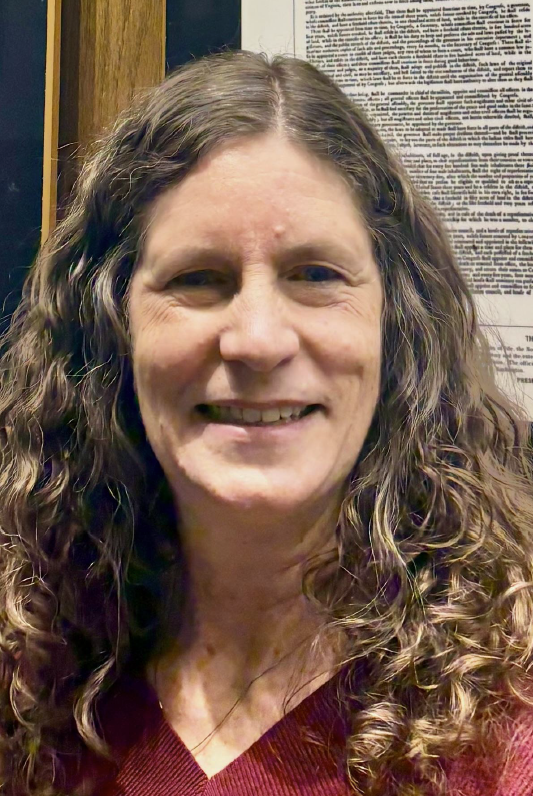
At Harborside Academy, teacher Connie Wheeler has helped bring the program into the classroom alongside KUSD District Coordinator of Secondary Mathematics and Science Jennifer Lawler and Harborside Principal Trent Barnhart. The three worked together to offer the course as part of the national pilot, which is also helping shape how the curriculum may eventually be used in schools across the country.

“Teaching this course is the highlight of my day,” Wheeler said. “Recently, my students analyzed a massive dataset tracking over 13,000 successful ascents of Mount Everest. They immediately began driving their own learning—formulating compelling questions and figuring out how to extract the exact data needed to answer them.”

Wheeler said the approach allows students to discover why mathematical concepts matter rather than simply being told to memorize them. By examining real-world information and developing their own questions, students become more engaged in the learning process and gain confidence in their mathematical abilities.

“Because they quickly realize that mastering specific mathematical concepts is the key to unlocking these real-world insights, the math flows naturally and purposefully,” Wheeler said. “It is incredibly rewarding to watch their confidence and enthusiasm for mathematics grow with every single class.”

The project-based curriculum is particularly well-suited for Harborside Academy, where teachers emphasize hands-on learning and in-depth educational experiences. Wheeler said she prefers meaningful problems over artificial classroom exercises that have little connection to situations students might actually encounter outside of school.

“At Harborside, we focus on deep learning expeditions and I dislike problems which are made up and have no relevance, so seeing my students tackling the same analytics used by modern scientists is exactly the kind of academic excellence we strive for,” Wheeler said.
Barnhart, a former mathematics teacher himself, said the program is giving students opportunities to work collaboratively and develop skills that extend well beyond the classroom. He said students are learning to question one another, check their understanding, and apply mathematical concepts to practical situations.
“As a former math teacher myself, I love that ISQR engages students in real world mathematical concepts,” Barnhart said. “When students are engaged in mathematical concepts that have them grappling with real world applications to make the math ‘come alive’, it is pretty impactful and powerful.”
Barnhart said the collaborative environment mirrors the types of situations students will encounter in their future careers. He believes that helping students understand how mathematics applies to everyday decisions makes the subject more meaningful and effective.
Unlike many traditional mathematics courses, which often provide students with all the information necessary to solve a particular problem, ISQR challenges students to determine what information they need in the first place. Students must then work with real datasets, which can contain incomplete or inconsistent information, to develop and defend their conclusions.
The program also emphasizes the ability to explain mathematical reasoning rather than simply arriving at the correct answer. Supporters say those skills are increasingly important as employers and colleges place greater emphasis on data analysis, technology, and evidence-based decision-making.
Amy Getz, a senior program associate in mathematics education and project director for ISQR at WestEd, said the participating districts have played an important role in developing the curriculum. Teachers, school staff, students, and families helped shape the program during a yearlong design process, and educators are now providing feedback as they use the materials in their classrooms.
“I can’t say enough about the leadership of the people who have participated in this work,” Getz said. “These incredibly busy people worked with us for a year to design an innovative course, and now the teachers are using the materials in their classrooms and giving feedback for improvements.”
Getz said the work being done by participating districts, including Kenosha Unified, could ultimately influence mathematics education far beyond the communities currently testing the program. The goal is to develop instructional materials that can be used by students across the United States.
Lawler said KUSD is continually looking for ways to make mathematics more engaging while ensuring students develop skills they will need after graduation. She praised Wheeler and Barnhart for their involvement and expressed enthusiasm about potentially expanding the program to additional district schools.
“We are always looking for new ways to engage students in mathematics that feels relevant and meaningful to them and also prepares them for what comes after high school,” Lawler said. “I am so grateful that we had the opportunity to participate in the ISQR pilot and appreciative of Ms. Wheeler and Mr. Barnhart for their involvement. I am excited to bring these materials to more students in KUSD schools in the future.”
The program has also attracted attention from leaders in higher education who believe traditional mathematics instruction needs to evolve alongside changes in technology and the workforce. Michael Dorff, past president of the Mathematical Association of America and chair of the Department of Mathematics at Brigham Young University, said students benefit when they can use mathematical reasoning and technology to investigate real-world applications.
Dorff said the continued growth of artificial intelligence and data science makes quantitative reasoning skills particularly valuable. He believes the ISQR approach can help students prepare for college-level mathematics and careers that increasingly require technological and analytical abilities.
For Kenosha Unified, participation in the pilot provides an opportunity not only to introduce a different approach to mathematics instruction but also to help develop a curriculum that could eventually reach students nationwide. District officials have expressed interest in bringing the materials to more KUSD schools in the future, although no specific expansion timetable was announced.
.
.
.
.
.
.