



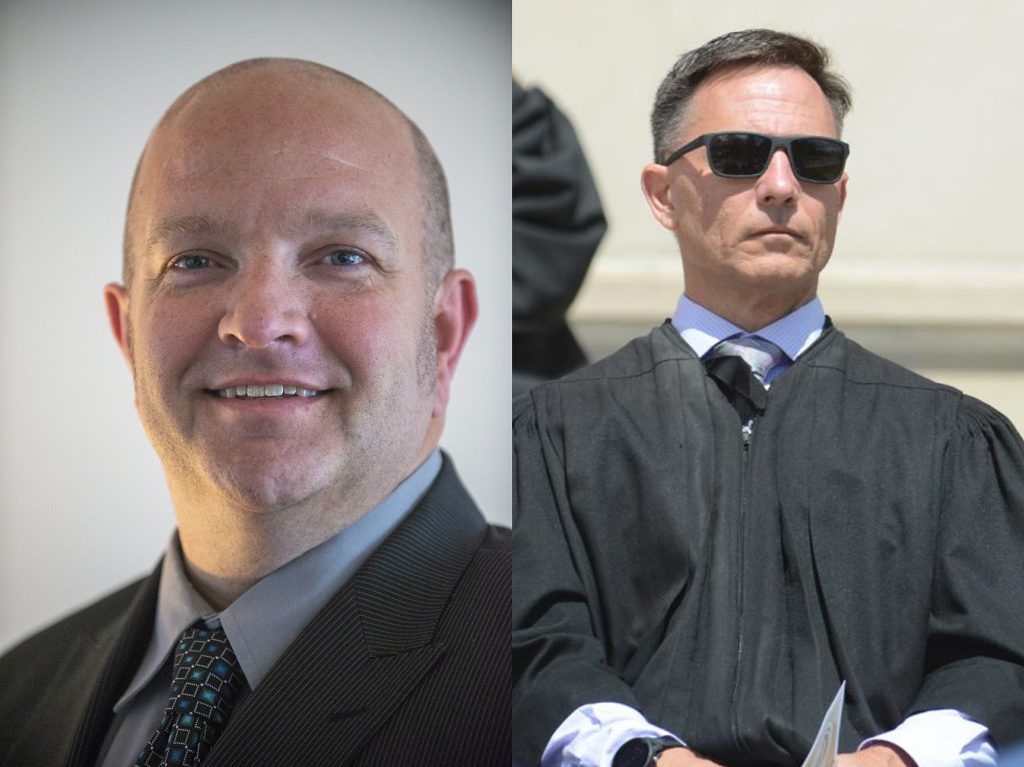
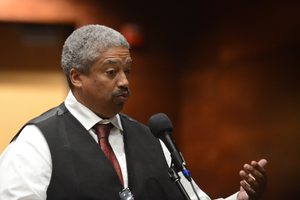
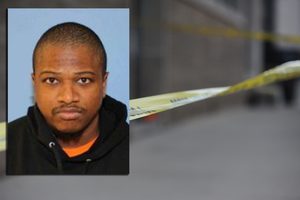
(Both Photos, by Kevin Mathewson, Kenosha County Eye)
MILWAUKEE, Wis. — When Kenosha County Eye founder and investigative journalist Kevin Mathewson filed a federal civil rights lawsuit against Kenosha County Circuit Court Judge Chad Kerkman in September 2025, he was representing himself, without an attorney, against government officials backed by at least four experienced attorneys. On Thursday, October 29, 2026, longtime U.S. District Judge J.P. Stadtmueller, appointed to the federal bench by President Ronald Reagan in 1987, handed Mathewson a significant legal victory, rejecting the defendants’ attempt to have his entire lawsuit dismissed and allowing his constitutional claims for declaratory and injunctive relief to move forward.
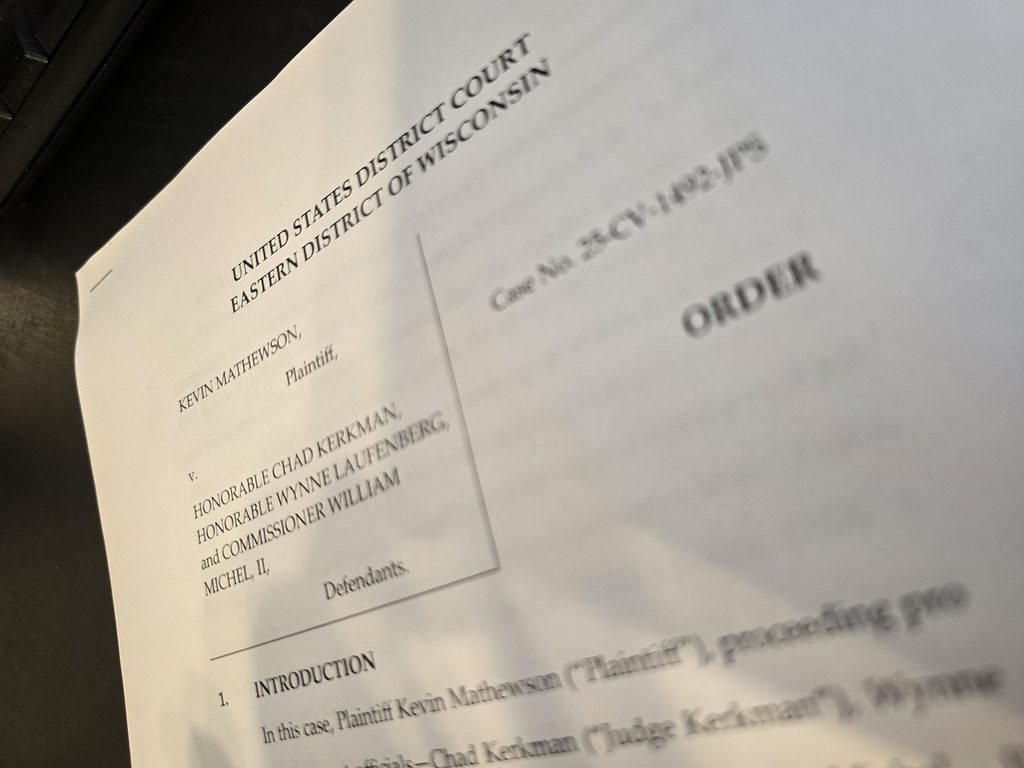
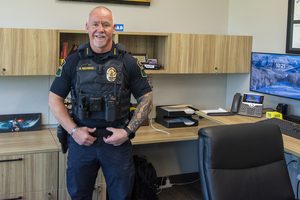
(Photo by Kevin Mathewson, Kenosha County Eye)
For Mathewson, the ruling represents something much bigger than a legal victory. It represents a fundamental American principle: nobody is above the law, not even a judge.
“I was three years old when President Ronald Reagan appointed Judge Stadtmueller to the federal bench,” Mathewson said. “Nearly four decades later, I found myself standing up to powerful government officials, representing myself against experienced attorneys, and asking that same judge to recognize that my constitutional rights matter just as much as those of the people wearing black robes. Today, he made it clear that my case deserves to be heard.”
The dispute began on September 2, 2025, when Kerkman, then serving as Deputy Chief Judge of Wisconsin’s Second Judicial District, a largely honorary administrative position, issued an extraordinary written directive specifically targeting Mathewson and Kenosha County Eye. The directive prohibited Mathewson from entering Kenosha County’s intake courtroom, banned him from bringing a camera into the courtroom, and ordered that all his media requests to photograph proceedings be denied. Despite Kerkman’s directive, other judges in the very same courthouse continued granting Mathewson media credentials and allowing him to photograph court proceedings without incident.
Mathewson believes the ban was retaliation for KCE’s aggressive reporting about Kerkman, including his courtroom outbursts, appellate reversals, allegations of sexual misconduct, and other matters that embarrassed the judge. The timing also raised serious questions for Mathewson because the ban was issued just eight days before Kerkman’s former bailiff, Tammy Rose, was scheduled to appear in intake court as a felony defendant.
For five years, Mathewson has regularly photographed court proceedings throughout Wisconsin, obtaining media credentials more than 100 times in Kenosha County’s intake court alone. According to his federal lawsuit, he has also been credentialed to photograph proceedings in Kenosha, Racine, Milwaukee, Walworth, and Brown County Circuit Courts, as well as Kenosha Municipal Court and Pleasant Prairie Municipal Court, among other Wisconsin courts.
Mathewson has also served as a pool photographer for nationally covered criminal trials, including the Mark Jensen retrial and the Zachariah Anderson murder trial. Despite his extensive courtroom experience and the continued approval of his media requests by other judges, Kerkman singled him out for exclusion from Kenosha County’s intake courtroom.
Rather than accept the ban, Mathewson drove to the federal courthouse in Milwaukee, paid the $401 filing fee, and filed a civil rights lawsuit under 42 U.S.C. § 1983. He did so without a law degree, without a law firm, and without the resources available to the government officials he was challenging.
“I drove to Milwaukee, paid $401 of my own money, and filed that lawsuit with a dream,” Mathewson said. “That dream was that a federal judge would recognize that I am equal to Chad Kerkman under the law. I’m a community college dropout. I don’t have a law degree, I don’t wear a black robe, and I don’t have taxpayers paying my legal bills. But I have the same constitutional rights he does, and today I feel like those rights were recognized.”
Kerkman also submitted complaints about Mathewson to multiple law enforcement agencies, seeking a criminal investigation into the journalist’s conduct. Mathewson characterizes the allegations as largely false and believes Kerkman was attempting to have him criminally prosecuted, potentially exposing him to imprisonment, in retaliation for his reporting.
The allegations included stalking, harassment, unlawful computer use, and defamation-related accusations stemming from Mathewson’s reporting and communications. After reviewing the referral, prosecutors declined to issue any criminal charges against Mathewson, citing First Amendment protections and the constitutionally protected nature of his news reporting.
Mathewson believes Kerkman’s efforts to have him criminally prosecuted were motivated by his investigative reporting and, in part, by his decision to challenge the judge in federal court. The initial law enforcement complaint preceded the federal lawsuit, but Mathewson believes the subsequent pursuit of criminal charges was also intended to punish him for filing it.
“I believe one of the reasons Chad Kerkman tried to have me charged with serious felonies and potentially sent to prison was because I had the audacity to file a federal civil rights lawsuit against him,” Mathewson said. “I believe he wanted to punish me for exercising my constitutional rights, both as a journalist and as an American citizen seeking justice in federal court. Fortunately, prosecutors reviewed his allegations and declined to charge me with anything.”
The defendants sought to dismiss the lawsuit with a team of at least four attorneys, arguing, among other things, that judicial immunity protected their actions. Mathewson fought back through written legal arguments, insisting that a judge cannot use his authority to silence a journalist simply because he dislikes the journalist’s reporting.
On Thursday, Judge Stadtmueller issued a 21-page ruling rejecting the defendants’ attempt to have the entire lawsuit dismissed. The federal judge allowed Mathewson’s constitutional claims to move forward, including his request for a declaration that the ongoing restrictions violate his constitutional rights and a court order prohibiting their continued enforcement.
The judge’s written decision also contained several observations about Mathewson and Kenosha County Eye that the journalist said left him humbled. One passage particularly stood out to the KCE founder.
“Plaintiff is a journalist in Kenosha County and runs a popular news site called Kenosha County Eye (‘KCE’),” Stadtmueller wrote.
The judge also recounted Mathewson’s history of obtaining media credentials to photograph court proceedings throughout Wisconsin and noted that Mathewson had never been sanctioned, removed, or disciplined by a presiding judicial officer for his courtroom media work.
“Reading those words from a federal judge was humbling,” Mathewson said. “I started Kenosha County Eye in 2020, and I’ve worked incredibly hard to expose wrongdoing, hold public officials accountable, and tell stories that others won’t tell. To see a federal judge describe KCE as a popular news site and acknowledge my years of professional courtroom coverage meant a great deal to me.”
Perhaps the most powerful moment in the decision came when Stadtmueller addressed Mathewson’s argument that the courtroom ban remains in effect and that the constitutional dispute is ongoing. In rejecting the defendants’ argument that the requested declaration concerned only past conduct, the federal judge wrote five words that Mathewson said he will not soon forget.
“The Court agrees with Plaintiff,” Stadtmueller wrote.
“Think about that for a moment,” Mathewson said. “I’m a journalist representing myself. I’m going up against at least four experienced government attorneys who have practiced law for decades, and I opened a federal court order today and read the words, ‘The Court agrees with Plaintiff.’ I can tell you that was almost unbelievable. I was genuinely humbled.”
The lawsuit also names Racine County Circuit Court Judge Wynne Laufenberg, who was Chief Judge of the Second Judicial District, and former Kenosha County Court Commissioner William Michel II, who enforced Kerkman’s directive by denying Mathewson’s media requests. Mathewson alleges that the three officials participated in an unconstitutional effort to restrict his access to public court proceedings while other news organizations were treated differently.
Mathewson’s lawsuit raises First Amendment claims involving freedom of the press and retaliation, along with Fourteenth Amendment equal protection claims and claims involving public access to judicial proceedings. The court has not yet determined whether the defendants violated the Constitution, but it has ruled that Mathewson may continue pursuing prospective relief against the restrictions.
Motions to dismiss are a major hurdle in federal civil litigation, and many lawsuits, including those filed by attorneys, are dismissed before they ever reach discovery or trial. In this case, however, Stadtmueller found that Mathewson’s well-pleaded allegations of ongoing constitutional violations were sufficient to allow his claims for prospective relief to move forward, rejecting the defendants’ arguments that the entire lawsuit should be dismissed.
“I know the odds are stacked against someone representing himself, especially when the other side has at least four experienced attorneys and substantial government resources,” Mathewson said. “But I believed in this case from the beginning. I believed that what happened to me was wrong, and I believed that the Constitution meant something. Today was a very good day.”
Mathewson said he intends to vigorously pursue the lawsuit, including seeking documents and testimony concerning the decision to ban him from intake court. He particularly looks forward to attempting to depose Kerkman under oath about the reasons behind the September 2 directive.
“I look forward to taking Judge Kerkman’s deposition and asking him to explain why he did this,” Mathewson said. “Why was I singled out? Why could other news organizations photograph court proceedings while I couldn’t? Why did this happen just days before his former bailiff was scheduled to appear as a felony defendant? Those are questions I intend to pursue through the legal process.”
Mathewson said he is fully prepared to take the federal civil rights lawsuit all the way through trial while continuing to represent himself. However, he said he would welcome assistance from an attorney, law school, or legal organization interested in protecting freedom of the press and challenging what he believes is an unconstitutional restriction on journalists.
“I am absolutely prepared to take this case all the way through trial representing myself,” Mathewson said. “But if there’s an attorney out there, or even a law school that wants to give me a hand, I would be extremely appreciative. I believe this is a very significant First Amendment issue that goes far beyond me or Kenosha County Eye. This is about whether a judge can punish a journalist for reporting news that the judge doesn’t like. I certainly won’t turn down help from someone who believes in this cause, but if nobody steps forward, I’m prepared to see this through on my own.”
The federal judge also issued a scheduling order Thursday, requiring an interim settlement report by April 1, 2027, and setting May 3, 2027, as the deadline for dispositive motions, including motions for summary judgment. The order makes clear that the case is continuing, with the court warning that extensions of deadlines will not be granted without good cause.
Despite the significance of the ruling, Mathewson said his ultimate goal remains relatively simple: to return to the intake courtroom and continue doing the same journalism he performed for years before the ban. He said he is not seeking special privileges, only the opportunity to cover public court proceedings on the same terms as other journalists.
“I don’t want special treatment,” Mathewson said. “I don’t want privileges that other journalists don’t have. I want to walk into that courtroom, take photographs of public court proceedings, and report the news. That’s what I was doing before Chad Kerkman decided I shouldn’t be allowed to do it anymore.”
Mathewson said he remains grateful for the court’s careful consideration of his arguments and looks forward to the next phase of litigation. He said the ruling has strengthened his determination to continue the case, regardless of whether he ultimately obtains legal assistance.
“I am extremely pleased with Judge Stadtmueller’s decision, and I intend to vigorously prosecute this case,” Mathewson said. “This was never about money. It was about the Constitution, freedom of the press, and the principle that no government official, regardless of title or position, is above the law. I stood up for what I believed was right, and today I got one step closer to getting back to work.”
For now, the September 2025 directive remains in place, and the federal court has not issued a final ruling on whether it violates Mathewson’s constitutional rights. But after Thursday’s decision, his effort to have the restrictions declared unconstitutional and permanently prohibited will continue in federal court.



One Response
Congratulations, Kevin, hopefully this continues to go your way 👏