



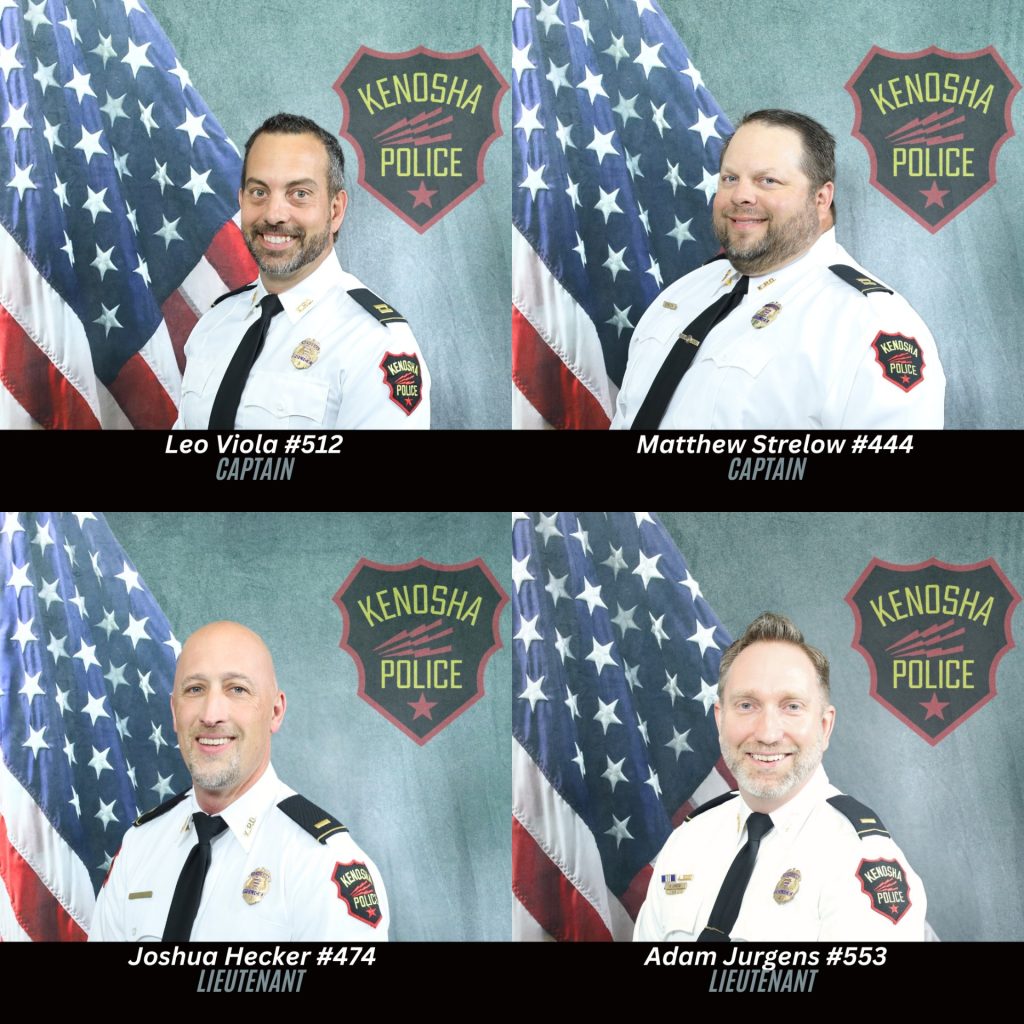
KENOSHA, Wis. — Four supervisors with the Kenosha Police Department have completed Northwestern University’s School of Police Staff and Command, a 22-week executive leadership program that focuses on organizational behavior, policy development, resource management and modern policing strategies.
Captains Leo Viola and Matthew Strelow, along with Lieutenants Joshua Hecker and Adam Jurgens, graduated from the nationally recognized course after months of intensive study, projects and peer review. Each said the program provided them with new tools for leadership and reaffirmed their commitment to serving Kenosha with professionalism, accountability and vision.
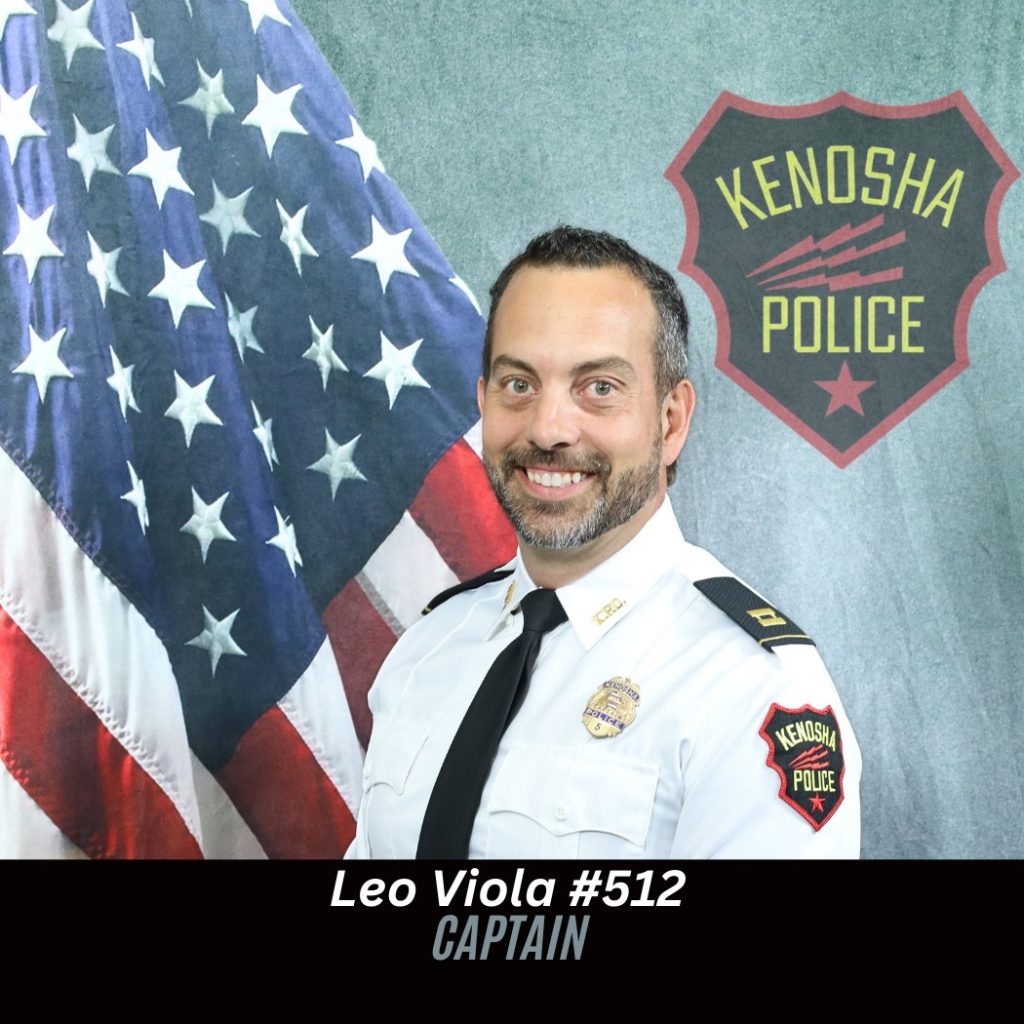
Captain Leo Viola
Viola, a Kenosha native, was hired on January 3, 2006, after deciding he wanted to give back to the community that raised him. He began on third-shift patrol before moving to the gang unit after four years. Over the years, he served as a detective, a patrol sergeant, and an administrative sergeant in the Office of Professional Standards. He also worked as a public information officer and later as a lieutenant on second shift before rising to captain.
He said he pursued the Northwestern program after hearing about it from Captain Dillhoff, another graduate. Viola said the training expanded his ability to think beyond immediate operational planning. “It is common for me to plan for special events or other things in the near term, but learning how to plan 5–10 years out and develop requests for proposal for larger initiatives was pretty foreign to me,” he said.
Viola called the experience humbling, given the caliber of professionals in the class, and said what excites him most now is building a cohesive, high-functioning team. “One that supports the community and surpasses their expectations of a professional police department,” he said.
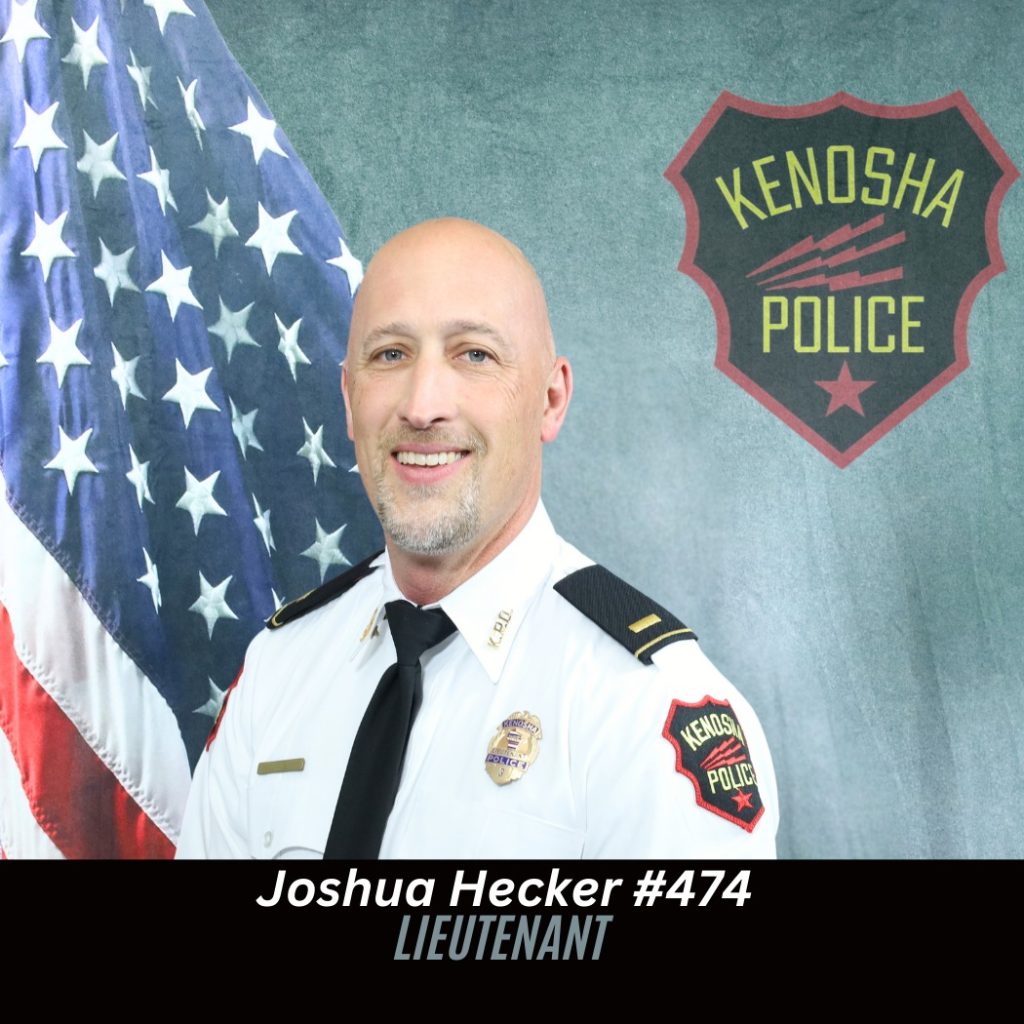
Lieutenant Joshua Hecker
Hecker joined KPD on September 3, 2002, inspired by a traumatic burglary at his family’s home when he was a child. The experience left him fascinated by the professionalism of responding officers and committed him to policing. He went on to attend Western Illinois University specifically for its respected criminal justice program.
At KPD, he worked patrol on multiple shifts, became a field training officer, and joined the tavern unit before moving to the Gang Crimes Unit in 2009. He was later promoted to detective in the general assignment division, specializing in death investigations and arsons. Promoted to sergeant in 2016, he supervised patrol on both first and third shift and later led the detective bureau. He was promoted to lieutenant in 2021, and now serves in the Office of Professional Standards.
Hecker said he is a firm believer in transformational leadership and sought the Northwestern course for its wide range of perspectives and national exposure. His most valuable takeaway was the staff study project, where he built a structured training manual for newly promoted sergeants. “The sergeant cadre is arguably the most critical supervisory role of any police department,” he said. He believes the program sharpened his ability to lead strategically, reflect on his own strengths and weaknesses, and reinforce a culture of accountability, innovation, and mentorship.
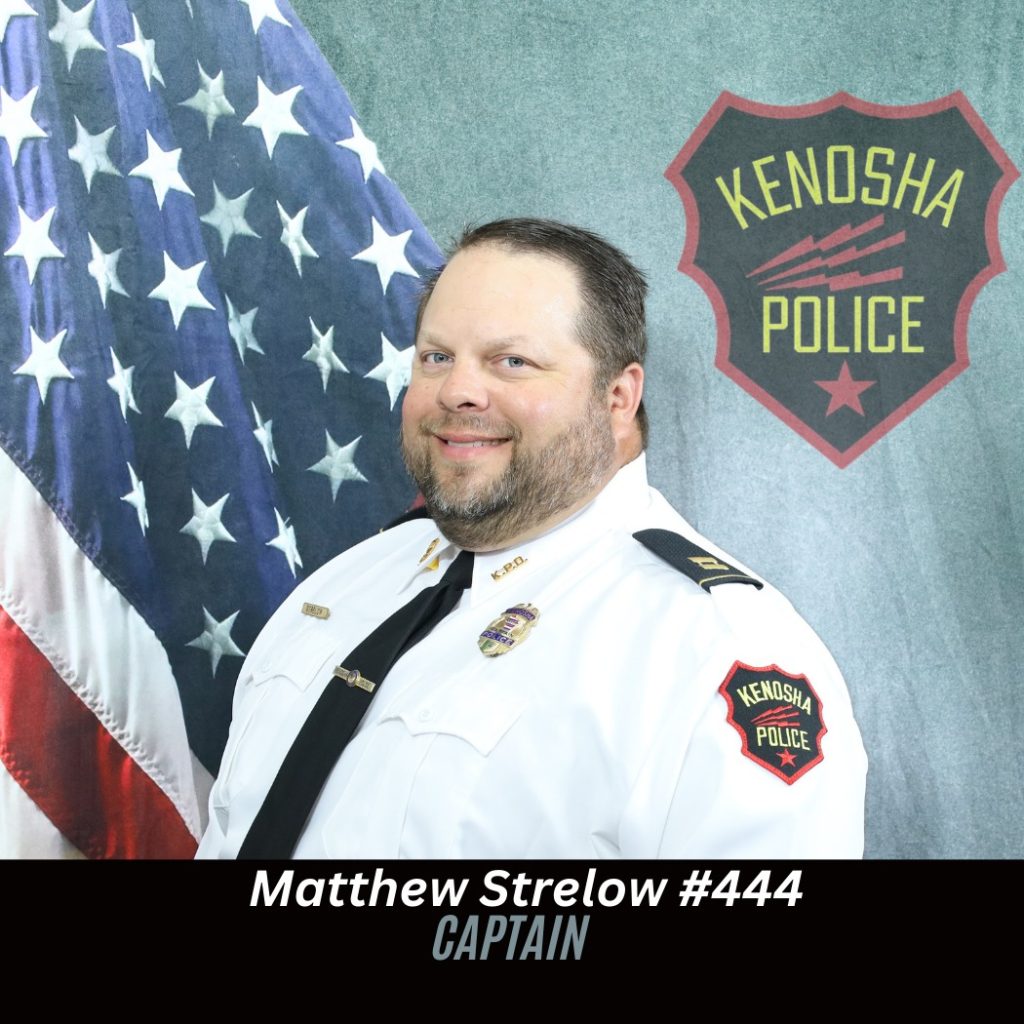
Captain Matthew Strelow
Strelow joined the Kenosha Police Department in April 2000 after deciding in college that he wanted a career working with people and outdoors while contributing to the community. He spent six years on third-shift patrol and two years in the gang unit before being promoted to detective. For more than seven years, he was assigned to the Street Crimes Unit and the Kenosha Drug Operations Group (KDOG), focusing heavily on narcotics enforcement and violent crime investigations.
As a sergeant, Strelow rotated through patrol, the detective bureau, and the Office of Professional Standards. He was later promoted to lieutenant and then to captain, where he now commands a shift and supervises daily operations. Strelow said he sought Northwestern’s program because of its national reputation, describing it as challenging and time-consuming but invaluable for broadening his operational perspective. He said the most valuable lesson was the importance of ongoing education, even after 25 years in policing.
The staff study project requirement particularly stood out to him. He said it showed how a thoroughly researched proposal can present decision-makers with objective analysis, viable alternatives, and actionable implementation plans. “The training developed my technical and interpersonal skills, both essential for managing people, making good decisions, and building trust within the community,” Strelow said.
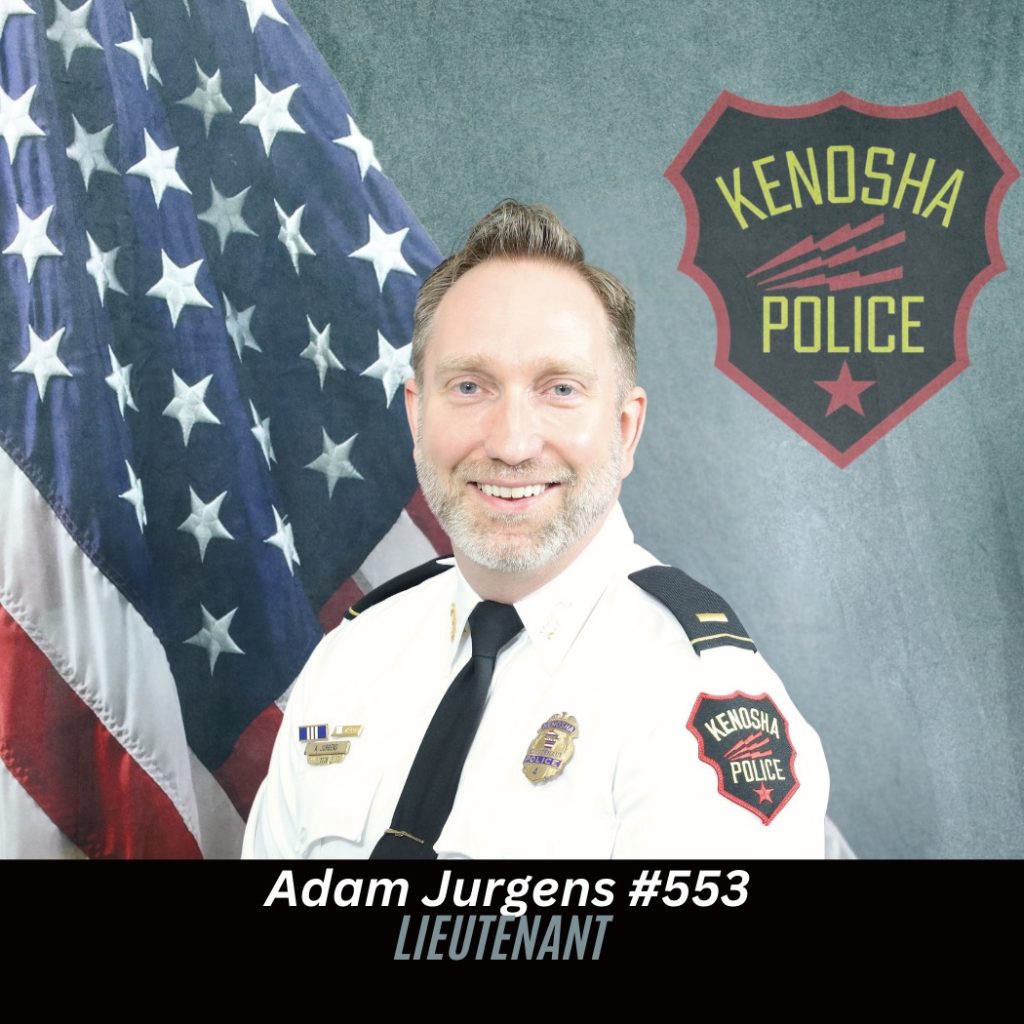
Lieutenant Adam Jurgens
Jurgens was hired on February 12, 2008. He said he was initially uncertain about a career path, but was drawn back to law enforcement for its stability, ability to make a difference, and unique challenges.
As a patrol officer, he served on all three shifts, worked seven years as a canine handler, and took on roles as a field training officer, evidence technician, and bicycle officer. Promoted to sergeant, he became supervisor of the Canine Unit and helped develop the second-shift mentoring program.
Jurgens called the Northwestern program one of the most demanding stretches of his career but said it gave him invaluable training in trust-building, decision-making, and proposal writing. He said grant writing lessons were particularly impactful—he has already applied them to secure funding for a new electronic storage-detection canine that will join the department in 2026. Jurgens said his long-term goal is to leave KPD in a stronger position than when he began, and that the Northwestern program gave him the tools to achieve that.
Looking Ahead
Department leaders said the four graduates are expected to apply what they learned to long-range planning, supervisory training, enhanced accountability, and better service delivery. All four emphasized that they intend to translate the program into stronger mentorship for younger officers and deeper trust with the Kenosha community.
Click here to read entire Q&A with all four graduates.
.
.
.
.
.





One Response
Lead, lead! I’m surprised Northwestern is in bed with the cops. This from Tal Schatsky of the Daily Northwestern in 2021: “After several months of continuous pressure on Northwestern administration to abolish University Police and divest from policing and other militarized entities, NUCNC is continuing their work into the new quarter.” But, I suppose if Northwestern can sell “leadership” in some form, they won’t be able to resist. “Leadership” is the new “strategy” in academia.