



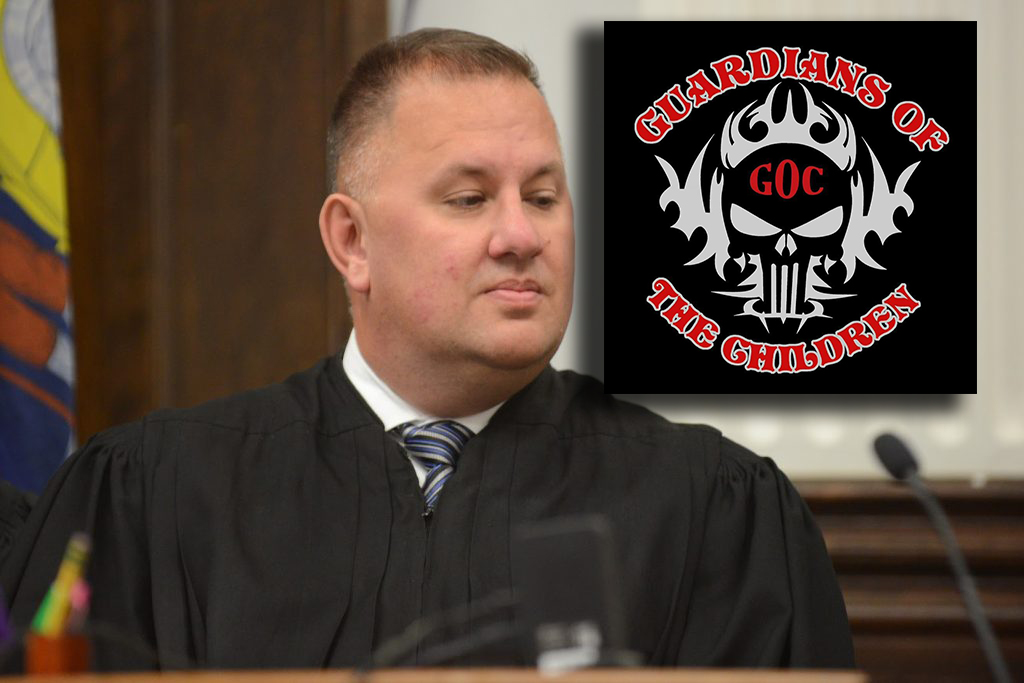
(File Photo by Kevin Mathewson, Kenosha County Eye)
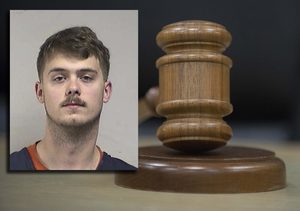
KENOSHA, Wis. — Guardians of the Children is a nonprofit motorcycle organization whose mission is to recognize and respond to child abuse, educate the public, provide strength and stability to families in crisis, and give abused children the courage, support and protection they desperately need. Founded in San Antonio, Texas, in 2006, the organization has spent 20 years helping vulnerable children confront some of the most frightening experiences of their lives, including testifying in court against their alleged abusers. On Wednesday morning, liberal Kenosha County Circuit Court Judge Jason Rossell (D) dealt a devastating blow to the beloved organization when he declared a mistrial in the prosecution of Micah Jonathan Dillon, 19, of Salem, who is accused of repeatedly sexually assaulting his 9-year-old nephew. Dillon faces four felony charges, including repeated sexual assault of a child and incest, and was ordered held on $50,000 cash bail. The judge’s decision means the child, his family, and numerous witnesses must prepare to go through the trial process all over again.

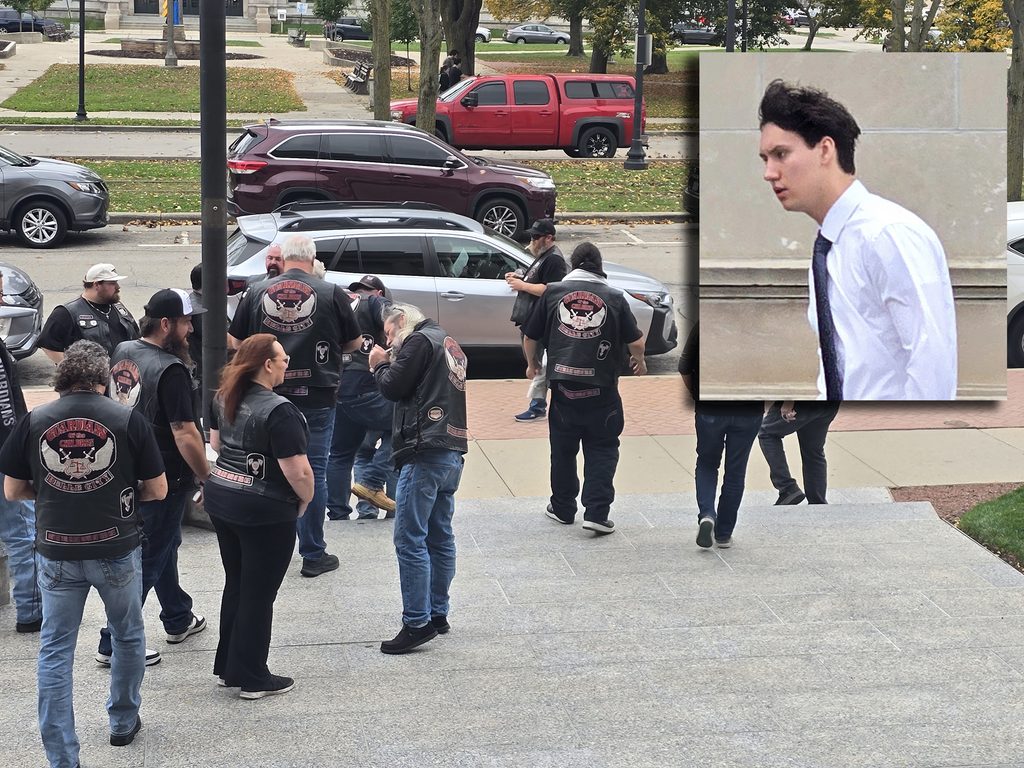
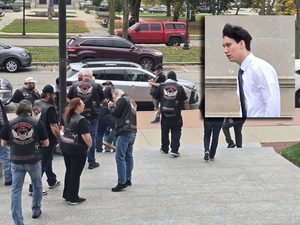
Guardians of the Children in Front of the Courthouse Yesterday
(Cell Phone Photos by Kevin Mathewson, Kenosha County Eye)
The mistrial came after approximately four or five Guardians of the Children members entered Rossell’s courtroom Tuesday afternoon at roughly the same time as the alleged victim and a victim-witness advocate. The child’s family had specifically requested the organization’s support, and its members were doing precisely what they have done for two decades: standing beside a child who was preparing to testify about allegations of horrific sexual abuse. Rossell acknowledged that the group had not been disruptive, had not behaved inappropriately while seated in the courtroom, and had appeared in previous trials without incident. Nevertheless, he concluded that their entrance could have improperly influenced the jury.

The underlying criminal allegations are disturbing. Prosecutors allege Dillon repeatedly sexually assaulted his young nephew between April and June 2024, when Dillon was 17 years old. The criminal complaint describes allegations of sexual touching, oral sexual assault, exposure to pornography, and Dillon allegedly telling the child that inappropriate sexual behavior between boys was normal and would prepare him for future relationships. The alleged abuse occurred on multiple occasions at a family residence in the Town of Paris.

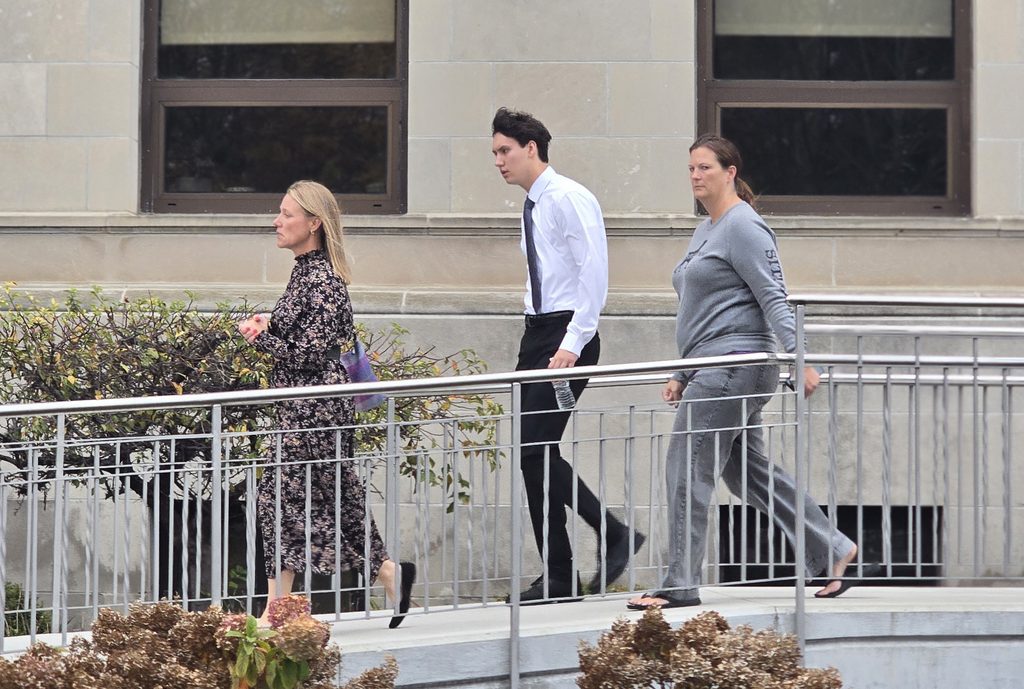
(Cell Phone Photos by Kevin Mathewson, Kenosha County Eye)
The most serious charge carries a maximum of 40 years of initial confinement. Kenosha County Eye was present for portions of the trial and reviewed the criminal allegations, including the recorded forensic interview in which the child described what he said happened to him.

But instead of allowing the jury to hear the remainder of the evidence, Rossell ended the trial over the manner in which the child’s supporters entered the courtroom.

The controversy began Tuesday afternoon when 12 of the 13 jurors, including an alternate, returned from lunch. One juror was still in the restroom, and the courtroom was waiting for that person to return. At approximately 1:35 p.m., the child entered the courtroom with a victim-witness advocate from the Kenosha County District Attorney’s Office. Several members of Guardians of the Children followed behind them.

Defense counsel remained standing. Rossell, who frequently uses animated facial expressions from the bench, looked toward the attorney with what appeared to be a “why are you still standing?” look on his face. Kenosha County Eye was present in the courtroom and recognized that the attorney was standing because he wanted to bring something to the judge’s attention.

Defense counsel requested a sidebar. After that conference, the attorney placed his concerns on the record, arguing that the Guardians of the Children members entering alongside the child could have improperly influenced the jury.

That sequence is important because it was defense counsel who stopped the proceedings and raised the issue. Yet during Wednesday morning’s hearing, Rossell delivered an extended explanation emphasizing his own observations of the entrance, repeatedly describing what he had noticed from the bench.
To those who witnessed both days of proceedings, the judge’s lengthy discussion Wednesday presented a striking contrast to the previous afternoon, when defense counsel had to request a sidebar to bring the matter before the court. Rossell appeared determined to establish that he had independently recognized the significance of the incident.
The judge then launched into a lengthy discussion about courtroom intimidation, uniforms, authority, and even the physical design of his courtroom.
Rossell explained that he sits in an elevated position because he represents the authority of the court. He described courtrooms as intentionally intimidating environments, designed in part to impress upon witnesses the seriousness of their obligation to tell the truth.
He then compared that institutional authority to the message conveyed by groups wearing matching clothing. Rossell suggested that leather motorcycle vests can communicate unity, strength, and authority, and that jurors might interpret Guardians of the Children’s entrance alongside the child as an endorsement of the child’s allegations.
The irony was difficult to miss. Rossell acknowledged that courtrooms themselves are designed to intimidate, while simultaneously treating the visible support of a child advocacy organization as a potential threat to a fair trial.
The judge repeatedly attempted to distinguish between the organization’s mission and the particular circumstances of Tuesday’s entrance. He acknowledged that Guardians of the Children provides valuable support to children and that its members had not been disruptive. He even recalled the organization attending approximately three previous jury trials before him and another case during his years as a prosecutor.
In all those years, Rossell did not identify a previous instance in which Guardians of the Children had caused a similar problem in his courtroom.
He also acknowledged that the group had no apparent improper purpose. Nevertheless, he ruled that its members’ entrance alongside the child created sufficient concern about possible jury influence to justify throwing out the trial.
For members of Guardians of the Children, the distinction offered little comfort. The group returned to court Wednesday wearing business or business-casual attire rather than the recognizable motorcycle vests they had worn Tuesday. Their mission had not changed, nor had their desire to support the child.
Assistant District Attorney Vincent Kurta argued against a mistrial, emphasizing that the organization had behaved respectfully throughout the proceedings. He maintained that the entrance appeared to be a misunderstanding of courtroom procedure rather than any intentional attempt to influence jurors.
Kenosha County Eye was present Tuesday and observed nothing suggesting that the District Attorney’s Office deliberately coordinated the entrance to intimidate or influence the jury. A courthouse insider familiar with the victim-witness advocate also defended her professionalism, saying she takes her responsibilities seriously and would not knowingly engage in improper conduct.
Perhaps the most significant development came when Kurta asked Rossell to question the jurors individually about whether they had actually been intimidated or influenced by what they witnessed.
Rossell refused.
Instead of asking the people whose impartiality was supposedly threatened, the judge relied on his own assessment of how the entrance might have appeared to them.
Kenosha County Eye subsequently spoke with one of the jurors, who strongly disputed the suggestion that Guardians of the Children had intimidated the panel. The juror described the notion as completely unfounded and said that, to the juror’s knowledge, none of the other jurors had been intimidated either.
That juror’s account raises an obvious question: Why declare a mistrial over possible jury intimidation without first determining whether the jurors themselves experienced any?
Rossell explained that he did not believe individual questioning would change his decision. He also expressed concerns about conducting such questioning outside public proceedings.
But the result is that a child sexual assault trial has now been terminated over potential jury influence without the court establishing through individual juror questioning that anyone was actually influenced.
The consequences have been devastating for the child’s family.
Kenosha County Eye spoke with family members who described their anger and frustration with Rossell’s ruling. Several relatives traveled approximately five hours to attend the trial, including family members who came from Indiana. They arranged transportation, took time away from their normal responsibilities, and prepared themselves emotionally to hear testimony about allegations involving a young child they love.
Now they must do it all over again.
Family members told KCE they specifically wanted Guardians of the Children present to support the child. The organization was not there to disrupt the proceedings or interfere with the judicial process. Its members were there because the child’s family had asked them to be there.
The family believes the group has every right to attend public court proceedings and provide emotional support to children who must testify about alleged sexual abuse. They expressed outrage that the organization’s presence has now become the reason the trial was terminated.
The frustration extends beyond the child’s relatives. Witnesses had traveled significant distances and made arrangements to testify, only to have the proceedings abruptly halted. The jury had already been selected, evidence had been admitted, and the prosecution had begun presenting its case.
Rossell acknowledged that only one live witness and a recorded forensic interview had been presented before the mistrial. He said the relatively early stage of the trial influenced his decision because the child had not yet testified.
The judge reasoned that allowing the trial to continue could create a risk that a future conviction might be overturned on appeal, forcing the child to testify again years later. But his ruling also guarantees that the family must endure another trial process now, rather than allowing the existing jury to finish hearing the case.
The controversy is particularly significant because Wisconsin appellate judges have already considered a remarkably similar situation involving Guardians of the Children.
In the December 2021 case State v. Stryker, a defendant convicted of first-degree sexual assault of a child challenged the presence of Guardians of the Children members during his trial. The organization’s members had worn leather vests displaying its insignia, and some had accompanied the child through a courthouse cafeteria where jurors may have observed them.
The defense requested a mistrial, arguing that the group’s presence and conduct created an improper influence on jurors. The trial judge denied the request, and the Wisconsin Court of Appeals upheld that decision.
The appellate court determined that the available record did not establish an unacceptable risk of improper influence. It also discussed the possibility of less drastic alternatives to a mistrial, including an appropriate jury instruction.
The Stryker decision was unpublished and cannot generally be cited as binding precedent under Wisconsin law. Nevertheless, it provides a striking comparison: another Wisconsin child sexual assault trial, the same advocacy organization, similar leather vests, concerns about the group accompanying a child in view of jurors, and an appellate court ultimately affirming the decision to allow the trial to stand. Justia Law+1
Rossell’s decision presents a different outcome. He concluded that the entrance into the courtroom itself, in front of seated jurors, was sufficiently concerning to justify a mistrial. Unlike the earlier case, the child entered the actual courtroom accompanied by supporters rather than being observed in a public cafeteria.
Still, the broader question remains: If Guardians of the Children has spent two decades accompanying children to court, and Wisconsin appellate judges have previously rejected a mistrial challenge involving the organization’s visible support of a child, what does Rossell’s decision mean for its future work?
The organization is not some newly formed protest group. It is an established nonprofit whose members volunteer their time to help abused children and their families. Its Belle City Chapter describes its members as ordinary people, including parents, grandparents, aunts and uncles, united by a commitment to protecting children.
The organization’s stated mission specifically includes attending court when needed to help children feel less frightened while testifying. That is precisely why the child’s family wanted its members present in Rossell’s courtroom. Belle City GOC
The ruling does not formally prohibit Guardians of the Children from attending future trials, but it raises concerns about whether the organization’s customary efforts to reassure children could expose future proceedings to similar mistrial motions.
Courthouse insiders and others who spoke with Kenosha County Eye expressed concern about the implications of the decision. Rather than addressing any actual disruption or proven juror intimidation, Rossell terminated the trial because of how he believed the group’s entrance could have been perceived.
Several attorneys have also told Kenosha County Eye that Rossell has a reputation for believing he is the smartest person in the courtroom. Those attorneys have criticized what they perceive as his tendency to lecture lawyers and dominate proceedings, an impression unlikely to be diminished by Wednesday’s lengthy explanation of courtroom authority and intimidation.
But a black robe does not automatically make someone the smartest attorney in the room. In Wisconsin, circuit court judges obtain their positions through elections, and their decisions remain subject to the law and appellate review.
Defense counsel, meanwhile, told the court that he and his law partner had prepared public records requests seeking courthouse surveillance footage and information from the District Attorney’s Office and victim-witness services. The defense wants to investigate whether the entrance was coordinated and preserve its ability to raise additional arguments.
Rossell granted the mistrial before those records were obtained. He made no finding that the District Attorney’s Office or Guardians of the Children deliberately attempted to influence jurors.
The judge’s ruling ultimately granted the relief requested by a defendant facing extraordinarily serious child sexual assault allegations, while leaving the child’s family and supporters furious about the interruption of the prosecution.
The court discussed a new jury trial beginning March 8, 2027, approximately four months away. That means more waiting for the child, more uncertainty for his family, and more disruption for witnesses who had already prepared to participate in this week’s proceedings.
For Guardians of the Children, the implications may reach well beyond Kenosha County. An organization that has spent 20 years helping abused children find the courage to face their alleged abusers has now found itself at the center of a mistrial, despite the judge’s acknowledgment that its members were respectful and had no apparent improper purpose.
The child’s family wanted those Guardians there. They were answering that call.
Now, because of the manner in which they entered a public courtroom, a jury has been dismissed, a child must prepare for another trial, and an organization dedicated to protecting children is left facing questions about whether its very presence could jeopardize future prosecutions.
Guardians of the Children’s motto is simple: “Don’t Let Your Silence Drown Out Their Cries.”
On Wednesday, the courtroom fell silent as Rossell declared a mistrial. The child and his family are the ones left waiting for justice.







6 Responses
All because some bikers walked into a courtroom… What a shame
Groups wearing similar clothing. What kind of “group”? Clergy. other various organizations, Boy scouts?
Groups wearing similar clothing. What kind of “group”? Clergy. other various organizations, Boy scouts!
Is the courtroom not open to the public…..? What a fucking joke!!! Does he have a soft spot for this pedofile….
this stupid judge should be locked up for a minor case of child abuse, making the family/child go through this again? everyone wanted them there, they weren’t disruptive, they were respectful— what is the problem? maybe we need to call the judge and complain.
That bitch in the gray is more intimidating