



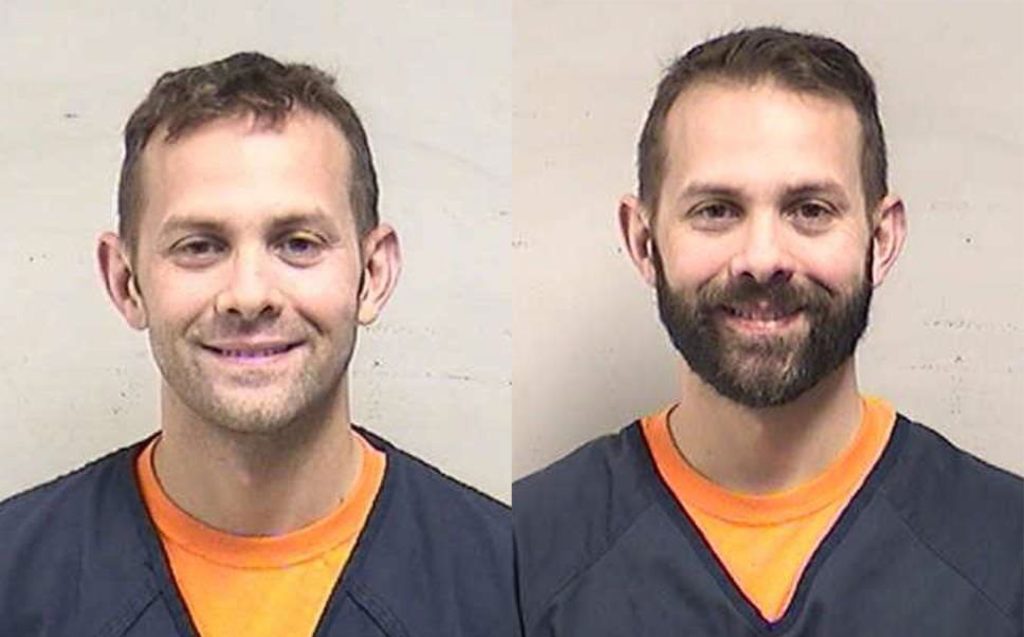
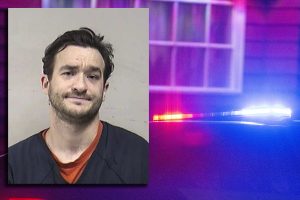
(Kenosha County Sheriff’s Office)
KENOSHA, Wis. — A years-long saga involving allegations of stalking, repeated violations of a harassment injunction, intimate photographs or recordings, and a mountain of largely unsuccessful AI-assisted litigation ended with a small fine Thursday after Kenosha County Circuit Court Judge Jodi Meier accepted a plea from Mathiew R. Fox.

Fox, 38, of Kenosha, pleaded guilty August 20 to an amended charge of disorderly conduct. Meier imposed a $500 fine plus court costs. Fox was also ordered to provide a DNA sample and pay the required surcharge. He received no jail and no probation.

Fox also stipulated to paying $4,250 in restitution to his former girlfriend, who was present in court and delivered a victim-impact statement. According to court records, the restitution will be paid from Fox’s bond already on deposit.

It was a dramatic reduction from the case prosecutors originally brought against Fox.

Fox had been charged with felony stalking, three separate counts of knowingly violating a harassment injunction and criminal defamation. The stalking charge alone was a Class I felony carrying up to 3½ years behind bars and a $10,000 fine.

Under the deal accepted by Meier, prosecutors amended the stalking charge to disorderly conduct. The other four charges were dismissed and read in. Fox was therefore not convicted of those charges, although Meier was permitted to consider the underlying conduct when sentencing him.

Woman Told Police She Feared Fox Could Kill Her
The criminal prosecution capped years of conflict between Fox and a former girlfriend.

According to the criminal complaint, the two began dating in 2021, lived together for about five months and broke up in January 2022. A harassment injunction was subsequently imposed.
Prosecutors alleged Fox later posted YouTube videos discussing the restraining order that included the woman’s photograph, information about where she worked, recordings of her and portions of court proceedings. Police reviewed three videos that allegedly displayed her likeness and work address without her consent.
The allegations continued into 2025.
Police said Fox contacted both of the woman’s employers regarding issues involving his children. The woman told police both employers had previously informed Fox that she did not, had not and would not have access to his children’s files because of the conflict of interest.
She told police she believed Fox was attempting to harass and intimidate her through her workplace.
According to the complaint, an officer observed that the woman was visibly upset. She described the situation as an ongoing battle lasting three years and told police she believed Fox could go so far as to take her life. She said she was severely fearful for her safety.
Fox was subsequently accused of additional contacts with the woman’s employer, including emails sent in August and September 2025.
Despite those allegations, the felony stalking prosecution ultimately ended with a disorderly conduct conviction and a fine.
Fox Had Already Received A Significant Break From Prosecutors
This wasn’t the first time Fox received a favorable resolution from the Kenosha County District Attorney’s Office involving serious allegations.
In 2023, then-Kenosha County prosecutor Carli McNeill, who later unsuccessfully ran for district attorney against current DA Xavier Solis, entered into a plea agreement with Fox resolving a separate matter.
As part of that agreement, prosecutors promised not to issue charges under three provisions of Wisconsin’s law governing intimate representations arising from a photograph and/or recording investigated by the Kenosha Police Department.
Those weren’t insignificant potential charges.
Wis. Stat. § 942.09(2)(am)1 prohibits capturing an intimate representation of another person without consent when that person has a reasonable expectation of privacy. Under the statute applicable at the time, the offense was a Class I felony. Section 942.09(2)(am)3 addressed possessing, distributing or exhibiting an intimate representation that had been unlawfully captured, also a Class I felony. Wisconsin law defines an “intimate representation” to include depictions of nudity or partial nudity and certain depictions involving sexual conduct or intimate body parts.
The third provision listed in Fox’s plea agreement, § 942.09(3m)(a), covered publishing private intimate representations without the depicted person’s consent.
Fox was not convicted of those offenses. Instead, prosecutors agreed not to charge them.
But that prosecutorial break came with explicit conditions.
The agreement required Fox to fully comply with the restraining order, commit no further violations of the identified intimate-representation statutes, and refrain from threatening or communicating that he would share, disseminate, exhibit, post or publish an intimate representation without the depicted person’s consent. The agreement expressly provided that if Fox violated any of those conditions, prosecutors would no longer be bound by their promise and could issue charges arising from the earlier police investigation.
Despite that condition requiring compliance with the restraining order, Fox was later charged in the current criminal case with three separate counts of violating a harassment injunction, along with felony stalking and defamation.
Years Of AI-Assisted Litigation
Meanwhile, Fox’s disputes spread far beyond the criminal courtroom.
Fox has acknowledged in open court that he relies on artificial intelligence to assist with his extensive litigation. Court records documented in previous Kenosha County Eye reporting show litigation spanning Kenosha County Circuit Court, the Wisconsin Court of Appeals, the Wisconsin Supreme Court and federal court. The cases have grown out of his divorce, child-custody proceedings, contempt proceedings, harassment injunctions and related disputes.
KCE previously documented repeated injunctions involving multiple women, civil litigation, appeals and an extraordinary volume of AI-assisted court filings. Fox has accused judges, guardians ad litem, prosecutors, law enforcement and others of wrongdoing or conspiring against him.
Earlier this summer, two federal civil-rights lawsuits filed by Fox were dismissed by U.S. District Judge Brett H. Ludwig.
Those lawsuits targeted people and entities connected to Fox’s state-court disputes, including Kenosha County Circuit Court Judge Heather Iverson, Court Commissioner Alexandra Smathers, an attorney, private individuals and local mental-health providers.
Ludwig didn’t simply throw the lawsuits out.
The federal judge wrote that Fox had “shown a pattern of filing cases attacking the defendants in an attempt to intimidate or retaliate against them.” Ludwig also pointed to Fox’s then-pending felony stalking prosecution and said the circumstances suggested Fox “may be trying to use this Court’s authority to exact revenge against parties and individuals involved in cases he has previously lost.”
Ludwig ordered Fox to explain why he should not be sanctioned under Rule 11 of the Federal Rules of Civil Procedure.
Fox’s litigation has also reached the Wisconsin Supreme Court, while his ongoing family-court battle has included extraordinary requests concerning his own parental rights.
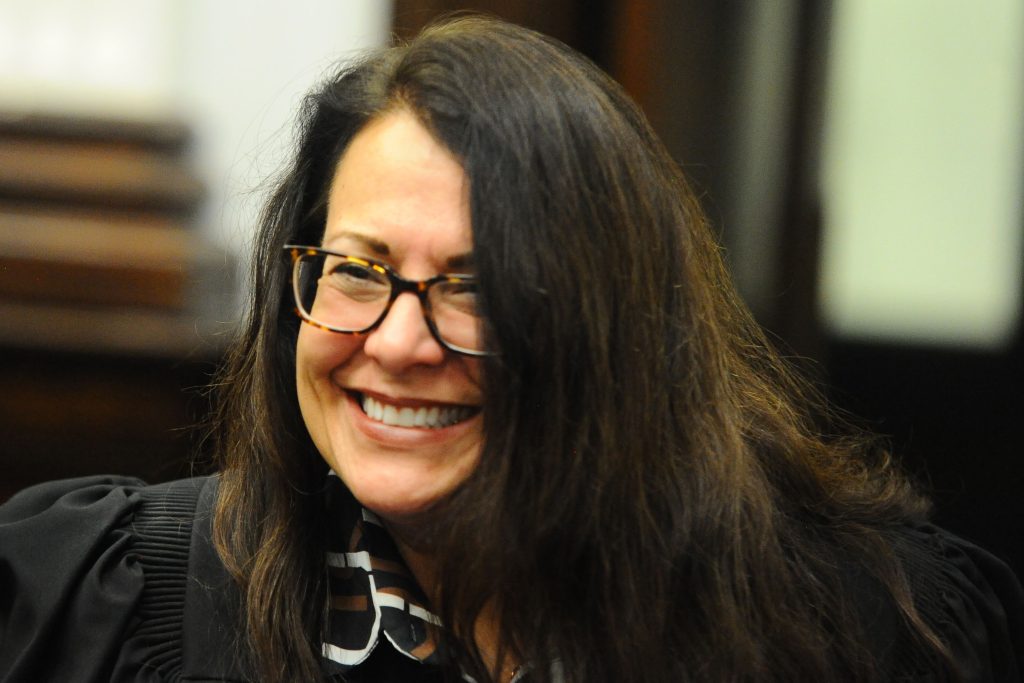
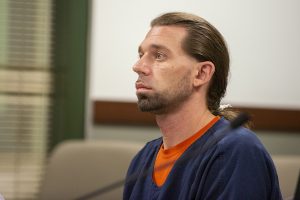
(File Photo by Kevin Mathewson, Kenosha County Eye)
Years Of Allegations End With A Fine
The contrast between the case prosecutors originally brought and its ultimate resolution is striking.
Fox was accused of felony stalking. He was accused of violating a harassment injunction three separate times. He was accused of criminal defamation. His former girlfriend told police she was severely fearful for her safety and believed he could eventually take her life.
Years earlier, prosecutors had already agreed not to bring potential charges involving intimate representations, with that agreement expressly conditioned on Fox complying with a restraining order.
While the criminal case was pending, a federal judge separately raised concerns that Fox’s relentless litigation itself may have been intended to intimidate or retaliate against people involved in cases he had lost.
Yet when Fox stood before liberal Kenosha County Circuit Court Judge Jodi Meier on Thursday, the felony stalking charge was gone.
So were the three harassment-injunction charges and the defamation charge.
Fox walked out convicted only of disorderly conduct, owing $4,250 in restitution and a $500 fine plus costs.
No jail. No probation.
After years of allegations, restraining orders, criminal complaints and litigation, that was Meier’s sentence.












2 Responses
How hot Matthew! Go back to work at HuHot you loser, oh wait you can’t because you got fired lol
Wait, are these two lovers?