


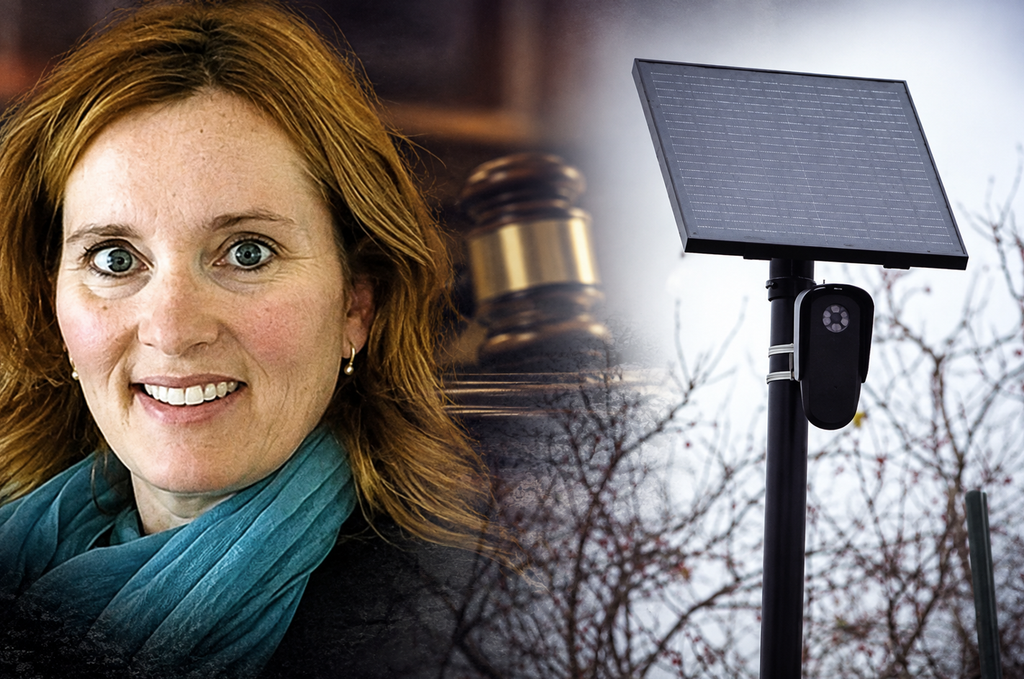
(Flock Camera Photo by Kevin Mathewson, Kenosha County Eye)
RACINE, Wis. — At a time when Wisconsin law enforcement officers are facing increasing scrutiny for abusing powerful surveillance tools such as Flock license plate readers, a Republican-appointed judge has declined to pursue criminal proceedings against a Racine County sheriff’s deputy despite expressly finding that he exceeded his authority when using law enforcement technology. In a final order issued Thursday, October 8, Walworth County Circuit Court Judge Kristine E. Drettwan rejected a John Doe petition filed by Kenosha County Eye seeking accountability for Deputy Emil J. Ortiz, 37, of Somers, who allegedly conducted 19 unauthorized Flock searches targeting his girlfriend’s ex-boyfriend. Drettwan also refused to appoint a special prosecutor, leaving Ortiz without criminal charges despite a documented pattern of unauthorized database activity.



The decision follows Racine County District Attorney Patricia Hanson’s earlier refusal to prosecute Ortiz and the Racine County Sheriff’s Office’s decision to handle the matter administratively rather than refer it for criminal prosecution. Sheriff Christopher Schmaling’s administration disciplined Ortiz, but did not initiate a criminal referral, despite evidence that the deputy repeatedly accessed restricted law enforcement databases for purposes unrelated to an authorized Sheriff’s Office investigation. The case raises questions about whether police officers who misuse surveillance technology face the same criminal accountability as ordinary citizens who unlawfully access confidential information.

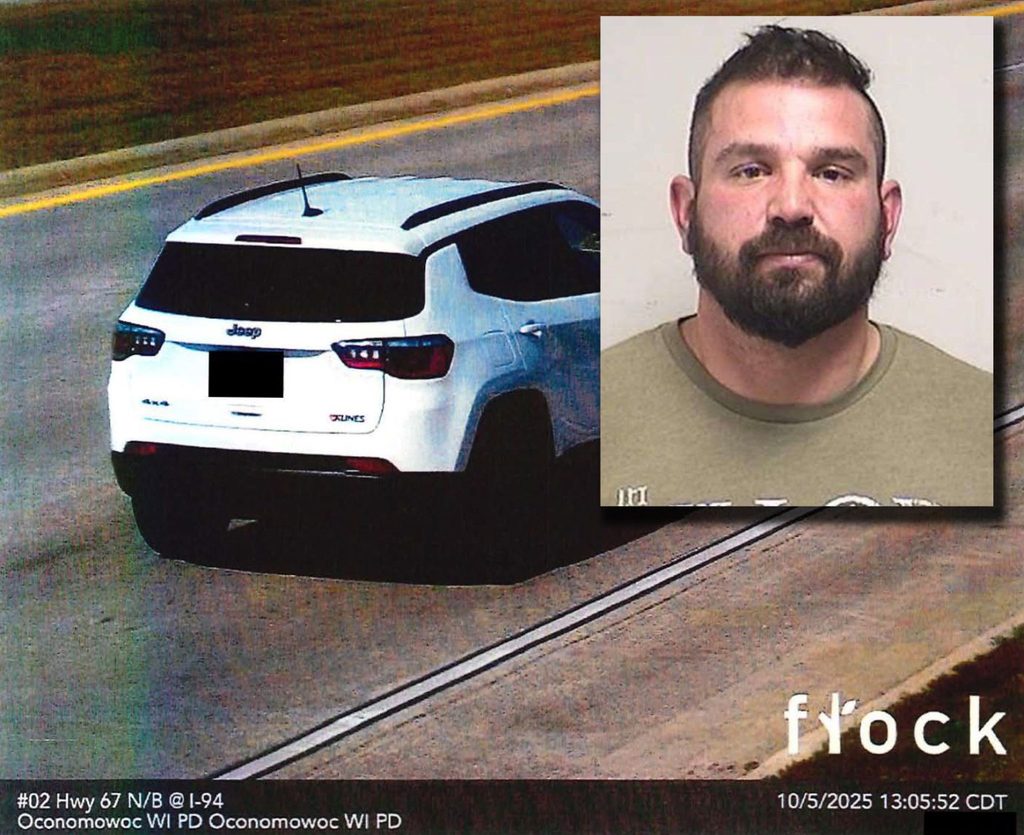
FLOCK Image Illegally Obtained by Ortiz
Judge Admits Deputy Exceeded His Authority, But Declines Criminal Proceedings
In her October 8 order, Drettwan acknowledged that Ortiz’s actions were unauthorized, a significant finding after months of legal proceedings initiated by Kenosha County Eye. The judge reached that conclusion after reviewing investigative materials submitted by two law enforcement agencies, which she had ordered produced in July after learning that the district attorney had not received the investigative records.

“The Court finds sufficient evidence that the officer’s use of law enforcement technology/resources did exceed his authority, as it was not sanctioned by his department for use in an official investigation for his department,” Drettwan wrote. Despite that conclusion, she declined to convene a John Doe proceeding, reasoning that Ortiz had taken the information to another law enforcement agency rather than acting upon it himself. She also found insufficient proof that Ortiz knew his conduct exceeded his authority or was prohibited by law, an element necessary to establish the felony misconduct-in-office offenses identified in the petition.

The ruling means that even though the judge concluded Ortiz exceeded his authority, she determined that the evidence did not establish the required criminal intent. For critics of police surveillance abuses, that distinction raises an important accountability question: How can an officer trained and authorized to access restricted law enforcement databases repeatedly use those systems outside an official investigation, yet avoid criminal prosecution because there is insufficient proof he knew the conduct was unauthorized?

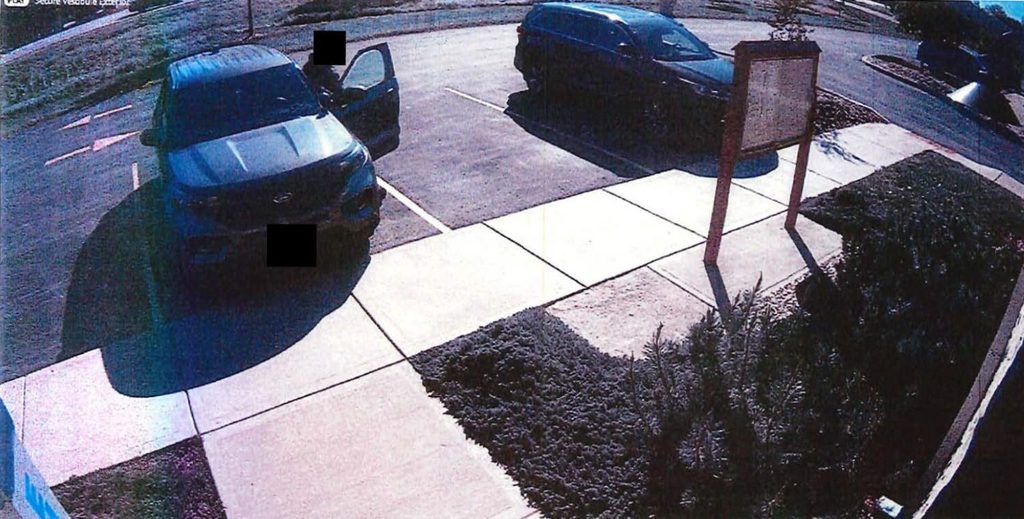
At Summit Police Department
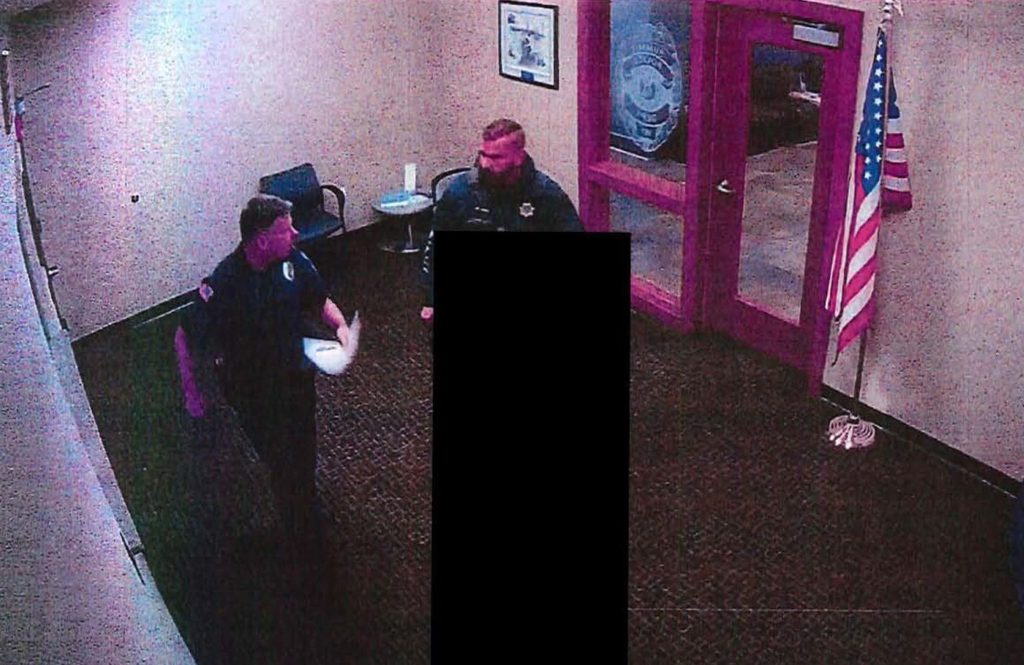
At Summit Police Department
Nineteen Flock Searches, Multiple Databases And A Personal Relationship
According to the sworn declaration filed by Kenosha County Eye on March 17, Ortiz conducted 19 separate searches in the Flock automated license plate reader system between August 10 and October 9, 2025. The searches targeted the vehicle of his girlfriend’s former boyfriend, despite the Racine County Sheriff’s Office having no open investigation involving the man. Ortiz allegedly entered “Investigation” or “Invest.” as the reason for every search, even though the activity was not connected to an authorized departmental investigation.

The searches were not limited to Flock. The petition alleged that Ortiz also accessed Wisconsin’s restricted TIME/eTIME law enforcement system, including information from NCIC, DOT, DOC, CIB and CCH databases, as well as the CLEAR investigative intelligence platform. Records cited in the petition showed that Ortiz searched the man’s vehicle registration five times on October 9 alone, adding to the evidence of repeated access to confidential government resources over approximately two months.

On October 9, Ortiz accompanied his girlfriend to the Village of Summit Police Department, where he provided Flock photographs and other investigative information. The Summit police chief subsequently contacted Racine County Sheriff’s Office supervisors because of concerns that an officer had used law enforcement resources in connection with a personal matter. That contact prompted scrutiny of Ortiz’s database activity and ultimately led to an internal investigation.

The Sheriff’s Office disciplined Ortiz by demoting him from detective to deputy, suspending him for 10 days without pay and reassigning him to patrol. Ortiz acknowledged the misconduct and waived his right to a disciplinary hearing. Nevertheless, Schmaling’s administration handled the matter internally rather than referring the allegations for possible criminal prosecution, a decision that eventually prompted Kenosha County Eye to seek judicial intervention.
District Attorney Refuses Prosecution, Sheriff Doesn’t Refer Case For Criminal Charges
Kenosha County Eye filed its John Doe petition on March 17, asking the court to investigate whether Ortiz committed felony misconduct in public office under Wisconsin Statutes § 946.12(2) or (3). The petition also requested the appointment of a special prosecutor, arguing that an independent review was warranted because of the Sheriff’s Office’s decision to resolve the matter administratively and concerns about whether the Racine County District Attorney’s Office would objectively pursue charges against a local law enforcement officer.
On June 1, Racine County District Attorney Patricia Hanson informed the court that she would not issue criminal charges against Ortiz. Hanson also acknowledged that the Sheriff’s Office had not referred the matter to her office and that she possessed no investigative materials beyond those provided by Kenosha County Eye. That meant the district attorney’s decision came without the full internal investigative file that the Sheriff’s Office had compiled concerning Ortiz’s conduct.
KCE renewed its request for a special prosecutor, but Drettwan denied that request in July, finding that the statutory criteria had not been met. She did, however, order the two involved law enforcement agencies to provide their investigative records within 20 days, after which she reviewed the materials privately. Her October 8 final order confirms that both agencies complied and that she reviewed the entire file before deciding not to convene further proceedings.
The result is that three separate levels of the criminal justice system declined to pursue a criminal case against Ortiz. Schmaling’s administration did not refer the matter for criminal prosecution, Hanson declined to issue charges, and Drettwan declined to convene a John Doe proceeding despite finding sufficient evidence that Ortiz had exceeded his authority. Although each official made a different decision under a different legal standard, the combined outcome is that Ortiz faces no criminal charges arising from the conduct described in the petition.
Kenosha DA Xavier Solis Took A Different Approach With Another Deputy
The Racine County outcome stands in sharp contrast to the handling of another law enforcement surveillance-abuse investigation involving former Kenosha County Sheriff’s Deputy Frank D. McGrath. McGrath was accused of using Flock license plate readers and the Polaris squad-tracking system to monitor a female deputy with whom he previously had a romantic relationship. Investigators documented approximately 16 to 17 Flock searches over a four-hour period and 40 unauthorized Polaris accesses while McGrath was off duty.
Kenosha County Eye also filed a John Doe petition in that matter after questioning the Sheriff’s Office’s handling of the allegations. Chief Judge Wynne Laufenberg ordered Kenosha County District Attorney Xavier Solis to review the evidence and either file criminal charges or explain why charges were not warranted. Unlike Hanson, Solis ultimately filed two felony counts of misconduct in public office against McGrath on August 19, 2026, exposing the former deputy to a potential seven years in prison if convicted of both counts.
Both investigations involved allegations that sworn law enforcement officers used government surveillance systems for personal purposes involving individuals with connections to their romantic relationships. Both involved evidence of repeated unauthorized searches, and both ultimately became the subjects of John Doe petitions filed by Kenosha County Eye. Yet one resulted in felony charges, while the other ended with a judicial finding of unauthorized conduct but no criminal prosecution.
There are factual differences between the cases, including the evidence concerning each officer’s knowledge and intent. Drettwan specifically relied on her conclusion that Ortiz brought information to another law enforcement agency rather than personally acting on it, and that the evidence did not sufficiently establish he knew his conduct was unauthorized. Nevertheless, the contrast illustrates how differently allegations of police surveillance abuse can be handled depending on the investigation, prosecutor and court reviewing the evidence.
Republican-Appointed Judge Declines To Pursue Charges Against Deputy
Drettwan was appointed to the Walworth County Circuit Court bench in 2014 by Republican Gov. Scott Walker. Wisconsin judicial elections are officially nonpartisan, and her appointment by Walker does not establish her personal party affiliation. Nevertheless, the decision is likely to draw scrutiny from those concerned about whether judges and prosecutors are sufficiently willing to hold law enforcement officers accountable for misconduct.
The concern extends beyond party labels. Police officers are entrusted with extraordinary powers, including access to sensitive government databases unavailable to ordinary citizens. When those powers are used outside authorized investigations, meaningful accountability depends on whether departments, prosecutors and courts are willing to scrutinize the conduct rather than treating it solely as an internal personnel matter.
In this case, the judge expressly found that Ortiz exceeded his authority but concluded that the evidence was insufficient to establish the knowledge required for felony misconduct charges. That is a legal distinction with significant consequences, particularly when compared with other Wisconsin officers who have faced criminal prosecution for allegedly misusing restricted law enforcement information.
Schmaling Recently Ordered Flock Cameras Removed Over Privacy Concerns
The Ortiz ruling also comes just over a month after Schmaling ordered the immediate removal of all Flock cameras operated by the Racine County Sheriff’s Office, accusing the company of potentially collecting, retaining and monetizing information beyond what the agency understood or agreed to. Schmaling said the Sheriff’s Office entered its agreement believing information collected by the cameras would be retained for 30 days and used for legitimate public-safety purposes, only to learn that Flock appeared to retain certain secondary information for five years.
“This is not what we agreed to, and it is not what the public was led to believe,” Schmaling said in September. He also warned that his office would not participate in a system that appeared to use public safety as justification for mass surveillance and the collection and monetization of information about innocent people. The sheriff concluded his announcement with a pointed criticism of the vendor, declaring that the technology had not failed the public, but Flock had.
The Ortiz case highlights another threat to public confidence in surveillance technology: the possibility that officers entrusted with these systems can use them for unauthorized personal purposes without facing criminal prosecution. Whether the equipment comes from Flock, Axon or another company, the fundamental issue is the same. These technologies can provide police with extensive information about the movements and activities of private citizens, making oversight and consequences for misuse especially important.
Schmaling has emphasized the importance of transparency, supervision and accountability when deploying license plate readers. But in the Ortiz matter, his own department’s response stopped at administrative discipline, even though the subsequent court order concluded that the deputy exceeded his authority. The difference between demanding accountability from a surveillance vendor and pursuing potential criminal accountability for an officer’s misuse of that technology is difficult to ignore.
Judge Closes Case, Leaves Door Open For Appeal
Drettwan’s October 8 order formally ends the John Doe proceeding, stating that no further action shall be taken and that the court has discharged its duties under Wisconsin Statute § 968.26. The order also expressly identifies itself as a final order for purposes of appeal, preserving the possibility that the decision could be challenged in a higher court.
For Kenosha County Eye, the most significant finding remains the judge’s acknowledgment that Ortiz exceeded his authority when accessing law enforcement technology. The original petition alleged 19 Flock searches, additional restricted database activity and the use of investigative resources in a personal matter. The Sheriff’s Office imposed substantial discipline, and the judge independently concluded that the conduct was not authorized by Ortiz’s department.
Yet after the Sheriff’s Office declined to make a criminal referral, the district attorney refused prosecution and the judge declined to convene a John Doe proceeding, Ortiz remains without criminal charges in this matter. The decision leaves Wisconsin residents with a question that goes well beyond one deputy or one county: If police officers misuse powerful government surveillance systems, who will hold them accountable when the institutions responsible for investigating and prosecuting misconduct decide not to act?