



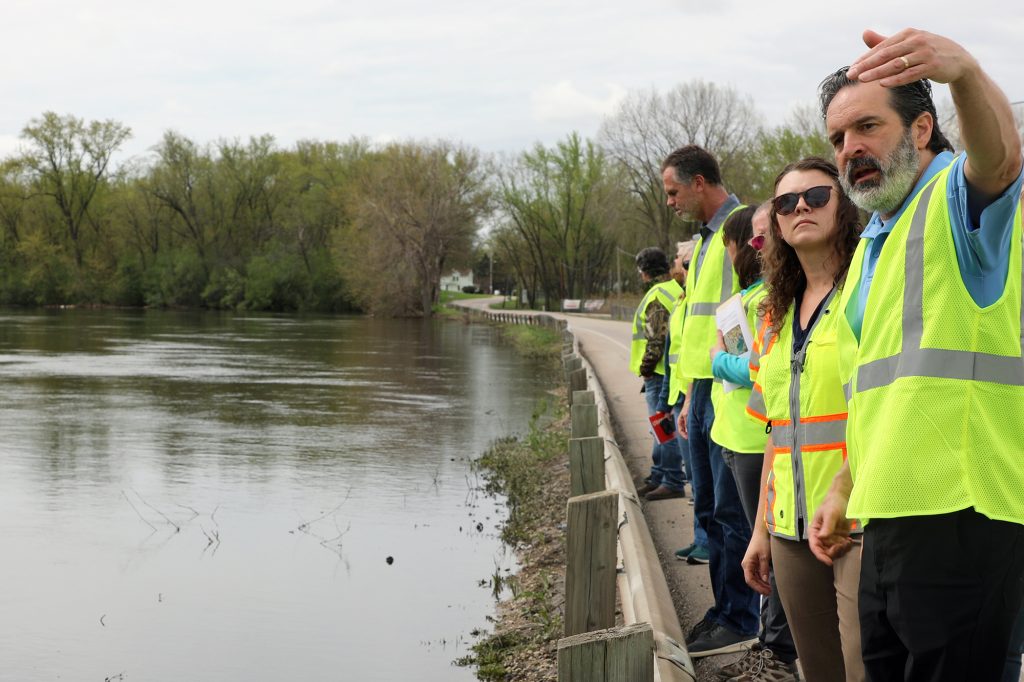
WHEATLAND, Wis. — Local and state officials toured a stretch of Highway W last week to assess ongoing erosion and flooding issues along the Fox River, as high water levels continue to threaten the stability of the roadway.

The visit came as the area recovers from recent flooding that pushed the Fox River to a crest of 15.08 feet on April 19, well above the 11-foot flood stage. While the level fell short of the record set in July 2017, it was enough to inundate portions of Highway W, forcing closures both north and south of Highway 50 for several days.

Officials say the flooding highlighted a persistent problem in the corridor, where riverbank erosion has increasingly put the roadway at risk. County leaders and agency representatives walked several trouble spots where the river has eaten away at the shoreline, in some areas edging dangerously close to the pavement.

Representatives from the Wisconsin Department of Natural Resources, Wisconsin Department of Transportation, and the Wisconsin Wetlands Association joined county officials for the tour, along with members of the area’s legislative delegation. The group also met earlier in the day to discuss long-term solutions.

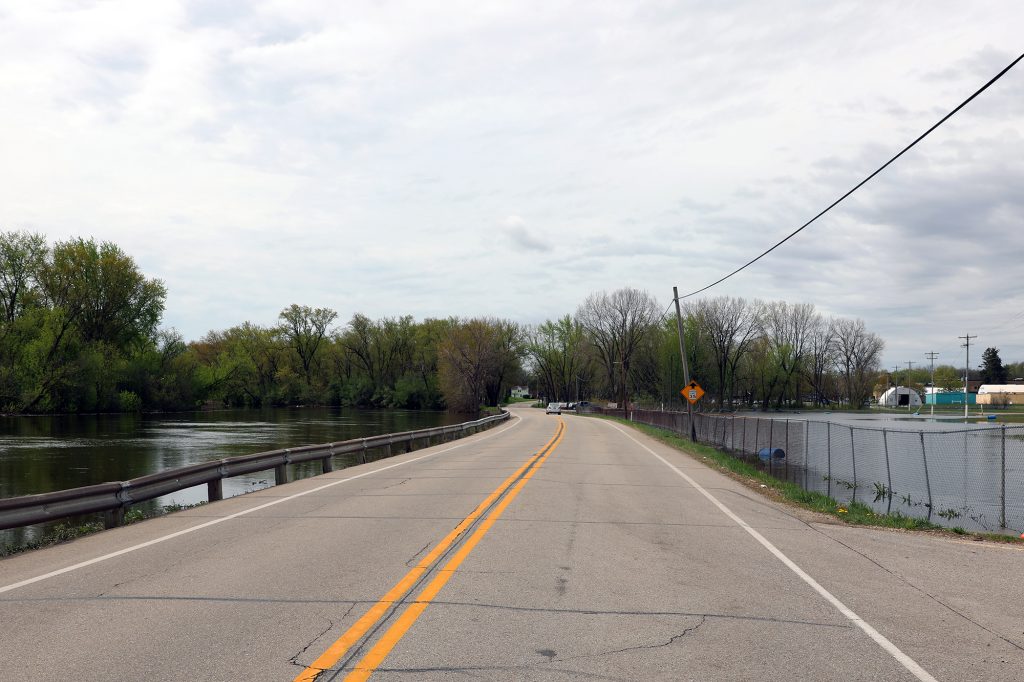
County officials emphasized that erosion along Highway W is not a one-time issue tied only to major flooding events, but an ongoing concern requiring coordinated planning and investment. With significant portions of land along the river already publicly owned, leaders say there may be an opportunity to implement broader environmental and infrastructure improvements.

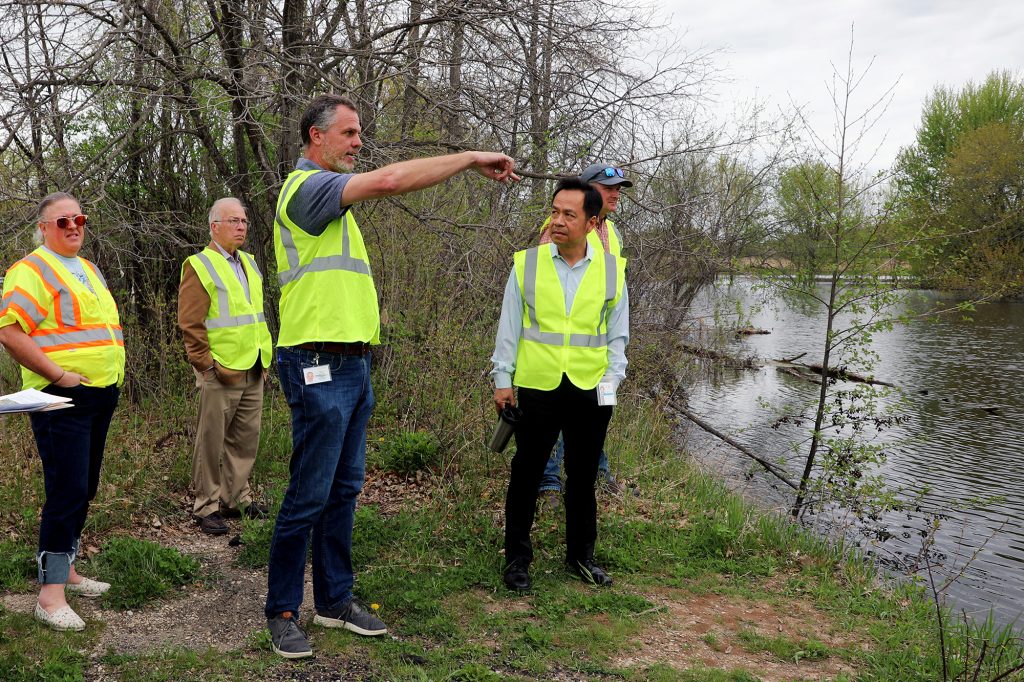
Discussions during the visit focused on potential strategies to stabilize the riverbank, reduce the frequency and severity of flooding, and secure funding for future mitigation projects. Officials indicated that collaboration between local, state, and federal partners will be key as planning moves forward.

The tour followed a similar site visit conducted late last year with environmental stakeholders, signaling what officials describe as a continuing effort to address both the immediate risks to Highway W and the broader ecological challenges along the Fox River corridor.

.

.
.
.
.
.
.
.
.
.
.
.
























3 Responses
From the story.
“Discussions during the visit focused on potential strategies to stabilize the riverbank, reduce the frequency and severity of flooding, and secure funding for future mitigation projects.”
Yes on the first part. Stabilize the Riverbank Yes. By all means.
But a hard NO to the second part.
“(focus) on potential strategies to reduce the frequency and severity of flooding,”.
Just how the hell are we going to do that ?
Locally or anywhere ??
We can’t stop the rain. The only thing we can do is stop building in the flood plane. And not only are we already doing that but we are buying homes already in the flood plane and tearing them down. We have programs for that. Have for years. Decades even.
I do however remember a very “well known” Silver Lake person who somehow was able to buy a piece of property in the flood plane and then built on it raising that property height to the detriment of surrounding homeowners.
He wasn’t supposed to be able to do that !!
Anyone in Silver lake remember that from 20 years ago or so ?
Do Tell !
Repair it like Kenosha, …”toss a little black top on it, good as new’
Make an ordinance regulating what the water level can be. They’re probably pointing to the west side of W saying the homes now have “water frontage” and their taxes will go up .