



(Photo courtesy of The New Extinction)
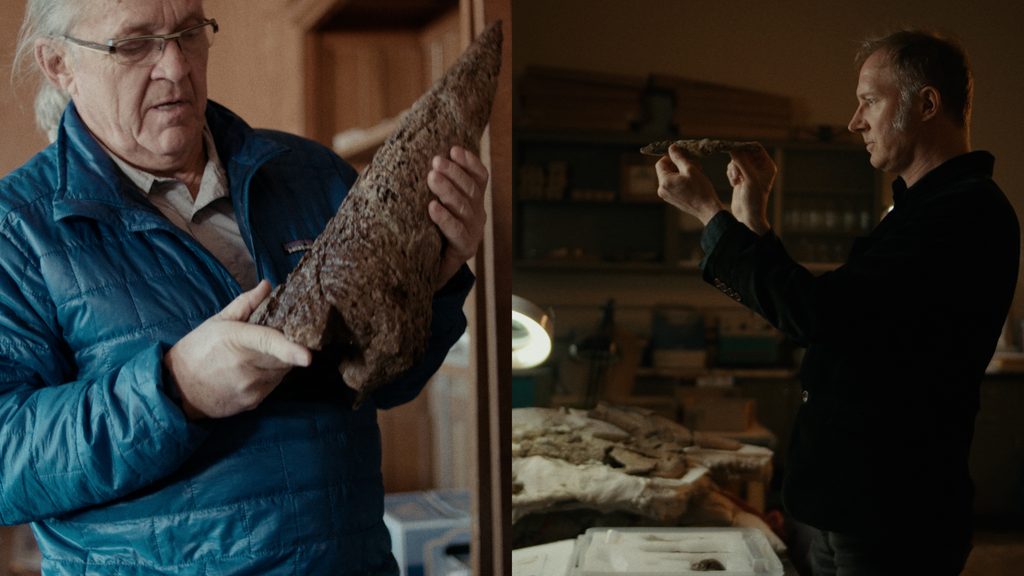
KENOSHA, Wis. — A Kenosha paleontologist and his fight to preserve a local dinosaur research program will take center stage on a national platform next month when a Wisconsin-produced documentary makes its world premiere at DOC NYC, the largest documentary film festival in the United States. The New Extinction, directed by Milwaukee filmmaker Kyle Lloyd Arpke, follows renowned Tyrannosaurus rex expert Dr. Thomas Carr as he navigates financial pressures threatening the future of Carthage College’s paleontology program, while exploring a controversial multimillion-dollar industry in which dinosaur fossils are increasingly treated as valuable commodities rather than scientific discoveries.


(Photo courtesy of The New Extinction)
The 90-minute documentary will premiere November 15, 2026, at the historic Village East by Angelika theater in Manhattan, with another screening scheduled for November 17. The film has been selected for DOC NYC’s Investigations, Science and Technology, and Social Issues programming categories. Its selection places a distinctly Kenosha story before a national audience of documentary filmmakers, industry professionals, critics, and moviegoers.

At the heart of the film is Carr, director of the Carthage Institute of Paleontology and a leading authority on Tyrannosaurus rex. His work has helped establish Kenosha as an unlikely center for significant dinosaur research. But according to the filmmakers, Carr’s program faces serious budgetary pressures, raising questions about whether Carthage College will continue investing in a field that has produced important scientific discoveries despite its relatively small size.

The documentary follows Carr’s efforts to use his latest discovery, a juvenile T. rex, to demonstrate the value of continued scientific research. The film also examines the role of Kenosha’s Dinosaur Discovery Museum and the broader challenges facing academic paleontology as private collectors and commercial fossil hunters compete for increasingly expensive specimens.

Science Versus Millions Of Dollars
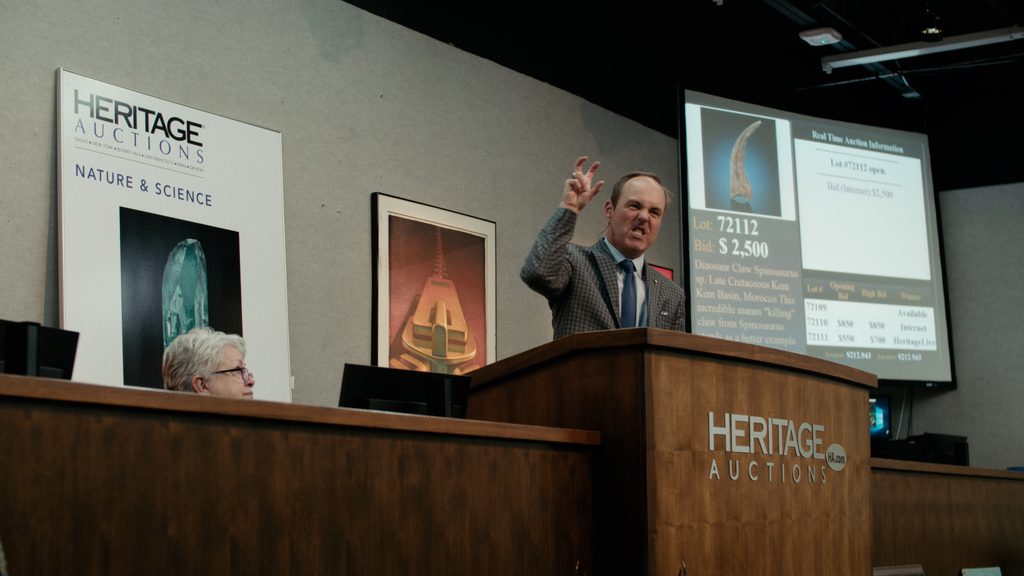
The documentary contrasts Carr’s commitment to scientific research with the work of Alan Detrich, a commercial fossil hunter from Lawrence, Kansas, who has spent decades buying, selling, and promoting rare dinosaur specimens. Detrich gained attention during the fossil boom of the late 1990s when he listed a T. rex specimen known as Samson on eBay for $20 million. The specimen was later sold at auction to a private buyer for an undisclosed amount.

The financial stakes have only increased. According to the filmmakers’ press materials, a T. rex skeleton known as Gus sold for a record $50 million in July 2026. Detrich has reportedly sold a single dinosaur tooth for $54,000, illustrating the extraordinary sums collectors are willing to pay for prehistoric remains.

(Photo courtesy of The New Extinction)
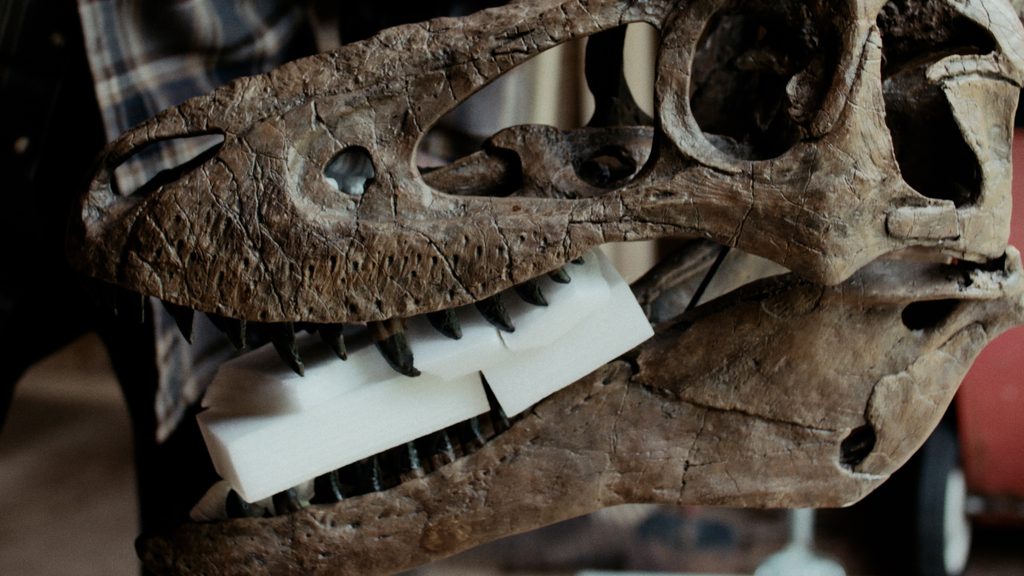
For scientists like Carr, the value of a fossil extends far beyond its potential sale price. The film’s electronic press kit explains that Carr can extract approximately 200 scientific data points from a single dinosaur tooth, 8,000 from a skull, and 12,000 from an entire skeleton. When fossils disappear into private collections, researchers may lose opportunities to study specimens that could answer important questions about prehistoric life.

Carr’s opposition to the commercial sale of fossils has made him a polarizing figure within the paleontology community. The filmmakers describe him as a fierce advocate for scientific research whose uncompromising views have earned both admiration and criticism. The documentary explores those competing perspectives without presenting the fossil industry as a simple contest between heroes and villains.

(Photo courtesy of The New Extinction)
A Kenosha Institution Facing An Uncertain Future
For Kenosha residents, the documentary’s most significant storyline may be the future of Carthage College’s paleontology program. Carr’s research has connected the college and the Dinosaur Discovery Museum to important discoveries involving one of the most recognizable animals ever to walk the Earth. The filmmakers portray the program as scientifically successful but financially vulnerable.
The film raises a broader question about the priorities of American higher education: What happens when research that contributes to scientific knowledge cannot generate the revenue needed to sustain itself? Carr’s efforts to preserve his program serve as one example of the pressures facing specialized academic fields, particularly at smaller private institutions.
The filmmakers have not publicly established that Carthage College has decided to eliminate the program, and the documentary’s promotional materials do not specify the amount of funding at issue. Instead, the film follows Carr as he attempts to convince college leadership that continued investment in paleontology is worthwhile.
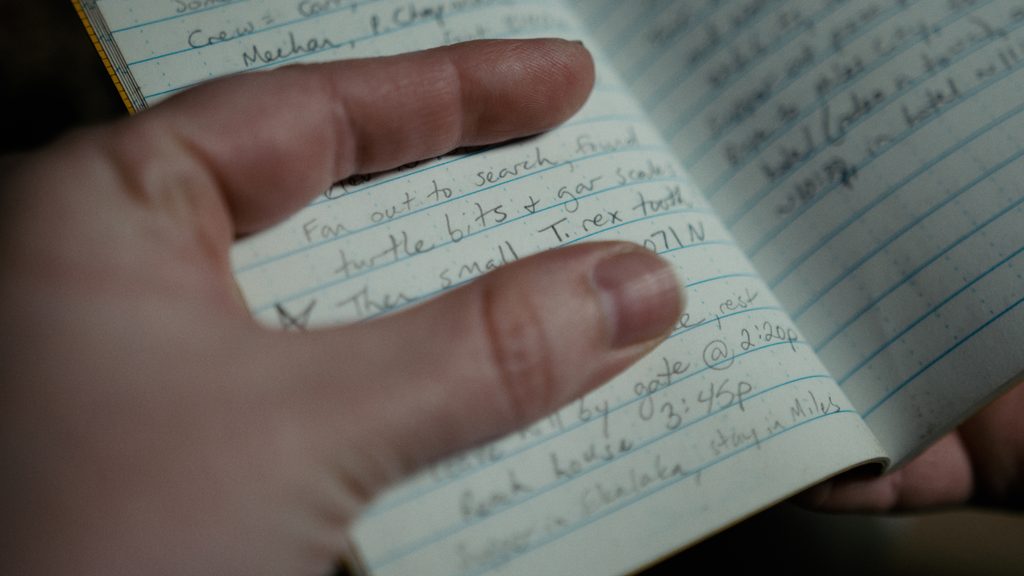
[Photo 5 – Use STILL 8: A field notebook documents a search for fossils, showing the detailed work behind paleontological discoveries. (Photo courtesy of The New Extinction)]
Wisconsin Filmmakers Bring Kenosha Story To National Audience
The New Extinction is also a significant achievement for Wisconsin’s independent filmmaking community. Director Kyle Lloyd Arpke and producer Jessica Knap assembled a production team featuring Milwaukee-area filmmakers, University of Wisconsin-Milwaukee graduates, cinematographers, editors, and post-production professionals.
The project received partial funding through Bader Rutter’s Lightbulb grant and became the most heavily funded project in the now-defunct Brico Forward Film Fund. The filmmakers say the documentary was designed to demonstrate that Wisconsin’s independent film industry can produce work suitable for major national festivals.
The production features an original musical score by Wisconsin composer Peter Batchelder, including approximately 48 minutes of music. Cinematographers Quinn Hester and Dana Shihadah used different visual techniques to distinguish academic scientists from commercial fossil hunters, while the editing team worked with more than 200 hours of footage.
Arpke said the documentary is intended to explore issues extending beyond dinosaur fossils, including the relationship between individual financial gain and the public’s access to scientific knowledge.
In his director’s statement, Arpke poses a central question: “At what point is a society responsible for sacrificing individual profit for collective knowledge?”
November Premiere And Public Screenings
The documentary’s world premiere is scheduled for Sunday, November 15, at DOC NYC in Manhattan, with a second screening November 17. Carr is expected to participate in a question-and-answer session following the premiere, giving festival audiences an opportunity to hear directly from the Kenosha scientist whose work is central to the film.
The documentary is also scheduled to be available through DOC NYC’s online screening program November 16 through November 29, subject to the festival’s viewing restrictions and ticketing requirements.
For Carr, the film offers an opportunity to bring national attention to his research and the financial challenges facing his Kenosha-based program. For local residents, it provides a rare look at how scientific discoveries made through a small Wisconsin college fit into a global industry where dinosaur fossils can command tens of millions of dollars.
More information about the documentary and its screenings is available at www.docnyc.net and www.thenewextinction.com.