



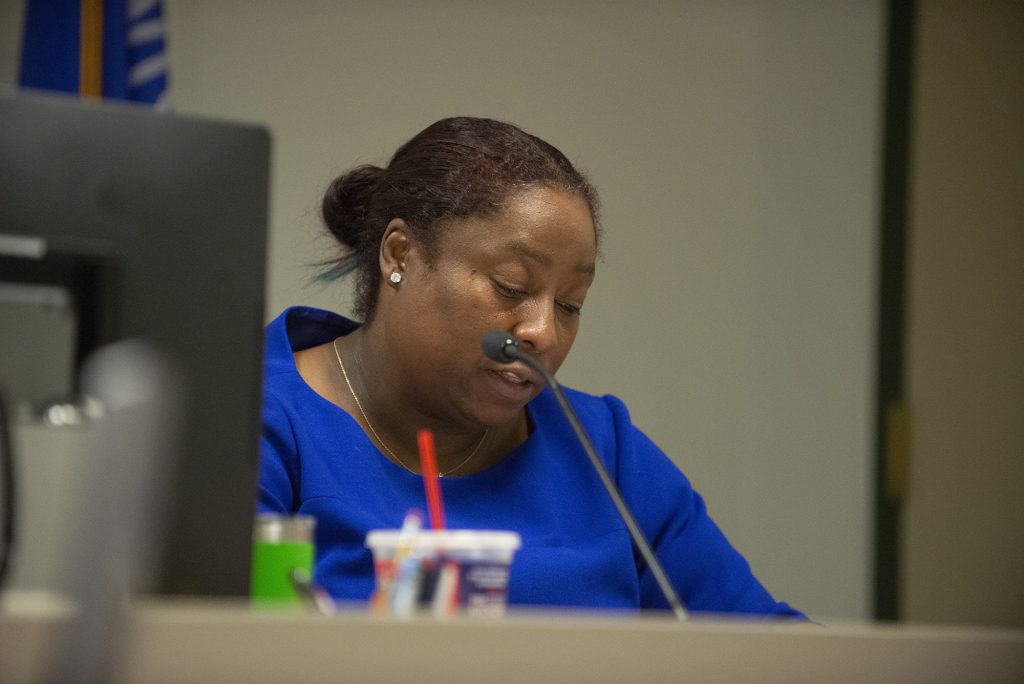
(File Photo by Kevin Mathewson, Kenosha County Eye)
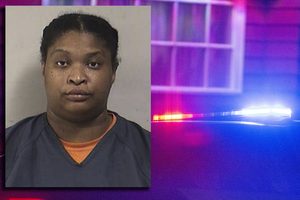
KENOSH COUNTY, Wis. — Kenosha County Eye has obtained, through a public records request to the Wisconsin State Public Defender’s Office, the contract governing Attorney Aileen Henry’s fixed-fee misdemeanor defense work for indigent clients in Kenosha County. The numbers in that contract, combined with what CCAP shows about Henry’s current caseload, describe a payment structure that a national body of legal scholarship says predictably produces exactly what local defense attorneys say they’re seeing: a lawyer who resolves cases fast and almost never goes to trial.

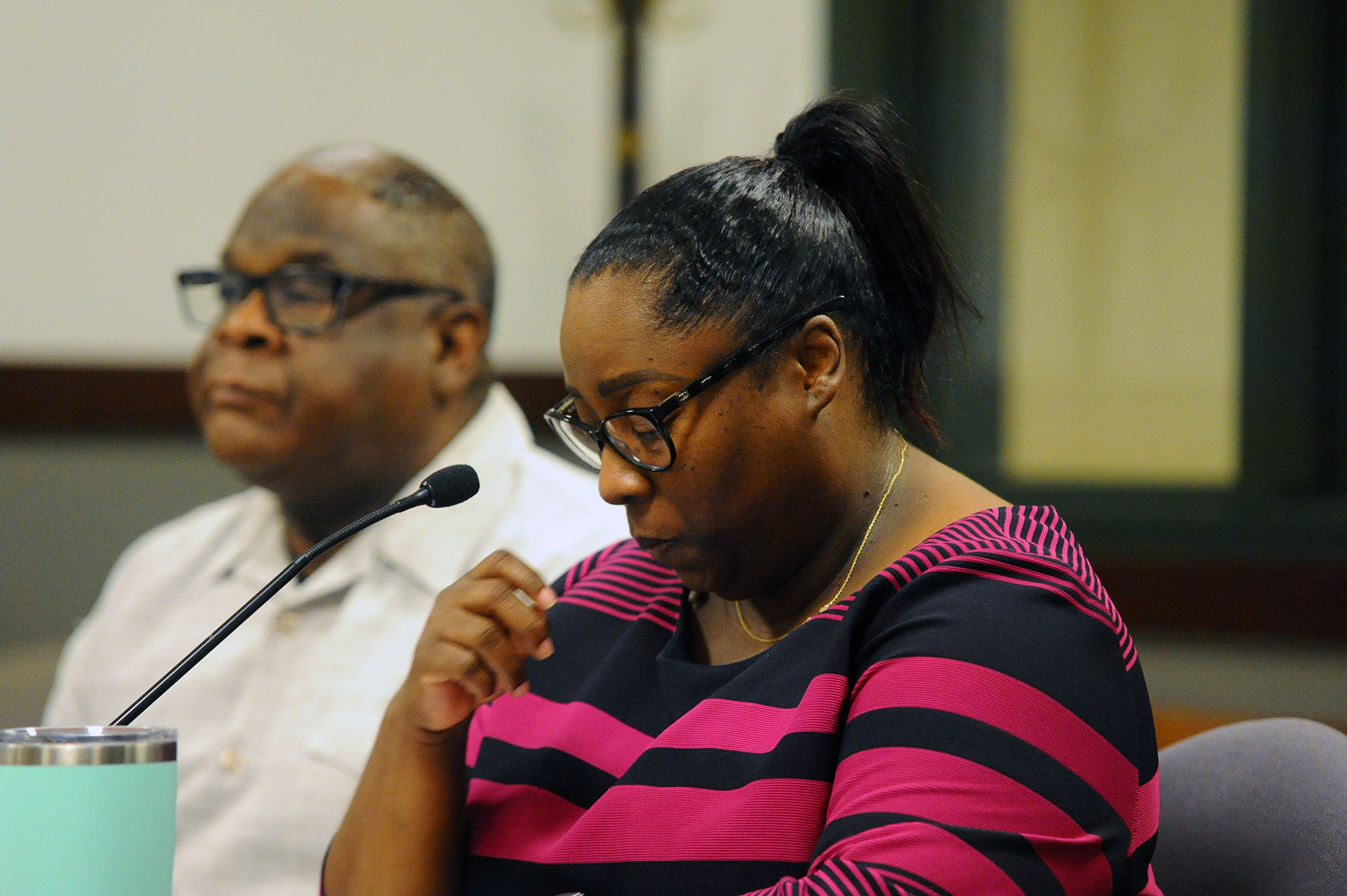
(File Photo by Kevin Mathewson, Kenosha County Eye)
The contract
Under her current agreement with the SPD’s Assigned Counsel Division, running July 1, 2025 through June 30, 2026, Henry is authorized to take up to 150 misdemeanor and misdemeanor-traffic cases in Kenosha County at a flat rate of $805 per case — paid the same whether the case closes in an afternoon or goes to a five-day jury trial. Her prior contract, covering fiscal year 2023, paid $567 per case for up to 125 cases.

The contract language is explicit that the $805 is meant to cover everything: “The rate per case paid to Contract Attorney is designed to cover attorney fees associated with representation of a client under the terms of this contract.” There is no separate hourly rate, no trial premium, and no additional pay tied to how much work a case actually requires. Henry is also, under the contract’s own terms, free to maintain a private practice alongside her SPD contract work — and does; she also accepts private clients and separate assigned-counsel appointments paid at an hourly rate.

The math
Multiple sources in the local defense bar tell KCE that assigned counsel elsewhere in Wisconsin — public defenders and private attorneys taking court appointments alike — are commonly paid around $100 an hour. Kenosha-area private defense attorneys say they charge retainers of $3,000 to $7,400 for misdemeanor cases and bill privately at $200 to $400 an hour.

Run Henry’s $805 flat fee against those numbers and the arithmetic is unforgiving:

- At $100/hour — the rate other Wisconsin assigned counsel earn — $805 buys just over 8 hours of work before Henry is effectively working for free.
- Against the low end of the local private market, $200/hour, that’s roughly 4 hours.
- Against the high end, $400/hour, it’s about 2 hours.
“That just isn’t possible,” one local defense attorney told KCE, describing the volume of material a single misdemeanor case can now generate. Police reports have to be reviewed. In the era of widespread body-worn camera deployment, some cases now come with hundreds of hours of BWC footage that has to be watched — not skimmed — before an attorney can competently advise a client or prepare a defense. None of that work is separately compensated. Every hour spent on it comes directly out of the $805.

If a client insists on going to trial, the math can collapse entirely. Wisconsin’s minimum wage is $7.25 an hour. Divide that into the $805 flat fee and the threshold is stark: once total time on a single case — investigation, any BWC review, motions, trial prep, and the trial itself — passes roughly 111 hours, Henry is earning less than minimum wage to represent that client. Given that some cases now come with hundreds of hours of body-worn camera footage alone, that threshold isn’t a hypothetical edge case — it’s a number a single BWC-heavy trial case can blow past on discovery review before a single hour of courtroom time is logged.

(File Photo by Kevin Mathewson, Kenosha County Eye)
The only way the math works: turn cases fast
As one local defense attorney put it, the only way Henry can make the contract pay is if she moves cases quickly. That’s not a one-off diagnosis — it’s the documented, predictable result of exactly this payment structure, according to a major 2023 Michigan Law Review study of how states deliver indigent defense.

In The Problematic Structure of Indigent Defense Delivery (122 Mich. L. Rev. 205), University of Michigan law professor Eve Brensike Primus lays out why flat-fee contracts like Henry’s produce this outcome as a matter of financial logic, not attorney failing:
“Financially, they are better off when they dispose of cases quickly because they do not receive additional money when they put more time and effort into a case. This creates an inherent conflict between contract attorneys’ financial interests and their ethical obligations to competently defend their clients.”
Primus isn’t speculating. She cites what happened when other states switched assigned counsel from hourly pay to flat fees. When South Carolina made that switch in 2012, the same lawyers reported working 50% fewer hours on indigent defense cases. When North Carolina did it in 2008, attorneys spent 11% fewer hours on each case and were 36% more likely to resolve it — plead the client out — the same day they first met them. Primus calls that pattern “meet ’em and plead ’em,” and flags it bluntly: with no investigation, no legal research, and no motion practice, “attorneys are simply not doing their job.”
The trial number
KCE has confirmed at least one instance of Henry taking a case to trial. Multiple local defense attorneys, independently, put her total trial count well under ten — with some estimating under five.
Whatever the precise number turns out to be, it is consistent with — not contrary to — what the $805 flat fee predicts. Under a payment structure where trial is the single most expensive thing an attorney can do to her own bottom line, a near-total avoidance of trial isn’t an anomaly. It’s the rational response to the incentive her own contract creates.
A commissioner setting bail in the same system she’s paid to work
Henry, a Democrat, also serves as a Kenosha County Supplemental Court Commissioner, a role in which she sometimes presides over initial appearances — the hearings where bail is set. She holds that position at the same time she holds a flat-fee SPD defense contract in the same courthouse. That overlap is itself a conflict on its face: a defense attorney who is compensated per case to move cases quickly, sitting in a judicial capacity setting the terms — including bail — under which those and other defendants’ cases will proceed.
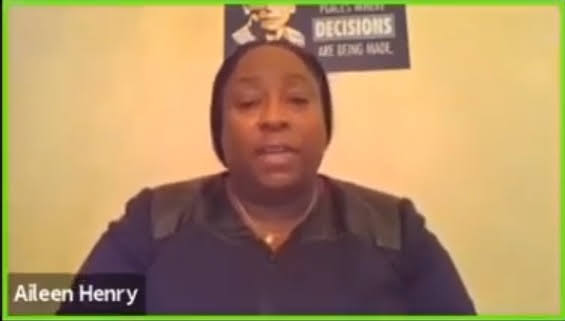
In that commissioner role, Henry has set no-cash or low-cash bail on a routine basis. During the COVID-era shift to Zoom court appearances, she regularly appeared on screen with an overtly political photo in the background — imagery similar to a portrait of the late Justice Ruth Bader Ginsburg — while presiding over criminal court proceedings.
The caseload
As of this writing, CCAP shows Henry with 150 open criminal cases. That is, not coincidentally, the exact ceiling written into her current SPD contract for new appointments in a single fiscal year — a number that does not include any private clients or other assigned-counsel work she may be carrying simultaneously.
It’s also worth measuring against current national workload guidance, not the standard baked into Henry’s own contract. Her agreement caps her individual caseload under the contract at “the ABA/NLADA standard” of 400 misdemeanor-equivalents a year — but that figure comes from a 1973 standard. It was replaced in 2023 by new National Public Defense Workload Standards, produced by the RAND Corporation, the National Center for State Courts, and the American Bar Association from seventeen state-level workload studies. Under that current guidance, a full-time attorney handling nothing but low-level misdemeanors should carry roughly 150 cases a year — a ceiling Henry’s contract alone permits her to reach, before any other work she takes on is counted.












4 Responses
She plea bargaining n shit
America is great
You gets what you pay for criminals.
If you are not a criminal, I hope you have some money to have a good attorney prove it.
Many drug dealers in Kenosha appear to live “phat”, yet save no money for that rainy day when they are snitched out by one of their low life customers.
The criminals should have good legal counsel, and it should be charged to them in the form of “court costs”. It should be taken from any future gubment subsidy such as SNAP, housing, Earned Income Tax Credit, stimulus checks, etc……..
You deserve your day in court, but you deserve the bill also.