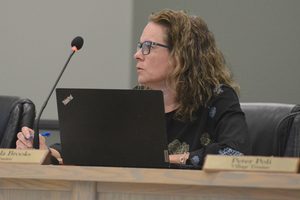



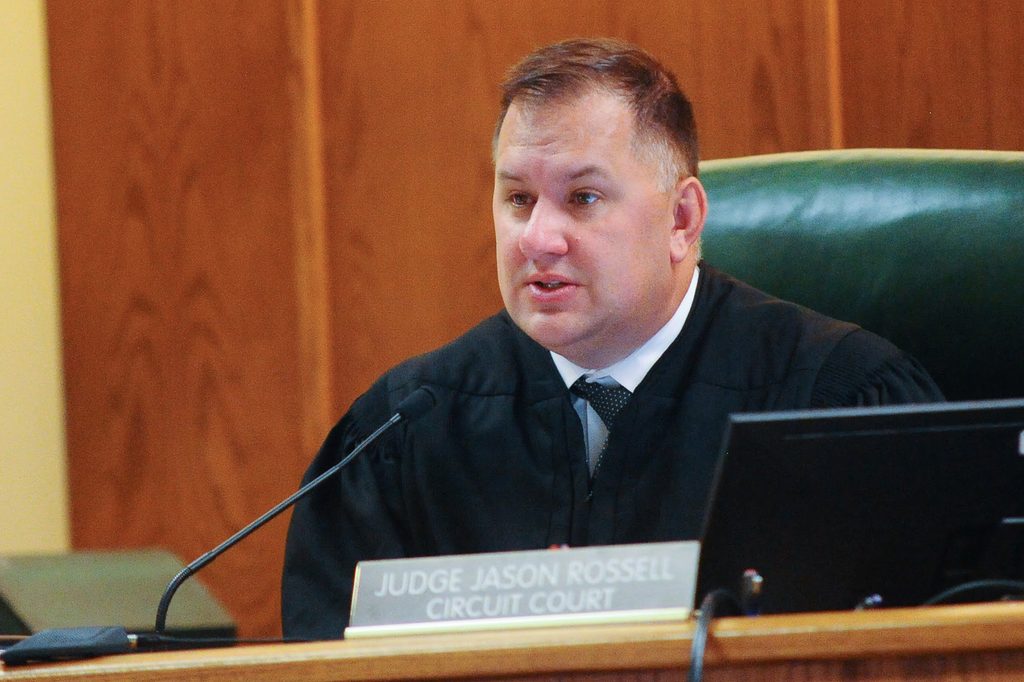
(File photo by Kevin Mathewson, Kenosha County Eye)
KENOSHA, Wis. — A three-judge Wisconsin Court of Appeals panel has reversed two felony child abuse convictions and ordered a new trial after determining that liberal Kenosha County Circuit Court Judge Jason A. Rossell (D) improperly prevented a defendant from presenting two legally recognized defenses to a jury. Wednesday’s decision represents a significant rebuke of Rossell’s handling of the case, finding that he improperly weighed evidence that should have been left to jurors and denied the defendant instructions on both self-defense and reasonable parental discipline.

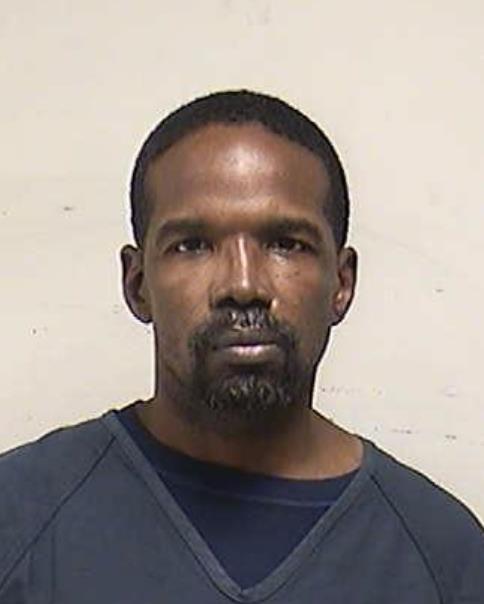
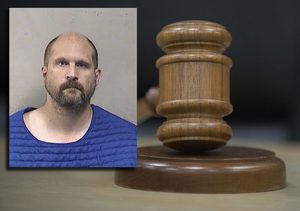
(Kenosha County Sheriff’s Office)
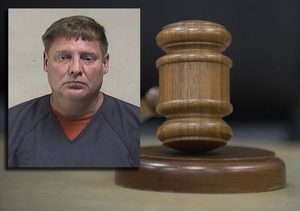
Reginald D. Hunter, 47, of Kenosha, was convicted in August 2023 of two felony counts of intentionally causing bodily harm to a child. The same jury acquitted him of two felony strangulation charges. On October 30, 2023, Rossell sentenced Hunter to four years of initial confinement in state prison, followed by six years of extended supervision. The sentences were consecutive to each other and to a sentence in another criminal case.

Now, more than three years after the jury verdict, the Wisconsin Court of Appeals has concluded that Rossell committed errors serious enough to require Hunter’s convictions to be reversed and the case returned to Kenosha County for a new trial. The unanimous decision came from District II Court of Appeals Judges Maria S. Lazar, Mark D. Gundrum and Anthony F. LoCoco, all three of whom have conservative backgrounds.
Appeals Court Finds Rossell Improperly Took Decisions Away From Jury
The criminal case originated from a June 18, 2022, confrontation between Hunter and his two children, then ages 13 and 8. According to court records, the disagreement began when Hunter attempted to enforce household rules concerning electronic devices at bedtime.

The children alleged that Hunter grabbed their necks, struck them and caused physical injuries. Hunter denied intentionally harming his children and testified that he was attempting to maintain order and keep them separated during the confrontation. During the altercation, Hunter’s son kicked him in the groin, and his daughter struck him in the back of the head with a rock, causing him to fall. Those details became especially important during the appeal.

At trial, Hunter’s defense attorney requested that Rossell instruct jurors on two defenses recognized under Wisconsin law: reasonable parental discipline and self-defense. Rossell refused both requests, concluding that the evidence did not justify either instruction. The appellate judges disagreed.

The panel concluded that Wisconsin law establishes a relatively low evidentiary threshold for presenting these defenses to jurors. Rather than viewing the evidence in the light most favorable to Hunter, as required when determining whether the instructions were warranted, Rossell improperly weighed competing testimony.

The appellate court specifically found that Rossell’s reliance on the strangulation allegations was problematic because the jury had acquitted Hunter of those very charges.

The judges determined that sufficient evidence existed for jurors to consider whether Hunter’s actions constituted reasonable parental discipline. They also found sufficient evidence to permit a self-defense instruction, particularly given testimony that Hunter had been kicked and struck with a rock.
In addressing Rossell’s handling of the conflicting testimony, the appellate court wrote that the circuit court had “wrongly invaded the province of the jury.”
The appellate court further determined that the errors were not harmless and reversed Hunter’s convictions.
The decision does not establish that Hunter acted in self-defense or that his conduct constituted reasonable parental discipline. Rather, it establishes that the jury should have been permitted to consider those defenses before deciding his guilt.
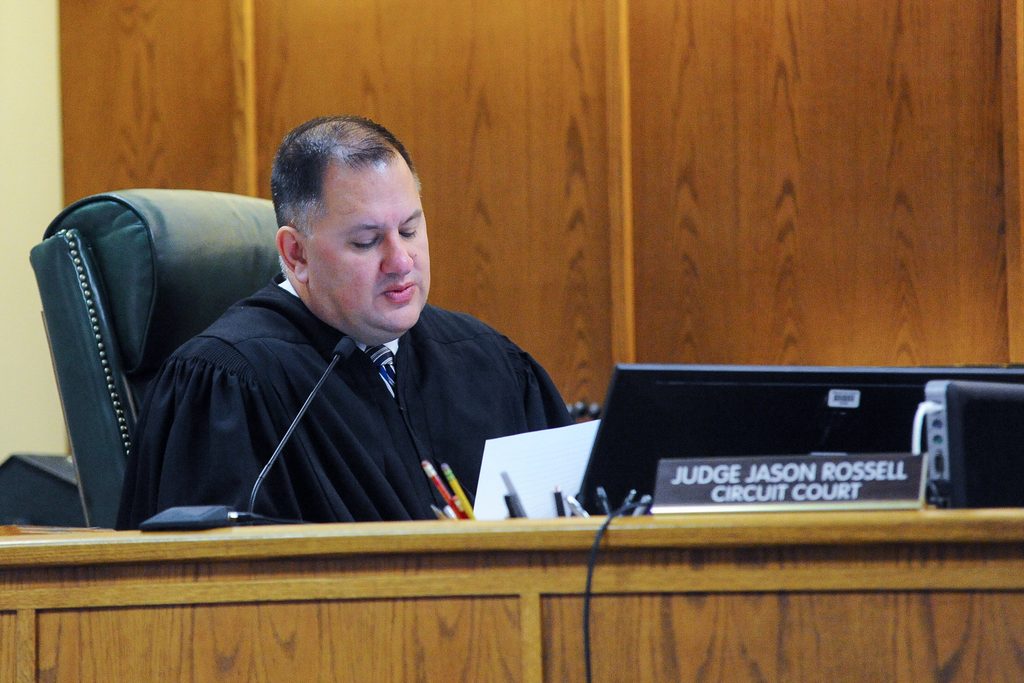
(File photo by Kevin Mathewson, Kenosha County Eye)
Rossell’s Political Evolution Raises Questions Among Courthouse Insiders
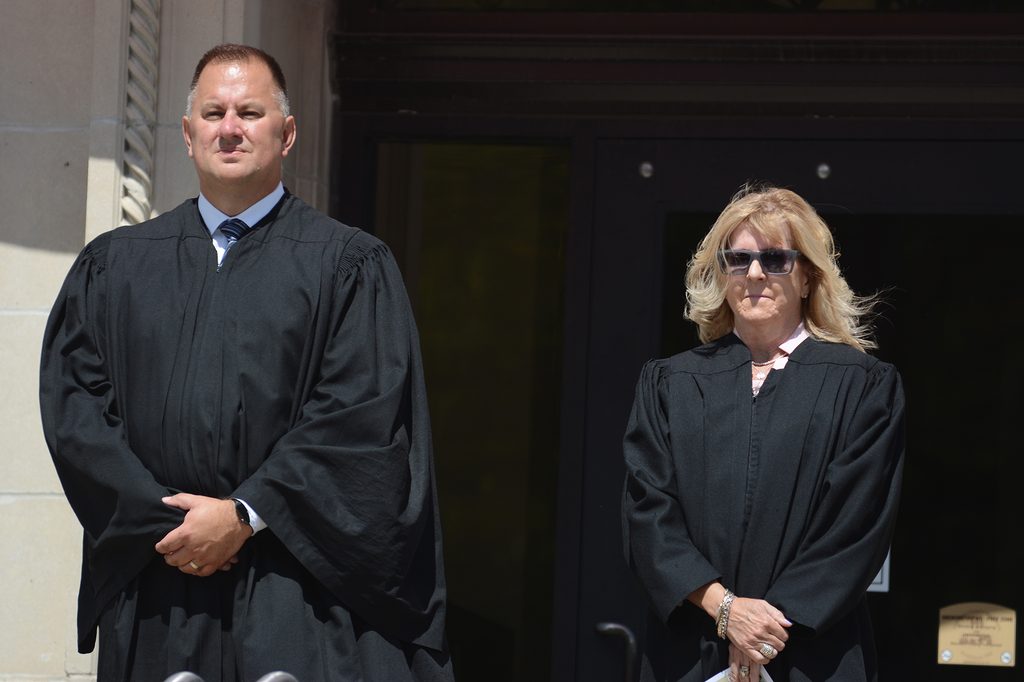
Rossell’s judicial career began with an appointment from Republican Governor Scott Walker in 2011. He won his first judicial election in 2012 and has subsequently secured reelection without an opponent.
In 2017, the then-conservative-controlled Wisconsin Supreme Court appointed Rossell chief judge of the Second Judicial Administrative District, overseeing Kenosha, Racine and Walworth counties. His appointment took effect May 8, 2017, and he continued serving as chief judge until July 31, 2024, when he reached the position’s eligibility limit. Racine County Circuit Court Judge Wynne P. Laufenberg succeeded him.
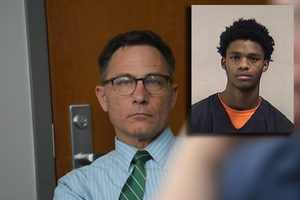
(File photo by Kevin Mathewson, Kenosha County Eye)
His rise through the judicial ranks has attracted scrutiny from courthouse insiders who question whether his judicial philosophy has changed along with Wisconsin’s political landscape.
Sources familiar with Rossell’s career describe him as a political opportunist who cultivated relationships with conservatives while Republican-appointed justices controlled the Wisconsin Supreme Court. Those sources believe his more recent judicial decisions reflect a liberal philosophy that was less apparent earlier in his career.
According to an account of a local Republican Party meeting several years ago, Rossell discussed a potential political strategy involving a future run for the Wisconsin Court of Appeals, followed by a possible campaign for the Wisconsin Supreme Court. The account describes a judge with ambitions extending well beyond the Kenosha County courthouse.
(File photo by Kevin Mathewson, Kenosha County Eye)
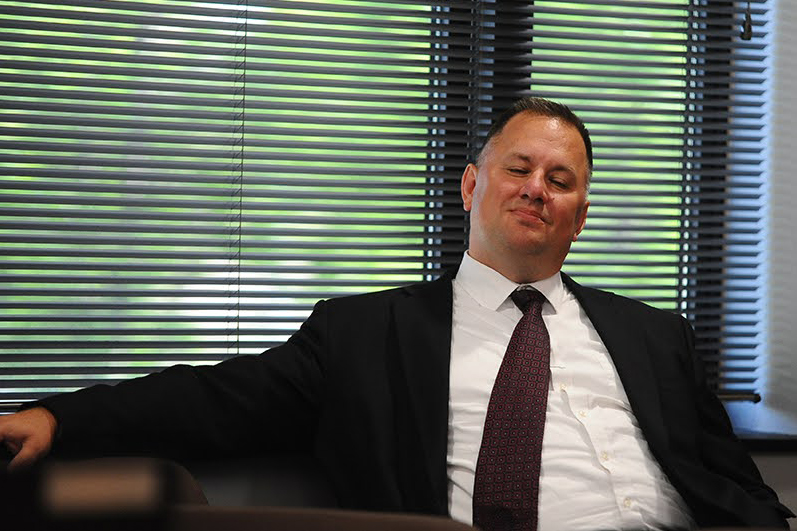
Those reported ambitions take on additional significance following the Wisconsin Supreme Court’s shift to a liberal majority in 2023. Critics of Rossell believe he has increasingly positioned himself to appeal to the state’s liberal judicial establishment, although the motivation behind individual judicial decisions cannot be established from their outcomes alone.
(File photo by Kevin Mathewson, Kenosha County Eye)
Criticism Of Rossell’s Criminal Sentencing Decisions
Rossell has also faced criticism over sentencing decisions that critics characterize as unusually lenient, particularly in repeat drunken-driving cases.
Kenosha County Eye has examined cases involving defendants convicted of third, fourth and fifth offenses of operating while intoxicated, raising questions about the amount of confinement Rossell imposes on repeat offenders.
Critics contend that his sentencing practices reflect a soft-on-crime judicial philosophy, particularly when compared with the substantial prison sentence he imposed on Hunter in 2023.
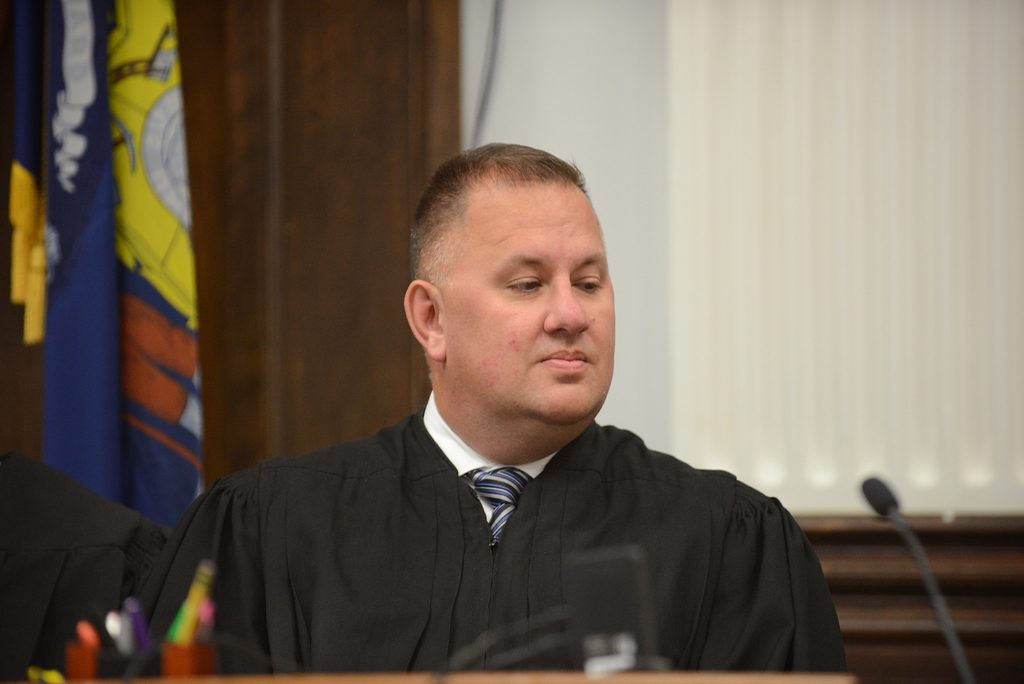
The contrast is striking to those who have followed Rossell’s career: a judge who imposed four years of initial confinement in this case, yet whose more recent handling of repeat OWI offenders has generated criticism over sentences involving limited incarceration or work release.
(File photo by Kevin Mathewson, Kenosha County Eye)
Courthouse Insiders Describe Broader Concerns About Self-Defense Cases
According to courthouse sources familiar with Rossell’s handling of criminal trials, the Hunter case is not the first occasion on which defense attorneys have encountered resistance when attempting to present self-defense arguments.
Those sources allege that Rossell has repeatedly interpreted the evidentiary requirements for self-defense instructions too narrowly, effectively preventing juries from considering defenses that attorneys believe are supported by the evidence.
They also describe contentious exchanges in which defense attorneys challenged Rossell’s legal reasoning and encountered explanations they considered inconsistent or legally unsound.
Wednesday’s appellate decision provides a documented example of the problem those sources describe.
In Hunter’s case, the appellate judges found that Rossell had applied an improper approach to evaluating evidence, substituting his own assessment of competing testimony for a determination that belonged to the jury.
The decision does not establish a broader pattern across Rossell’s other cases. However, it raises questions about whether similar rulings in other criminal trials have prevented defendants from receiving jury instructions to which they were legally entitled.
Former Prosecutor Timothy Martin Handled The Case
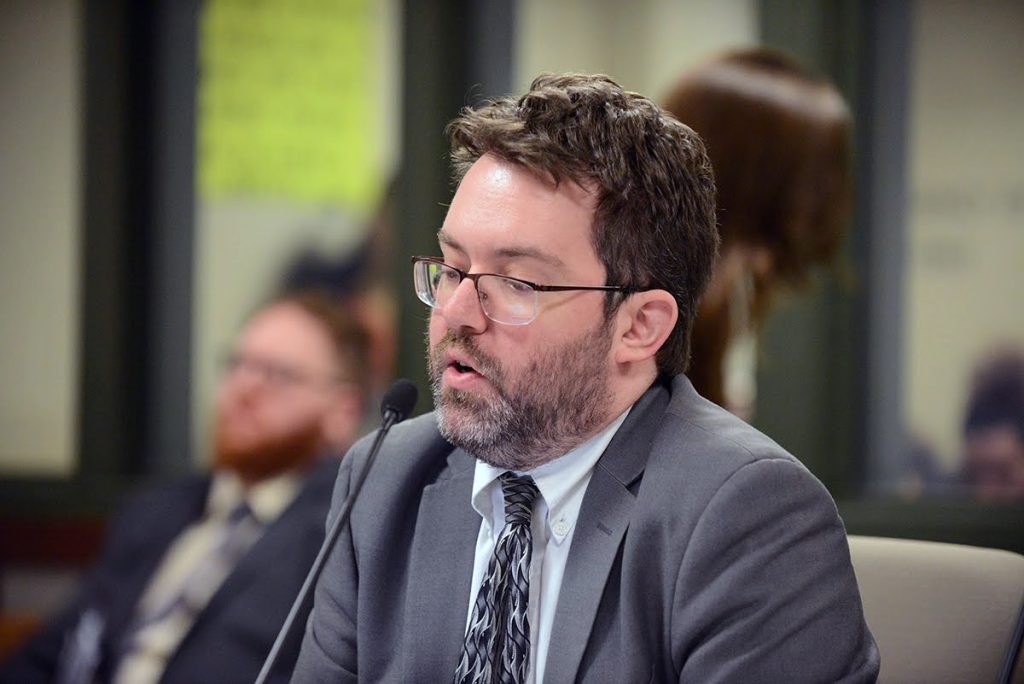
The prosecution was handled by former Kenosha County Assistant District Attorney Timothy Alan Martin, who is no longer employed by the Kenosha County District Attorney’s Office.
(File photo by Kevin Mathewson, Kenosha County Eye)
Martin was a controversial figure among some members of the local defense bar, according to courthouse sources who describe strained professional relationships during his tenure as a prosecutor.
The appellate decision focused on Rossell’s rulings, not misconduct by Martin. Nevertheless, the reversal represents a substantial setback for the prosecution’s original convictions.
Hunter’s appeal was handled by Assistant State Public Defender Olivia Garman, who successfully argued that Rossell’s refusal to provide the requested instructions deprived Hunter of a fair opportunity to present his defenses.
Three Conservative Appeals Court Judges Reverse Rossell
Wednesday’s decision was issued by three judges with conservative backgrounds: Presiding Judge Maria S. Lazar, Judge Mark D. Gundrum and Judge Anthony F. LoCoco.
Gundrum previously served as a Republican state representative and was appointed to the Court of Appeals by Republican Governor Scott Walker in 2011. LoCoco, who won election to the appellate court in April 2026, previously worked for the conservative Wisconsin Institute for Law & Liberty. Lazar also has a record of support from conservative groups and judicial figures.
The three judges unanimously concluded that Rossell’s rulings could not stand.
The judges emphasized that determining whether conduct constitutes reasonable parental discipline or self-defense is a question for jurors when sufficient evidence supports those legal defenses.
The court concluded that Rossell improperly evaluated conflicting testimony rather than allowing the jury to resolve those factual disputes under appropriate legal instructions.
The reversal sends Hunter’s case back to Kenosha County Circuit Court for a new trial, with the two child abuse convictions overturned.
For Rossell, who once held a powerful administrative position within Wisconsin’s judiciary and whose political ambitions have been discussed among local Republicans, the ruling is a significant public setback.
(File photo by Kevin Mathewson, Kenosha County Eye)
For criminal defendants, Wednesday’s decision reinforces a fundamental principle: a judge cannot prevent a jury from considering a legally recognized defense simply because the judge personally finds the supporting evidence unpersuasive.
And for those who have questioned Rossell’s handling of self-defense cases for years, Wednesday’s ruling provides something far more consequential than courthouse criticism — a written appellate decision finding that he improperly denied a defendant the opportunity to have a jury consider his defenses.