


(Photo by Kevin Mathewson, Kenosha County Eye)
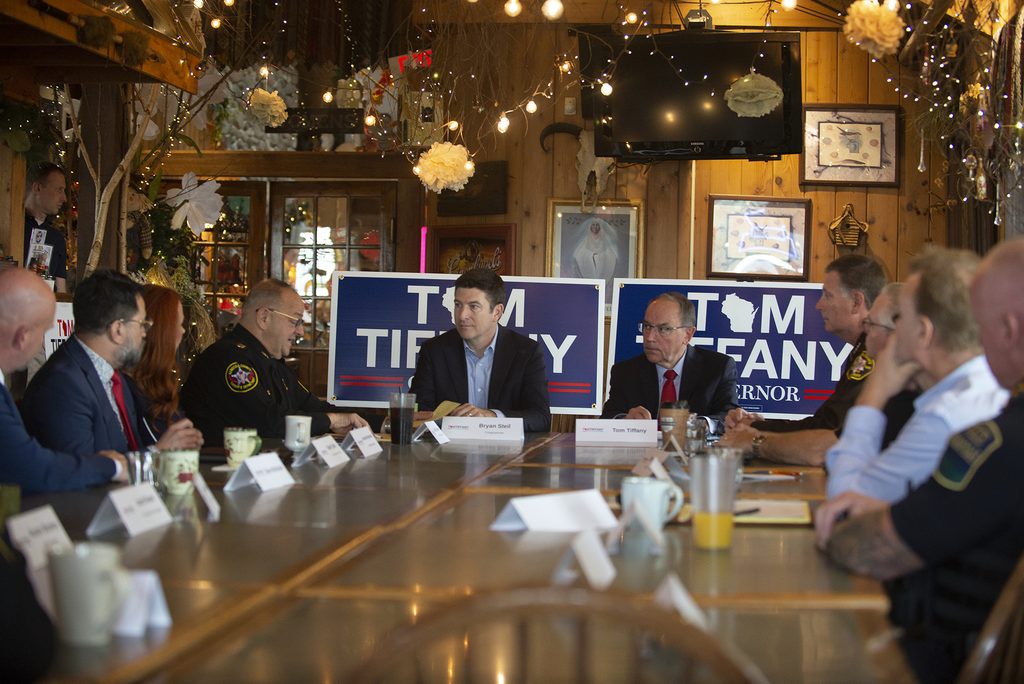
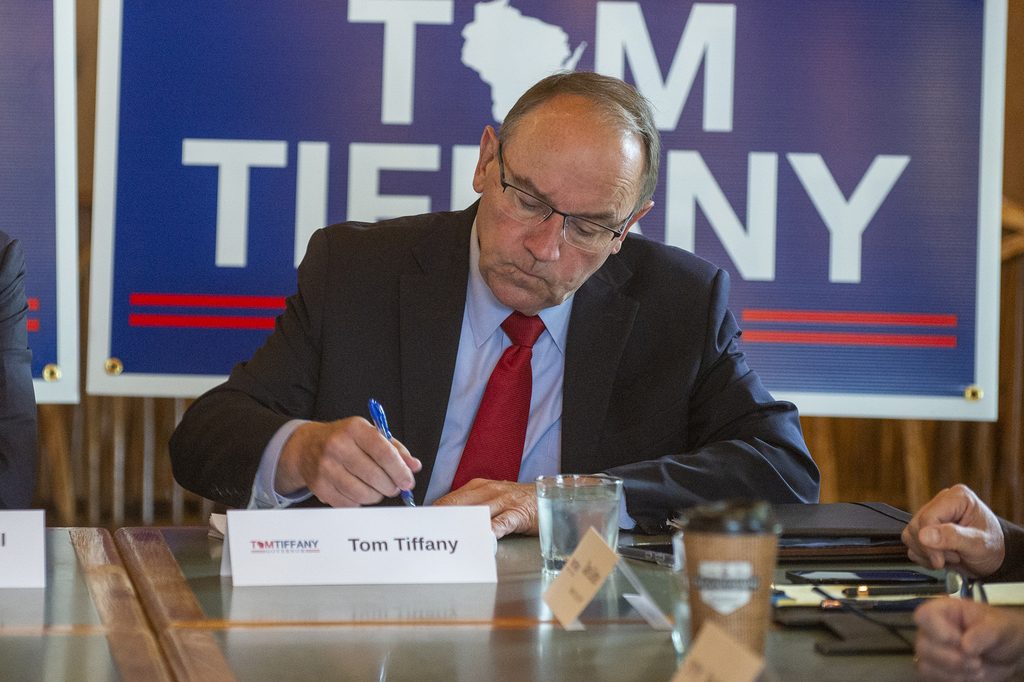
KENOSHA, Wis. — Republican gubernatorial candidate and U.S. Congressman Tom Tiffany brought his Safe Communities Tour to Kenosha on Friday morning, October 9, 2026, meeting with sheriffs, police chiefs, prosecutors and elected officials from southeastern Wisconsin to discuss public safety, law enforcement funding, mental health reform and staffing shortages. The roundtable, held at Birchwood Grill, included Congressman Bryan Steil, Kenosha County Sheriff David Zoerner, Walworth County Sheriff David Gerber, Kenosha County District Attorney Xavier Solis and numerous other officials. Kenosha County Eye was invited to attend the gathering, where participants identified several priorities they would like Wisconsin’s next governor to address, including increased interstate patrols, competitive salaries for prosecutors and public defenders, and significant changes to Wisconsin’s mental health detention system.

The discussion included concerns about the difficulty of recruiting and retaining assistant district attorneys, the loss of local inpatient psychiatric treatment options, lengthy trips to distant mental health facilities and the need to hire additional police officers and deputies. Tiffany told those gathered that law enforcement would have his support and that, as governor, he would avoid making inflammatory public statements about police incidents before all the facts were known.

(Photo by Kevin Mathewson, Kenosha County Eye)
Sheriffs Want More Deputies On I-94 To Combat Drugs, Guns And Human Trafficking
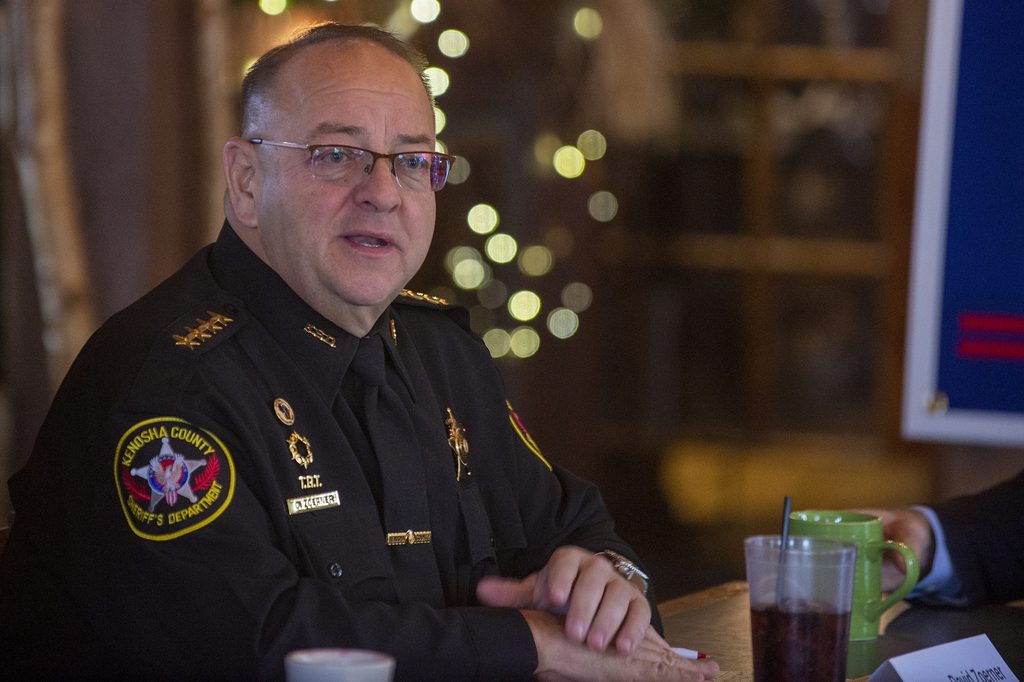
Kenosha County Sheriff David Zoerner and representatives of the Racine County Sheriff’s Office both expressed interest in obtaining additional state funding to increase patrols along Interstate 94, one of Wisconsin’s busiest transportation corridors.
Zoerner explained that additional deputies assigned to the interstate could help law enforcement intercept illegal firearms, fentanyl and other dangerous drugs moving through southeastern Wisconsin. He also identified human trafficking and individuals distributing child sexual abuse material as criminal activity that increased proactive enforcement could help uncover.

(Photo by Kevin Mathewson, Kenosha County Eye)
Interstate 94 connects southeastern Wisconsin with the Chicago metropolitan area and serves as a major transportation route for commercial vehicles and passenger traffic. Local law enforcement officials see opportunities for proactive enforcement beyond traditional traffic violations, particularly when traffic stops and investigations uncover more serious criminal activity.

Representatives from the Racine County Sheriff’s Office echoed Zoerner’s request, indicating that the desire for increased interstate enforcement is shared by neighboring agencies. Additional state funding could allow sheriff’s offices to dedicate more deputies to interstate patrols without pulling personnel away from existing responsibilities elsewhere in their counties.

Democratic District Attorney Calls For Higher Prosecutor Pay To Address Staffing Shortages
Another significant topic was the need to increase compensation for prosecutors and public defenders in Wisconsin.

Participants expressed concerns that compensation for government attorneys is not competitive with other states, making it more difficult to attract and retain qualified attorneys in Wisconsin’s criminal justice system.

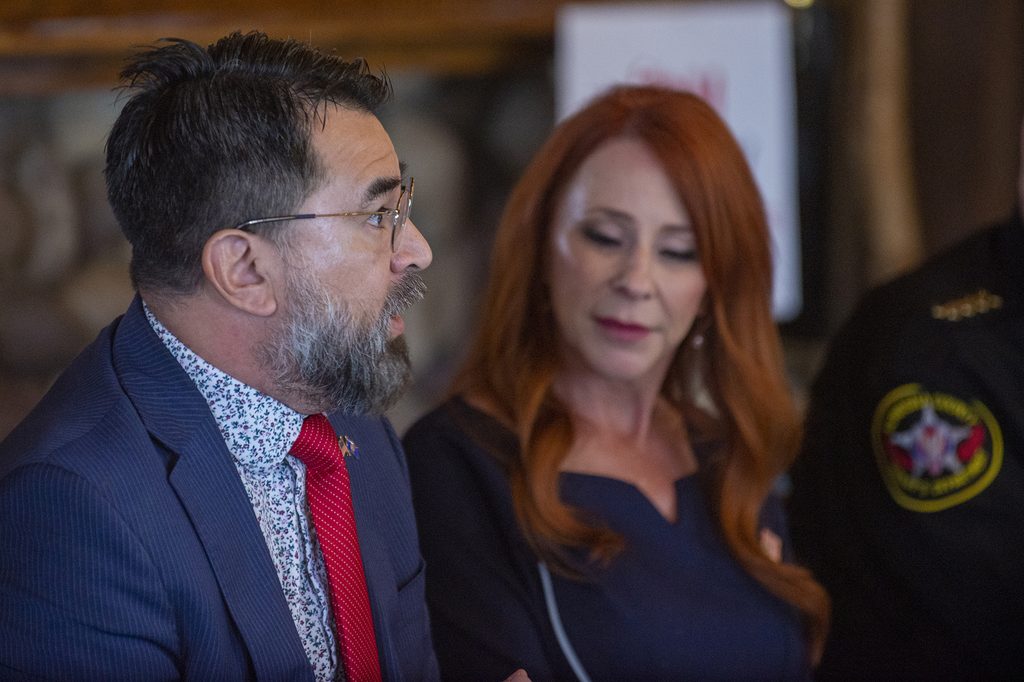
Racine County District Attorney Patricia Hanson (D) specifically discussed the difficulties her office faces in maintaining adequate staffing levels and recruiting assistant district attorneys. Hanson explained that the compensation available to prosecutors presents challenges when competing for attorneys who may have more financially attractive opportunities elsewhere.
The issue extends beyond prosecutors. Participants also discussed the importance of competitive compensation for public defenders, who represent defendants unable to afford private attorneys. Both sides of the criminal justice system depend on having enough qualified lawyers to handle cases efficiently and protect the rights of those involved.
When district attorney’s offices struggle to recruit prosecutors, existing attorneys must absorb additional cases. Similarly, shortages of public defenders or private attorneys willing to accept court appointments can contribute to delays in criminal proceedings.
The discussion highlighted an area of concern shared by participants from different political backgrounds. Although Hanson is a Democrat and Tiffany is a Republican, the issue of attorney compensation was raised as a practical challenge affecting the operation of Wisconsin’s criminal justice system.
(Photo by Kevin Mathewson, Kenosha County Eye)
Mental Health Detentions Creating Hours Of Travel And Frustration For Police
One of the most extensively discussed issues involved Wisconsin’s emergency mental health detention process, commonly referred to by officers as a Chapter 51 detention, or “chaptering” someone.
Law enforcement representatives described serious frustrations with the current system, particularly when officers must transport individuals experiencing mental health crises to state facilities such as Mendota Mental Health Institute in Madison or Winnebago Mental Health Institute near Oshkosh.
According to concerns raised during the discussion, some transports can involve three to three-and-a-half hours of driving each way, followed by additional hours waiting to learn whether a facility will accept the individual or whether a bed is available.
For a department already struggling with staffing, such a trip can tie up an officer or deputy for most of a shift or longer. During that time, the officer is unavailable to respond to calls for service, investigate crimes or patrol the community.
Participants also expressed frustration with the role of social workers in the emergency detention process. Officers described a system in which decisions they believe were previously made by law enforcement are now subject to review and approval by social workers and other mental health professionals. Several participants questioned whether those making the decisions have the same firsthand understanding of the circumstances encountered by officers responding to potentially dangerous mental health emergencies.
(Photo by Kevin Mathewson, Kenosha County Eye)
Sheriff Zoerner Recalls When Kenosha Had Two Hospital Mental Health Units — Now There Are None
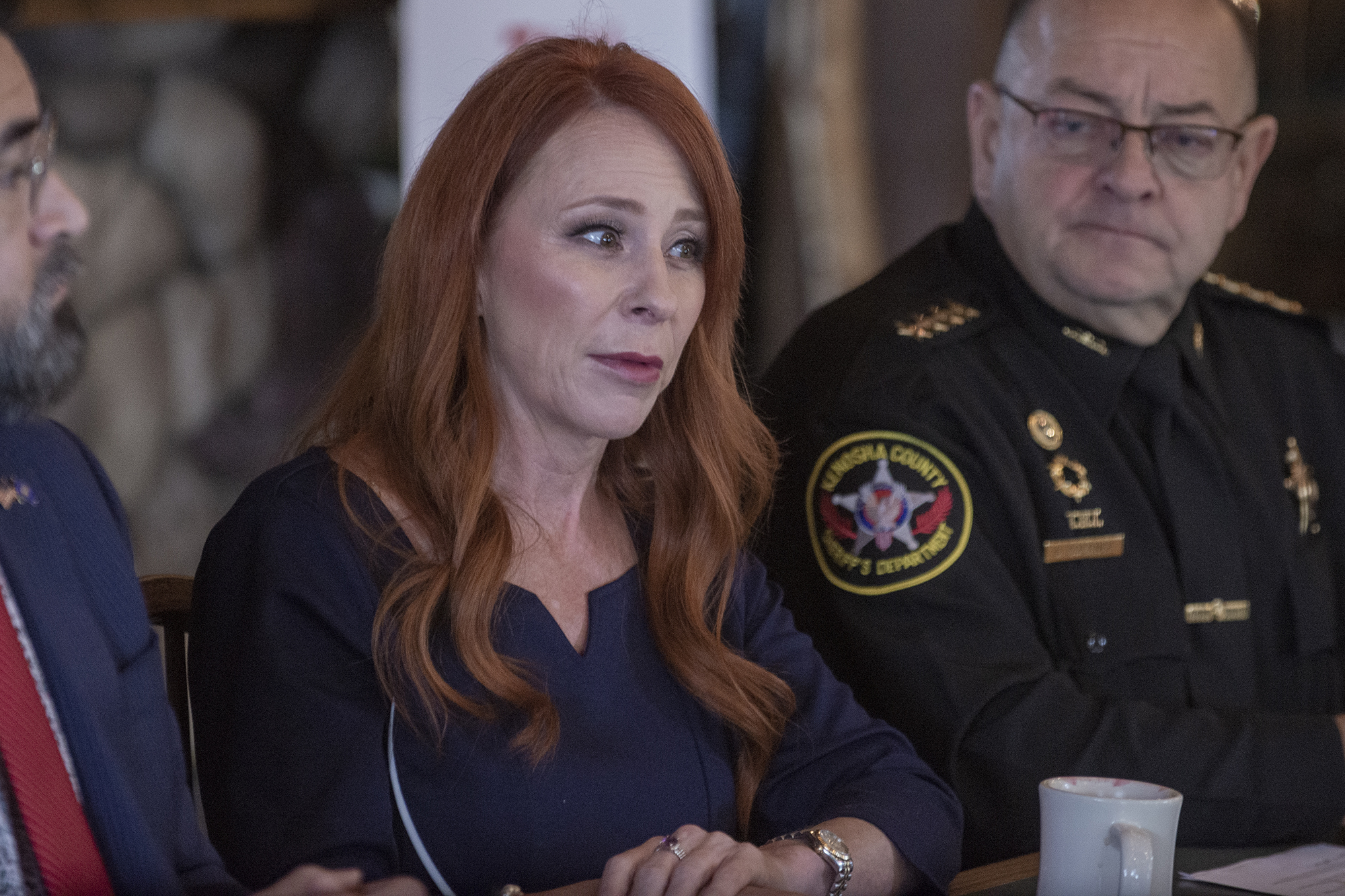
Sheriff David Zoerner provided historical perspective on the decline of local inpatient mental health services in Kenosha County.
Zoerner recalled that when he was a young police officer, two different Kenosha hospitals each had a floor dedicated to mental health treatment. Today, he said, neither of those inpatient units remains available.
The disappearance of those local options has left law enforcement agencies with fewer nearby places to bring individuals experiencing serious mental health crises, contributing to the need for lengthy transports to facilities elsewhere in Wisconsin.
The sheriff’s comments underscored how the loss of local psychiatric treatment capacity has affected not only patients and families, but also the officers responsible for responding to mental health emergencies.
When officers must travel several hours to obtain treatment for someone in crisis, the consequences extend beyond transportation costs. Those officers are unavailable to their communities, and the individuals being transported may be taken far from their families and local support networks.
Representative Nedweski Highlights Illinois Mental Health Partnership As Possible Model
State Representative Amanda Nedweski discussed an initiative she helped advance during her time serving on the Kenosha County Board.
Nedweski was involved in arranging an agreement with a private mental health treatment facility in Illinois, providing Kenosha County with a closer option for certain emergency mental health patients who otherwise might have required transportation to distant Wisconsin facilities.
The partnership was established with Lake Behavioral Hospital in Waukegan, Illinois, allowing some Chapter 51 patients to receive treatment approximately 30 minutes from Kenosha rather than requiring a trip of several hours.
Nedweski said she would like to see additional partnerships between government agencies and private mental health hospitals, suggesting that similar arrangements could help address the shortage of accessible treatment facilities.
Such partnerships could potentially reduce transportation times, save taxpayer money and allow officers to return to their communities more quickly. They could also keep patients closer to their families and support systems.
(Photo by Kevin Mathewson, Kenosha County Eye)
Tiffany Pledges To Support Police And Avoid Premature Statements After Officer-Involved Shootings
Tiffany also addressed the relationship between the governor’s office and law enforcement, promising that officers would have his support if he is elected.
The congressman emphasized that he would not make inflammatory public statements that could unnecessarily place law enforcement officers at risk, particularly following controversial incidents such as officer-involved shootings.
Tiffany said he believes elected officials should wait until the relevant facts are known before publicly commenting on incidents involving police use of force, rather than drawing conclusions while investigations are still underway.
The discussion included references to the unrest that occurred in Kenosha in August 2020, when protests following the police shooting of Jacob Blake were accompanied by widespread property destruction, fires and violence.
Tiffany’s comments reflected his position that political leaders should avoid escalating tensions during volatile situations and allow investigations to establish the facts before making public judgments about officers’ actions.
His remarks were consistent with positions he previously outlined during an exclusive November 2025 interview with Kenosha County Eye at Bristol Oaks Country Club.
“If I would have been governor, those riots would not have happened in Kenosha,” Tiffany told KCE during that earlier interview.
During that conversation, Tiffany also emphasized the importance of executive leadership during emergencies and pledged to make public safety a priority of his administration.
(Photo by Kevin Mathewson, Kenosha County Eye)
Police Staffing And Recruitment Among Other Concerns
The need for additional police officers and sheriff’s deputies was another subject discussed during Friday’s gathering.
Law enforcement representatives raised concerns about having enough personnel to meet the demands placed on their agencies. The discussion connected staffing challenges with the other issues raised throughout the roundtable, including interstate enforcement and the lengthy periods officers can spend handling mental health detentions.
Adding personnel would allow departments to devote more resources to proactive policing while maintaining sufficient staffing to respond to emergencies and routine calls for service.
The mental health transportation issue was particularly relevant to staffing concerns. When an officer must spend several hours driving a patient to a distant facility, waiting for an admission decision and then returning to the community, that officer cannot perform normal patrol duties during that period.
For smaller departments, losing even one or two officers for an extended period can create substantial operational challenges.
(Photo by Kevin Mathewson, Kenosha County Eye)
Congressmen, Sheriffs, Prosecutors And Local Officials Attend
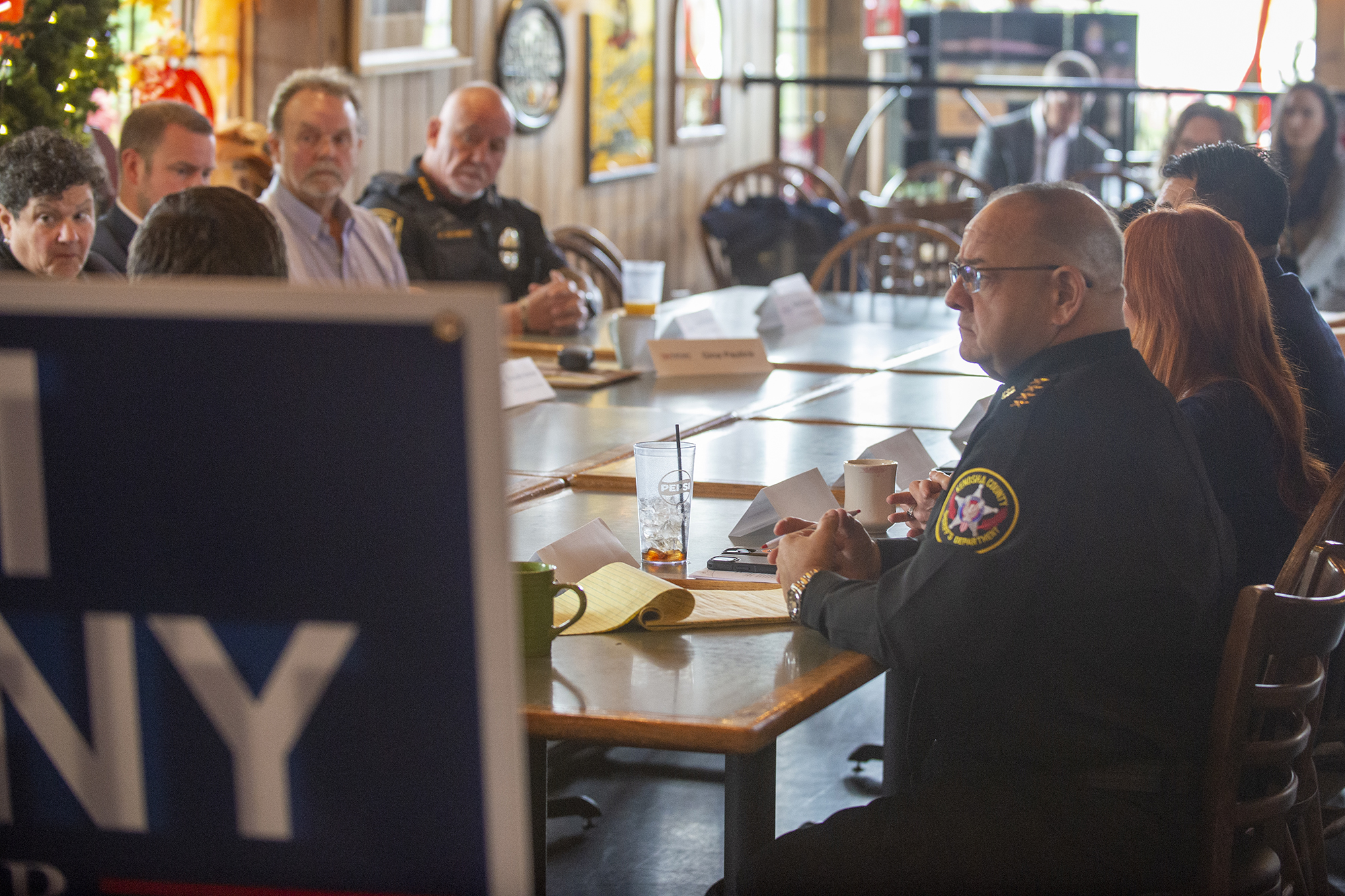
The roundtable brought together officials representing several southeastern Wisconsin communities and different levels of government.
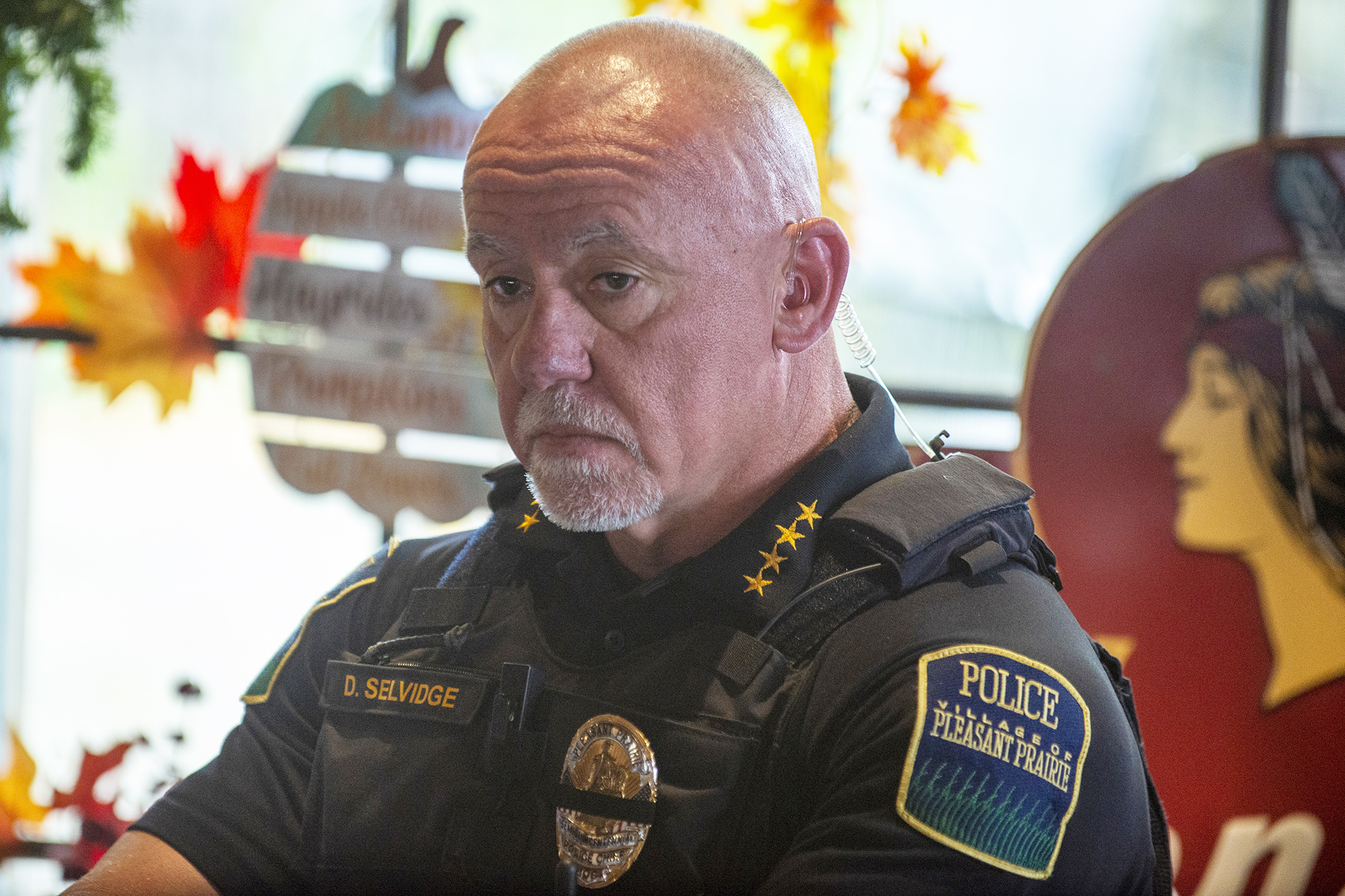
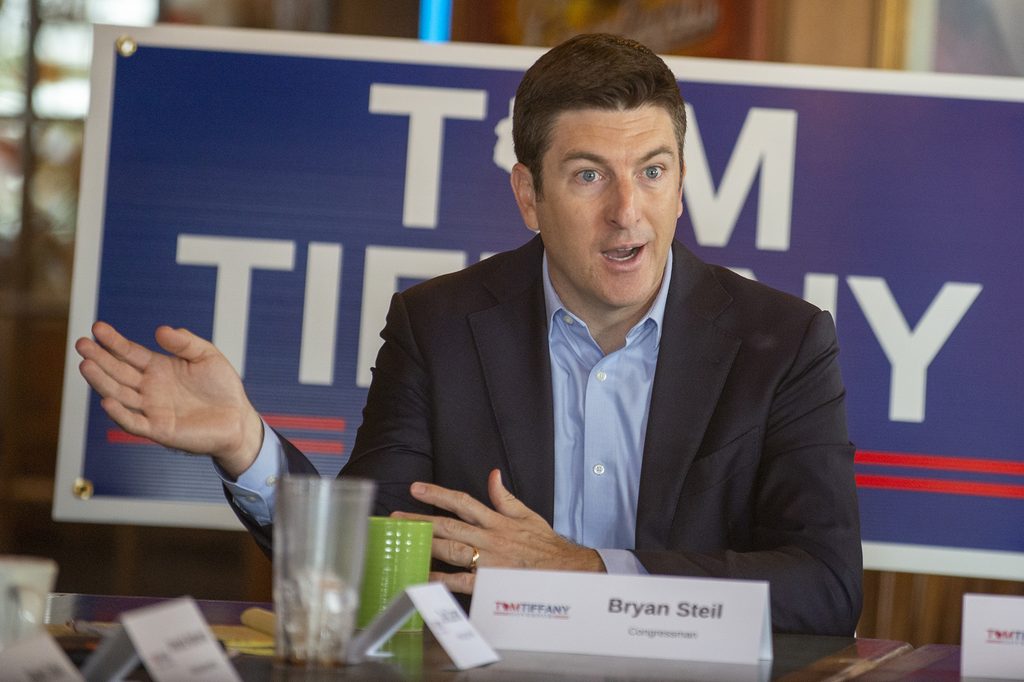
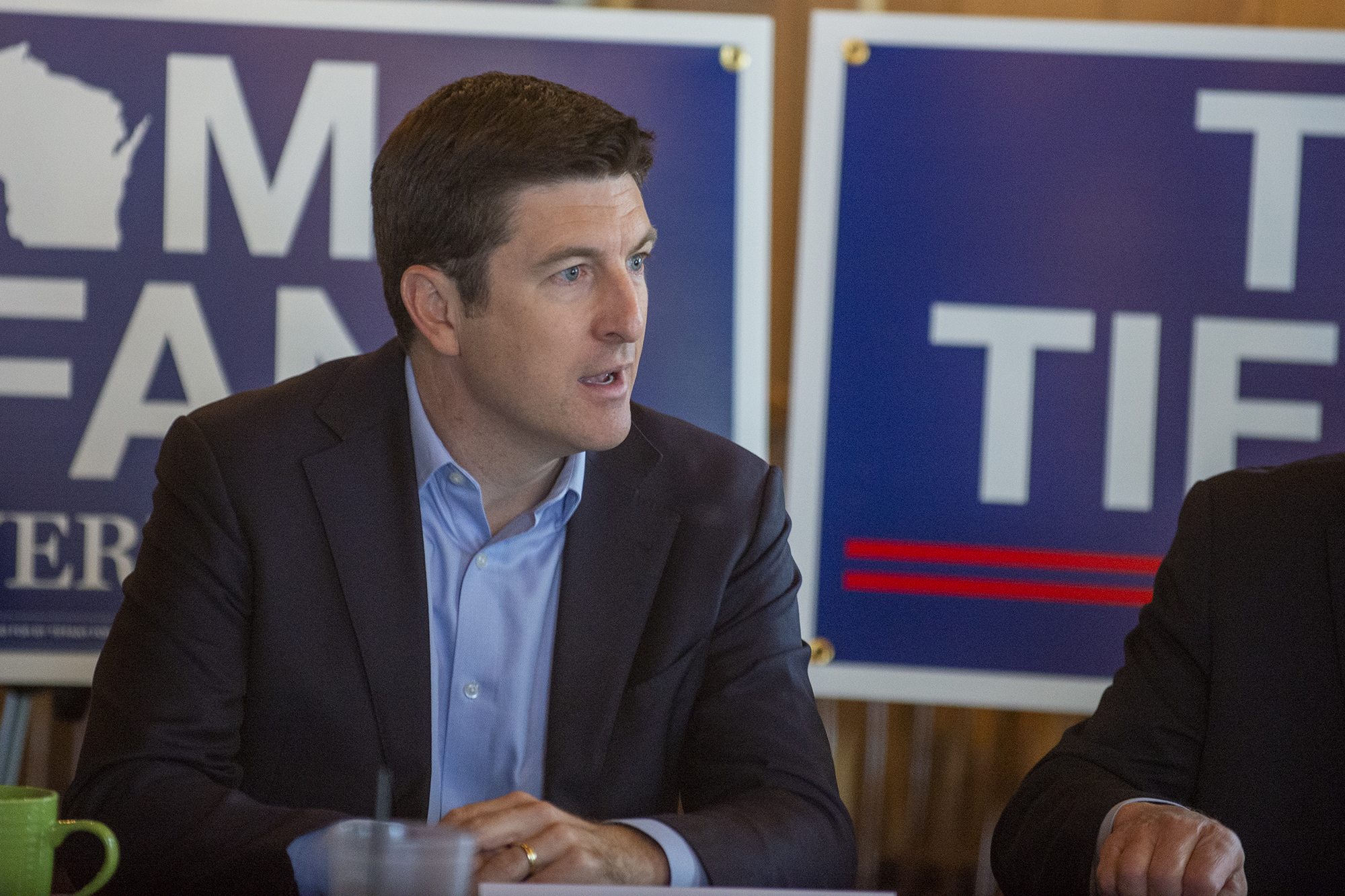
Among those in attendance were Congressman Bryan Steil, State Representative Amanda Nedweski, Kenosha County District Attorney Xavier Solis, Kenosha County Sheriff David Zoerner, Walworth County Sheriff David Gerber, Walworth County Undersheriff Tom Hausner, Pleasant Prairie Police Chief David Selvidge, Racine County District Attorney Patricia Hanson (D), Racine County Deputy District Attorney Christopher Steenrod (D), and Kenosha Professional Police Association President Rusten Sheskey.
Also attending was Racine County Sheriff’s Captain Cary Madrigal, who is seeking to succeed retiring Sheriff Christopher Schmaling, as well as Mount Pleasant Village President David DeGroot and other political representatives.
(Photo by Kevin Mathewson, Kenosha County Eye)
The presence of prosecutors alongside police administrators and elected officials provided an opportunity for participants to discuss public safety issues from different perspectives, including criminal investigations, prosecution, deployment of police resources and the role of state government in supporting local agencies.
Public Safety Remains Central To Tiffany’s Campaign
Friday’s event was part of Tiffany’s Safe Communities Tour, which his campaign organized to discuss public safety priorities with law enforcement representatives across Wisconsin.
In announcing the roundtables, Tiffany’s campaign contrasted his positions with those of Democratic gubernatorial candidate David Crowley, criticizing Crowley’s record on incarceration policy, penalties for repeat drunk drivers and domestic abusers, and cooperation with federal immigration enforcement.
Tiffany’s Kenosha appearance also continued a conversation he began with Kenosha County Eye nearly a year earlier. During his November 2025 exclusive interview, Tiffany discussed public safety, economic development and his approach to governing Wisconsin.
Friday’s roundtable gave law enforcement representatives an opportunity to identify practical concerns that could require state action, including funding additional interstate patrols, increasing compensation for prosecutors and public defenders, addressing lengthy mental health transports, expanding public-private treatment partnerships and improving staffing levels at local police and sheriff’s departments.
Following the Kenosha event, Tiffany was scheduled to continue his Safe Communities Tour with another law enforcement roundtable in Elm Grove on Friday afternoon.
For the sheriffs, police chiefs, prosecutors and officers who attended the Kenosha gathering, the discussion highlighted specific public safety challenges they believe deserve attention from Wisconsin’s next governor.