


KENOSHA, Wis. — Setting bail for defendants accused of violent crimes or sexual assaults, especially those involving children, is among the most consequential decisions made in a courtroom. Get it wrong, and innocent people can be hurt or killed. Kenosha County Eye has repeatedly criticized Court Commissioner Daniel “Catch & Release” Kellum for releasing defendants accused of serious crimes on no-cash bail. This publication believes his decisions reflect a misguided, politically driven approach to criminal justice that places too little emphasis on the risks associated with pretrial release. But there is another danger that rarely enters the conversation: What happens when a defendant facing decades in prison is released without posting a penny and then takes his own life? William E. Frazier Jr., 58, of Kenosha, accused of sexually assaulting a child under 13 and facing up to 60 years in prison, died September 22, 2026, in what a source describes as an apparent suicide, less than a month after Kellum released him on no-cash bail. Kenosha County Eye has warned for months that Kellum’s decisions could eventually cost someone their life. Did that warning just become reality?


The consequences of inadequate bail decisions have already been demonstrated in Wisconsin. Last month, police say Adam Scott Threlkeld, 45, of Milwaukee, fatally shot Antero Medina III, 33, inside Kenosha’s Shenanigan’s tavern before opening fire on responding police officers. Threlkeld had been released on no-cash bail in a pending Milwaukee County case involving allegations against a police officer. In another notorious example, Darrell Brooks was free after posting just $1,000 cash bail when he drove through the Waukesha Christmas Parade in 2021, killing six people and injuring dozens more. Those cases demonstrate why pretrial release decisions deserve careful scrutiny, although they do not establish that every defendant released on bail poses a danger.

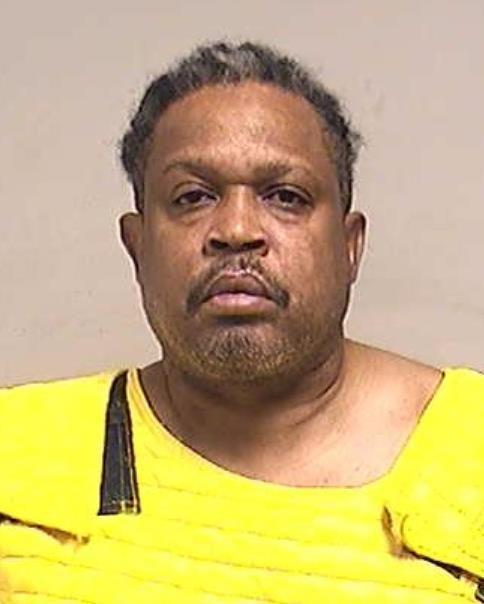
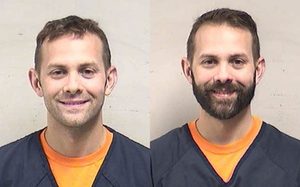
(Kenosha County Sheriff’s Office)
Accused Of Sexually Assaulting A Child
According to a criminal complaint filed July 27, 2026, Frazier was accused of sexually assaulting a young girl during an overnight stay at her grandmother’s Kenosha home in 2024. Frazier was identified as the grandmother’s husband. The child eventually disclosed the allegations to a counselor, and Kenosha police began investigating. During a subsequent forensic interview, the child described inappropriate conduct and said she had been frightened to report what happened.
Prosecutors charged Frazier with first-degree child sexual assault, a Class B felony carrying a maximum sentence of 60 years in prison. On August 27, Frazier appeared before Kellum with defense attorney Terry Rose. Assistant District Attorney Matthew Zisi represented the prosecution. The hearing lasted approximately 10 minutes, during which Kellum denied a defense motion to dismiss the complaint and released Frazier on no-cash bail. The publicly listed conditions prohibited contact with the alleged victim.

Kenosha County Eye believes the decision was far too lenient given the seriousness of the allegations. A defendant facing a potential 60-year sentence deserves an individualized assessment of flight risk and appropriate release conditions. Wisconsin law limits the purposes for which cash bail may be imposed, but the severity of the charge and potential punishment remain legitimate considerations when determining whether a defendant is likely to appear in court.

Source Reports Similar Allegations In New Mexico
A source has told Kenosha County Eye that Frazier also faced child sexual assault-related allegations in New Mexico in 2024. The publication has not obtained the underlying charging documents and does not know the precise nature or extent of those allegations, whether they resulted in formal charges, or whether Frazier was ever convicted of an offense in that state.

The information raises questions about what authorities knew of Frazier’s background and whether any previous allegations were presented during his Kenosha court appearance. An allegation or investigation does not establish guilt, and Kenosha County Eye has not determined whether Kellum was made aware of the reported New Mexico matter.

An Apparent Suicide And A Troubling Question
According to a source who spoke with Kenosha County Eye, Frazier intentionally took pills in an apparent suicide attempt and was admitted to an intensive care unit. He reportedly remained hospitalized before dying September 22 at Froedtert South Pleasant Prairie Hospital. His obituary confirms the date and location of his death, although the manner of death has not been independently confirmed through medical examiner records.

Court records reveal that Frazier’s attorney requested an adjournment of his preliminary hearing in September. On September 17, the court received a letter from physician George Poullette, M.D., although its contents are not disclosed in the publicly available docket. A motion to dismiss was filed September 22, and Frazier’s death certificate was filed October 7. As of October 13, the criminal case remained listed as open.
I believe a more restrictive pretrial decision might have changed the circumstances surrounding Frazier’s death. Had substantial cash bail been imposed and Frazier been unable to post it, he could have remained in custody, where his medical and mental health needs would have been subject to jail supervision. That does not guarantee his safety. Suicides occur in correctional facilities, and there is no evidence establishing that Kellum knew Frazier was at risk or that detention would have prevented his death.
Nevertheless, the circumstances warrant questions about whether the court had sufficient information to make an appropriate release decision. In my opinion, allegations involving the sexual assault of a child, coupled with the possibility of decades in prison, demanded especially careful scrutiny.
We Warned About The Consequences
Kenosha County Eye has repeatedly questioned Kellum’s approach to pretrial release, particularly in cases involving serious allegations of violence and crimes against children. Those concerns extend beyond any single defendant and reflect a broader disagreement about how the courts should balance the rights of accused individuals with public safety and the administration of justice.
Frazier’s death does not prove that Kellum caused it. Nor does his death establish guilt in the criminal case, which was never decided by a jury. But the sequence of events raises legitimate questions about the decision to release him, the circumstances of his final hospitalization, and whether other conditions might have been appropriate.
For months, we have warned that questionable bail decisions could have tragic consequences. Now a man facing one of Wisconsin’s most serious criminal charges is dead, and the allegations against him will never be resolved in court.
The question remains: Could a different decision have changed the outcome? We may never know. But that uncertainty is no reason to stop scrutinizing the decisions being made in Kenosha County’s courtrooms.