




SOMERS, Wis. — If you live in the Village of Somers and want to keep a horse, the rule is straightforward: you generally need at least three acres of land. That rule applies throughout the Village, except now, effectively, for one woman. Tammy Jo Rose, the former bailiff for Kenosha County Circuit Court Judge Chad Kerkman, was allowed to keep her miniature horse on her roughly 1.5-acre property in the 9200 block of 12th Street and received $12,000 in settlement-related payments after hiring Disability Rights Wisconsin and escalating the dispute under federal disability law. Some residents are questioning whether Rose received special treatment, while a Village official told Kenosha County Eye that officials were reluctant to continue fighting the matter after attorneys became involved. Rose is also currently on bail in an unrelated felony identity-theft case.


Rose keeps a miniature horse named Sir Trottington. Somers Ordinance 10.03(B)(1) generally requires three acres for the first horse. Rose’s parcel is only about half that size, and Village records show she was warned and cited for keeping the animal there before Somers ultimately prosecuted her. KCE previously reported that Rose had received multiple citations and continued keeping Sir Trottington on the property despite the acreage requirement.

Rose fought the citations, maintaining that Sir Trottington was an emotional support or service animal and that federal disability laws required Somers to make an exception for her. She initially lost.


Following a Feb. 6, 2025 trial, Somers Municipal Judge Robert C. Kupfer found that the Village had proven Rose violated the ordinance. Kupfer wrote that Rose had not provided satisfactory evidence during the proceeding that her disability required the miniature horse and had not provided sufficient evidence concerning the horse’s alleged service-animal training. The court therefore did not reach the larger question of whether the ordinance had to be modified under federal disability law.

Rose appealed, later obtained representation from Disability Rights Wisconsin and filed a complaint against Somers with the U.S. Department of Justice alleging that the Village violated Title II of the Americans with Disabilities Act.

Rose’s Medical Issues
As the dispute progressed, Rose provided medical information in support of her request for an accommodation. The records identify ankylosing spondylitis, asthma, fatigue and degenerative disc disease of the lumbosacral spine among Rose’s medical conditions.

The records also identify Rose as HLA-B27 positive and list lumbar spondylosis, migraine headaches and primary narcolepsy with cataplexy. Additional listed conditions include hypersomnia and malaise. Rose’s records further list an elevated blood-pressure reading without a diagnosis of hypertension, recurrent dislocation of her left shoulder, a right rotator-cuff disorder, acute right-shoulder pain and right-shoulder instability.

In a handwritten letter submitted during the dispute, Rose said Sir Trottington had undergone extensive daily training to perform tasks as a service miniature horse. She argued that federal disability and housing laws required Somers to make an exception to its zoning rules and said having Sir Trottington made a significant difference in her ability to live a quality life.
By October 2025, KCE reported that settlement negotiations were underway. Sources familiar with those discussions said Rose would likely be allowed to keep Sir Trottington despite her property falling well short of the acreage requirement and would receive money as part of the settlement. At that time, KCE was also told Rose would be required to use a portion of the money to build a fence. That fence requirement disappeared.
A Village official has since told KCE that Somers originally intended to require Rose to use the $7,000 personal payment to pay for fencing on her property but ultimately decided against imposing that condition. The final signed settlement contains no requirement that Rose spend the money on a fence.
$12,000 Settlement
Under the final agreement, Somers agreed to provide Rose with a $7,000 check, with the agreement specifying that the payment would be provided through insurance.
Somers also agreed to provide another $5,000 to Disability Rights Wisconsin for Rose’s attorney fees, bringing the total settlement-related payments to $12,000.
The Village further agreed to dismiss its municipal enforcement case with prejudice, waive its right to enforce the underlying citations and obtain Village Board approval for an exemption from the three-acre requirement specifically for Rose’s property.
In practical terms, Rose went from being found guilty of violating Somers’ horse ordinance to receiving thousands of dollars and permission to continue keeping the same horse on the same undersized property.
The settlement does not contain an admission by Somers that it violated the ADA, and it expressly states that both sides deny wrongdoing or liability. Rose was also specifically not designated as the prevailing party.
In exchange, Rose broadly released her existing claims against Somers, and her attorney agreed to withdraw the DOJ complaint after the Village provided the settlement payments.
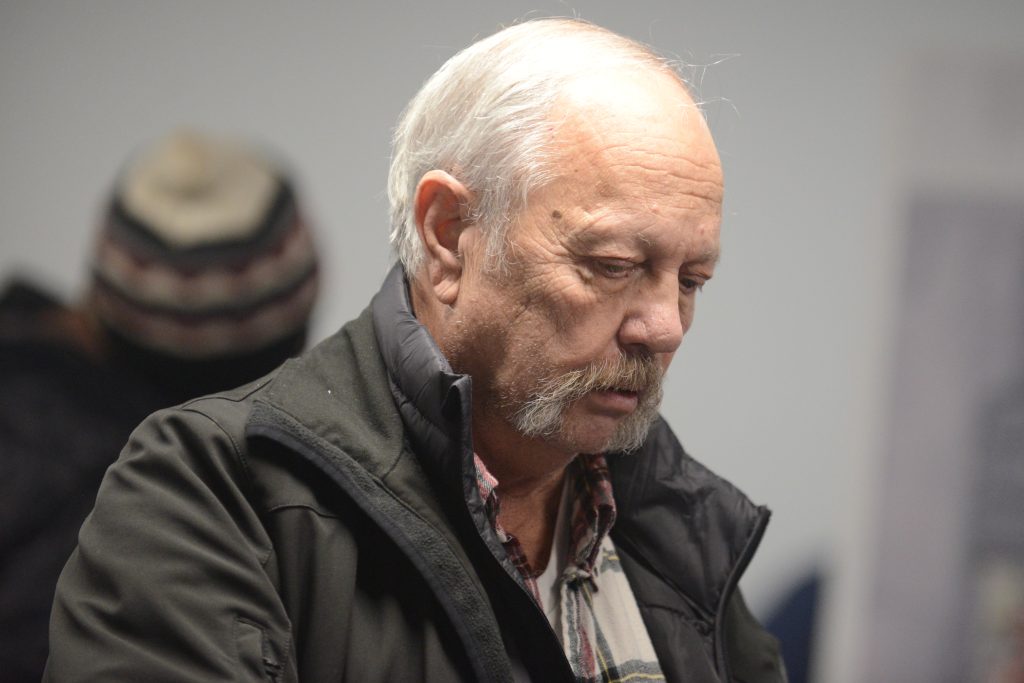
(File Photo by Kevin Mathewson, Kenosha County Eye)
Stoner, Village Board Approve Exception
Village President George Stoner (D) was publicly supportive of resolving the dispute. KCE reported in October 2025 that Stoner had reportedly approved or was preparing to approve the proposed deal while settlement negotiations were still ongoing.
The final accommodation then went before the Somers Village Board, which approved the resolution granting Rose the exemption. Stoner signed the resolution as Village President after its adoption by the board.
The March 24, 2026 resolution states that Rose provided the Village with confidential medical information “substantiating that she requires the support of a service animal” and identifies that animal as Sir Trottington.
The resolution also states that the U.S. Department of Justice took the position that Somers should modify its ordinance as a reasonable modification for Rose under federal law.
The Village Board consequently granted Rose an individualized exemption from the acreage requirement.
The exemption is tied specifically to Rose and her property. It does not transfer if the property is sold or changes ownership, and the resolution states that Rose must continue complying with other applicable laws and Somers ordinances.
The settlement also required Somers to make broader ADA-related changes, including identifying an ADA coordinator and creating a process for residents to seek reasonable accommodations or modifications involving Village programs and services.
The municipal enforcement action was formally stipulated for dismissal on April 27, 2026. On May 1, the municipal court entered an order dismissing the case with prejudice and without fees or costs to either side. Neither Rose nor Somers was deemed the prevailing party.
Residents Question Special Treatment
Some Somers residents have questioned why Rose ultimately received money and an exemption after first being found in violation of an ordinance that applies throughout the Village.
KCE previously reported residents describing the proposed arrangement as “special treatment,” including one taxpayer who questioned why an ordinary resident would be expected to remove an illegally kept animal while Rose was instead poised to receive money and permission to keep hers.
The criticism does not change the fact that Rose later provided additional medical documentation and that DOJ supported making a reasonable modification for her. But residents questioning the deal point to the unusually favorable end result: an individualized exemption, a $7,000 personal payment, another $5,000 for her attorneys, dismissal of the Village’s enforcement case and removal of the proposed fence requirement.
The circumstances have drawn additional attention because Rose has longstanding ties to the Kenosha County court system.
Rose formerly served as bailiff for Kenosha County Circuit Court Judge Chad Kerkman. She was charged in August 2025 with felony identity theft after prosecutors alleged she used a former boyfriend’s business account at Sherwin-Williams to make more than $280 in unauthorized purchases. The charge remains an allegation, and Rose has not been convicted.
At Rose’s preliminary hearing, she represented herself and testified on her own behalf. Commissioner Alexandra Smathers found probable cause and bound Rose over for trial. Rose highlighted her work as Kerkman’s bailiff and her previous work with the district attorney’s foster-care program during the proceeding. KCE was later told Rose was no longer serving as Kerkman’s bailiff.
Rose is currently on bail while that felony identity-theft case remains pending.
The horse controversy also predates the settlement. Records document an August 2024 incident in which Sir Trottington escaped from Rose’s property and was found tied near a roadway after deputies responded.
What ultimately changed was not Rose’s lot size or the language of Somers’ three-acre ordinance. Rose produced additional medical documentation, retained disability-rights attorneys and took the matter to the federal government.
DOJ ultimately supported an accommodation, and Stoner and the Somers Village Board approved the resolution rather than continue the dispute.
The final result was an exemption allowing Rose to keep Sir Trottington on property about half the acreage normally required, dismissal of the enforcement action, $7,000 for Rose, another $5,000 for her attorneys and, according to a Village official, abandonment of the proposed requirement that Rose use her personal settlement payment to build a fence.

























9 Responses
I have fatigue,malaise,and a chapped ass,can I have a horsey in pleasant prairie?
It’s not what you do but it’s who you know
Hahahaha. Lololol. Special emotional support horse! This lady is genius and making an absolute mockery of our system and those that lead it. We all are sitting back shaking our heads but slowly are allowing this erosion of sanity. Let’s keep this stupid sh*t going.
What would happen if she lived in an apartment? Would the apartment complex owner be ordered to build her a pen to keep her emotional support horse to comply with this ridiculous ruling?
I had a pony
Needs the emotional support for all the felonies she committed and false rape claims.
George Stoner is probably tapping it just like he was banging Somers’ old municipal clerk Fran Dibble.
Emotional support animals are a fucking joke. Tell me you are a pussy in life without telling me you are a pussy in life.
Weird… That last name sounds familiar.. I wonder if she is tied to any “influential” people here in Kenosha. What other sway may she have with a floral name like that? Her emotional support Maserati probably helps a bit too, with the rich corinthean leather seating….