



KENOSHA, Wis. — Three Kenosha County circuit judges have now refused the Kenosha County District Attorney’s Office’s routine requests to keep victim-witness identification keys under seal, leaving the identities of three minor girls publicly available in a recent felony child enticement case.
As previously reported by Kenosha County Eye, the dispute centers on the District Attorney’s Office’s use of victim-witness identification keys. Under that practice, criminal complaints filed with the court identify victims and witnesses only by their initials, while a separate document known as a victim-witness key contains their full names and dates of birth. The defendant and defense attorney receive the key, but prosecutors have routinely asked judges to keep it sealed from the public in an effort to protect victims’ identities, particularly children and victims of sexual assault.
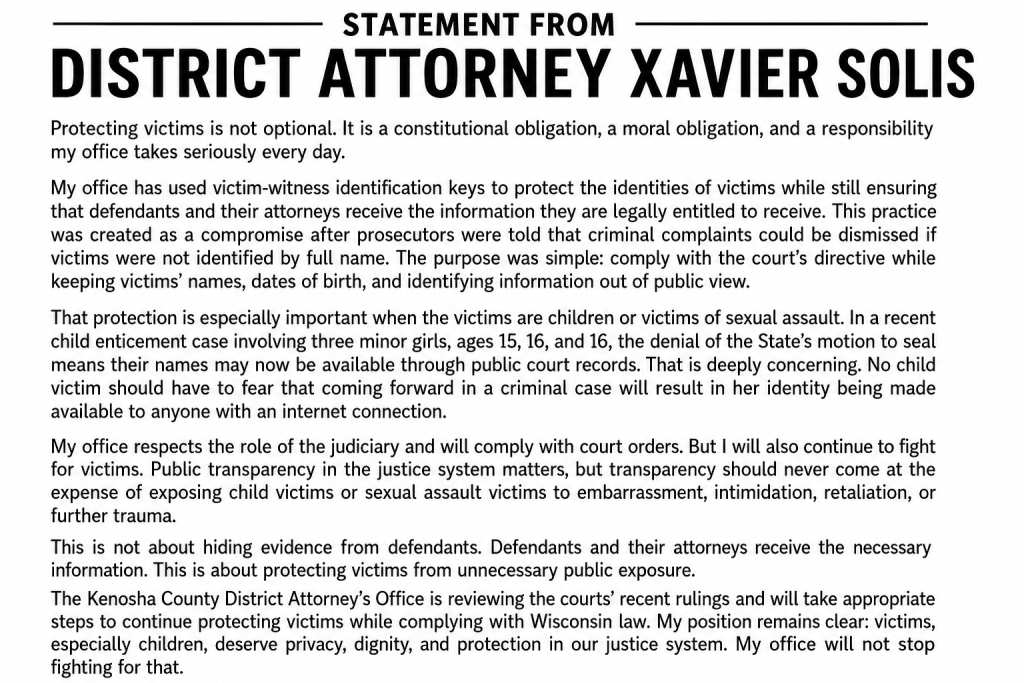
According to District Attorney Xavier Solis, the practice was adopted as a compromise after Judge Chad Kerkman warned prosecutors that he would dismiss criminal complaints if they failed to identify victims by their full names. Solis said the victim-witness key allowed prosecutors to comply with Kerkman’s directive while also attempting to honor the enhanced privacy protections afforded crime victims under Wisconsin’s Marsy’s Law constitutional amendment.
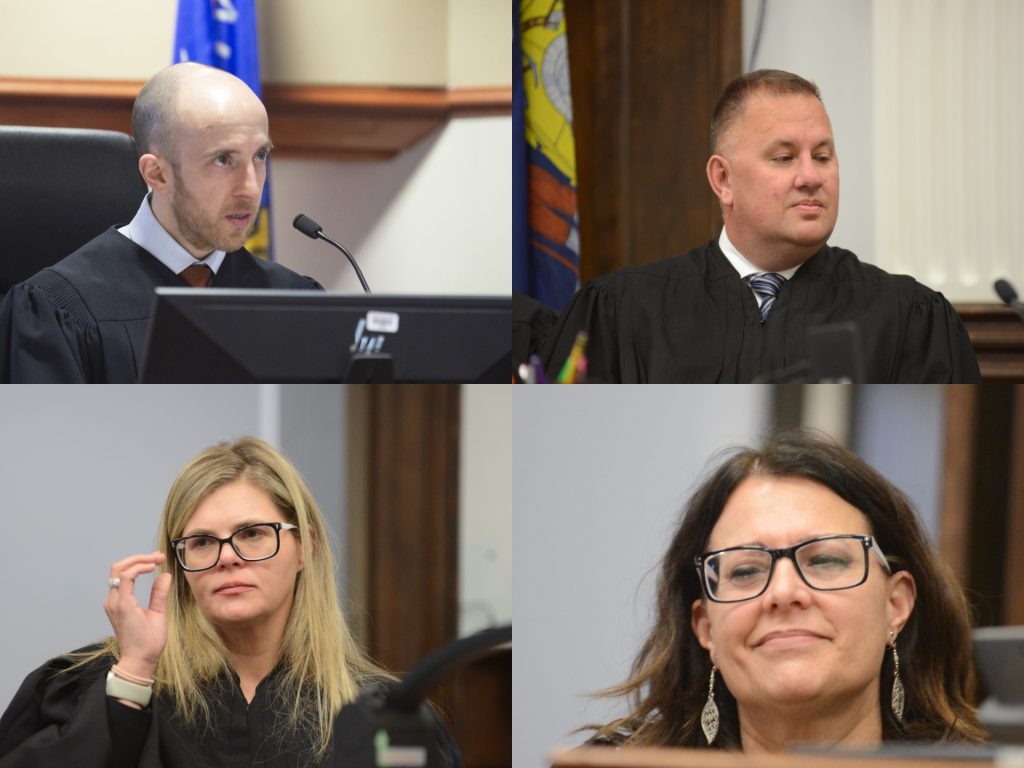
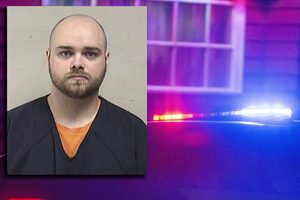
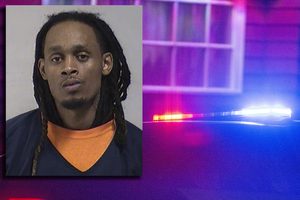
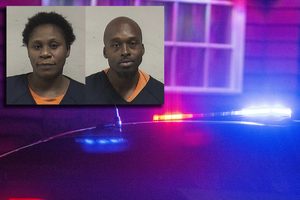
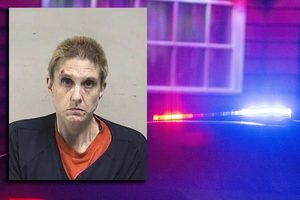
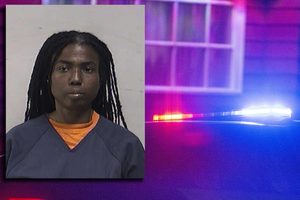
Bottom Row: Judges Heather Iverson (D) and Jodi Meier (D)
(File Photos by Kevin Mathewson, Kenosha County Eye)
Until recently, Judges Heather Iverson, David O. Hughes and Jodi L. Meier simply declined to rule on those motions to seal. Because the motions remained pending, the victim-witness keys effectively stayed sealed, preventing the public—but not defendants or their attorneys—from viewing victims’ names and dates of birth.
That practice changed recently.
More recently, Hughes and Meier began entering orders automatically denying the State’s motions to seal within hours after new criminal cases were filed. Their orders use identical language, suggesting the judges are working together to make their decisions.
Both judges wrote:
“The Court hereby denies Plaintiff State of Wisconsin’s motion to seal victim witness key because it does not comply with section 801.21(2) of the Wisconsin Statutes and fails to state any specific legal and factual basis for sealing or redaction. See State v. Cummings, 199 Wis. 2d 721, 740-41, 546 N.W.2d 406 (1996).”
The change in approach had an immediate effect. Documents containing highly sensitive victim information that previously remained inaccessible because the motions were never decided suddenly became public records after the motions were denied.
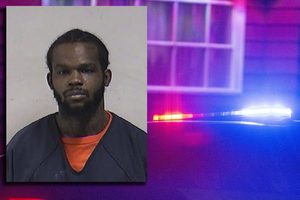
One of those cases involves Amir Mohammad-Khan, 24, of Milwaukee, who is charged with three counts of felony child enticement and one count of soliciting a child for prostitution. As soon as Judge Hughes denied the State’s motion to seal, the victim-witness key became a public record.
Today, anyone with an internet connection anywhere in the world can request a copy of that victim-witness key from the Kenosha County Clerk of Courts and obtain the full names of the three girls. Anyone can also walk into the Kenosha County Courthouse and view the document on the public-access computer terminals located in Rooms 109 and 204.
The criminal complaint identifies the girls only by initials but lists their dates of birth. They are 15, 16 and 16 years old.
Judge Jason Rossell has been denying the District Attorney’s Office’s blanket motions to seal victim-witness keys for nearly a year. His orders have consistently stated that the motions fail to comply with Wisconsin’s sealing requirements, and he has repeatedly warned prosecutors that continuing to file blanket motions lacking a sufficient legal basis could result in sanctions.
Now, nearly a year later, Hughes and Meier have joined Rossell in immediately denying those motions rather than allowing them to remain pending.
Judge Heather Iverson now appears to be the only remaining judge assigned to Kenosha County’s criminal rotation who has not begun immediately denying the motions. However, sources familiar with the matter tell Kenosha County Eye they expect that to change as well.
One insider familiar with the courthouse’s handling of the issue told Kenosha County Eye that while the judges may be correctly applying the law in routine criminal cases, they believe judges should exercise their discretion differently in cases involving child victims and alleged sexual assaults.
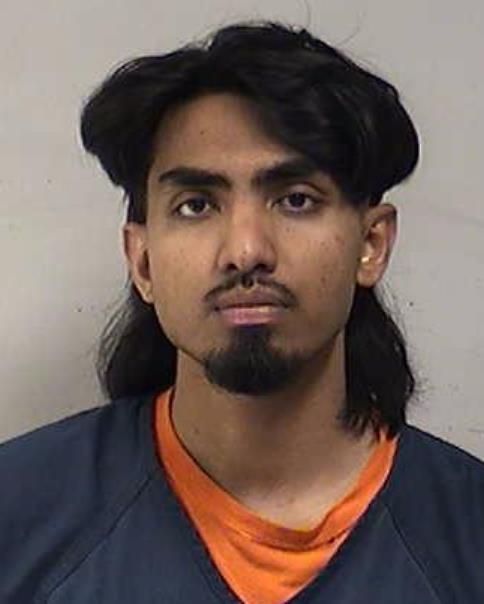
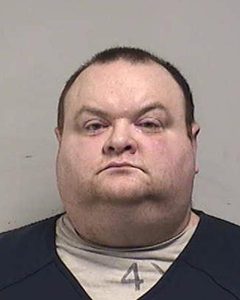
(Kenosha County Sheriff’s Office)
The source specifically criticized Hughes’ decision in the Mohammad-Khan case, arguing that this was precisely the type of case where the court should have exercised its authority to keep the victim-witness key sealed.
“You’ve got three girls who are 15, 16 and 16 years old who prosecutors allege were enticed by a 24-year-old man for sexual purposes,” the source said. “Even if the State’s motions aren’t perfectly drafted, the judges control what gets sealed and what gets unsealed. They have the authority to protect these children until the issue is fully litigated, and they should have done so.”
Despite Rossell’s warning that sanctions could be imposed, the District Attorney’s Office continues filing blanket victim-witness keys with virtually every criminal complaint involving an identifiable victim and continues filing identical motions asking the court to seal them without providing a case-specific legal and factual basis.
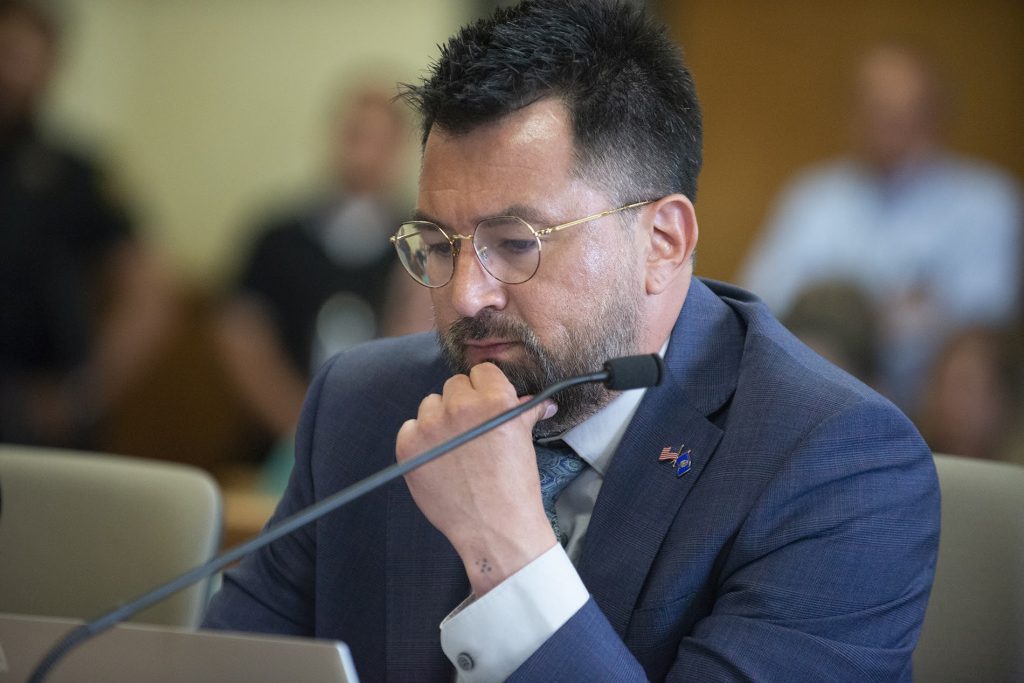
(File Photo by Kevin Mathewson, Kenosha County Eye)
Kenosha County District Attorney Xavier Solis told Kenosha County Eye he is at a loss over the courts’ recent shift. Solis said the victim-witness key was created as a compromise after Judge Chad Kerkman warned prosecutors that he would dismiss criminal complaints if they did not identify victims by their full names in the complaints themselves.
According to Solis, the compromise allowed the District Attorney’s Office to use victims’ initials in publicly filed complaints while placing their full names on a separate victim-witness key filed with the court.
“I’m at a loss,” Solis said. “This was the compromise that everyone agreed to.”
Solis said victim-witness keys are used by numerous district attorney’s offices across Wisconsin and said his office remains committed to protecting the privacy and identities of crime victims, particularly children and victims of sexual assault.
“Our office remains committed to protecting victims, especially children and victims of sexual assault,” Solis said. “We’re evaluating how we can continue protecting victims while complying with the courts’ rulings.”
(cicchnilaw.com)
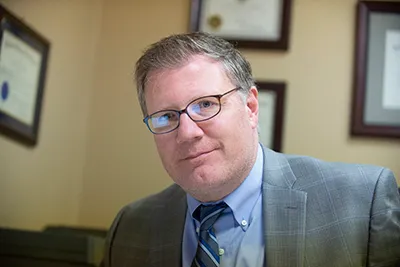
The legal dispute has also attracted support from Kenosha criminal defense attorney and legal author Michael D. Cicchini, who recently filed a brief supporting the judges’ decisions to deny the blanket sealing requests.
“The real question is not whether the state’s victim witness key can be sealed; the real question is why it even exists in the first place,” Cicchini wrote. He argues Wisconsin law requires criminal complaints to identify the complaining witnesses themselves rather than relying on initials and a separate “decoder key.”
Cicchini also argued that transparency—not secrecy—protects the integrity of Wisconsin’s judicial system.
“Allowing the prosecutor to publicly name and charge the defendant, while simultaneously hiding the identity of the accuser and the witnesses from public view, is what harms the integrity of judicial proceedings,” he wrote.
The controversy represents a dramatic shift from the practice followed under former Democrat District Attorney Michael Graveley. For years, the District Attorney’s Office routinely used only initials for child victims and alleged sexual assault victims in criminal complaints, and in some cases referred to them simply as “John Doe” or “Jane Doe.” The judges handling criminal cases at the time did not object to the practice. The issue has only become controversial now that the office is led by a Republican district attorney.
Today, all four judges assigned to Kenosha County’s criminal rotation are Democrats, while the District Attorney’s Office is led by Republican District Attorney Xavier Solis.
The dispute now centers on whether prosecutors may continue filing blanket victim-witness keys in every criminal case or whether Wisconsin law requires individualized findings before records identifying victims and witnesses may be withheld from public view.
For now, three of the four judges assigned to Kenosha County’s criminal rotation have changed course. Instead of allowing the motions to sit undecided—which effectively kept the victim-witness keys sealed—they are now denying them almost immediately, making documents containing victims’ names available for public inspection within hours of a criminal complaint being filed.






19 Responses
My wife and I met Hughes at a Republican event. Disappointed in him. Should of know he was a Liberal Democrat.
This issue became controversial when the state expanded this practice — not only to every accuser (whether child or adult), but also to eyewitnesses. Preliminary hearings have become a complete disaster. We’re now fumbling over initials with the reader-witness at the prelim: “Did RSR say this? Or was that SBG? What did eyewitness LLP say? Who are these people?” Things were fine if it was a minor inconvenience for defense lawyers in limited cases. But now that it’s been taken to the extreme, in violation of the statutes and case law, it can’t be tolerated any longer. The law requires accusers and witnesses to be named in the complaint. It’s the classic requirement to assert “Who says so?” Enough with the decoder keys and the courtroom chaos. Just follow the law.
It authoritarianism anarchy. Rules for thee but not for me.
There are habitual petitioners for restraining orders and the statute is clear. Their address is the only lawfully sealed part of the file. Yet across the board names are not shown in ccap.
Showing names identify the abusers!
I got my secret decorder ring in the mail after eatint 15 boxes of Peanut Butter Cap’n Crunch and sending in the box tops.
Send the towel head back to Iran
He’s from Israel
Send him to Idaho. They have a new law that sex offenders to children get the shooting squad!
Sounds like the UK
Unheard of 😡😡😡😡😡😡. They all need a ride to the train station
Yep! I agree!
How would Sharia Law handle him? Oh, I forgot, he would be cheered. Only women are brutalized. Shoot him in his weenie and deport.
Like you know. Hahahqh
Next he will be attending flight school.
If he’s part of the see I a or mosad
Who are these half witts to judge anyone! The evil they portray to be justice will come back on them. Appointed by some people in the system to judge others who are not part of system
This is how they do it in the Modern Day United Kingdom.
An Islamic invader terrorizes and rapes local young females.
Then the authorities do nothing fearing being labeled as Islamophobics and sweep these crimes under their Liberal Marxist Rugs.
The victims then increase as the Islamic terror increases on the Infidel population.
Kenosha County is turning into the 2026 United Kingdom.
Now cooperate with ICE and get these sexual predators locked up and/or deported.
Protect the identities of the victims so they are not victimized twice…by these local Marxist Reprobate Judges.
If one of these low IQ hack judges’ kids were raped you know their kids names and dates of births would not be showing up in public documents.
Our four Socialist judges.
What Michael Cicchini said!!!! Well said!!!!! I’ve read all of your articles, and Published work… and the approaches you have taken to the law. You are correct to say it has been a disaster.