



(File Photo by Kevin Mathewson, Kensosha County Eye)
KENOSHA COUNTY, Wis. — If you or your child were the victim of a sexual assault, would you want a stranger to be able to walk into the Kenosha County Courthouse, pay $1.25, and walk out with your full name and date of birth? In Kenosha, that’s not a hypothetical — it can happen right now, depending on which judge is assigned to the case.
(File Photo by Kevin Mathewson, Kenosha County Eye)
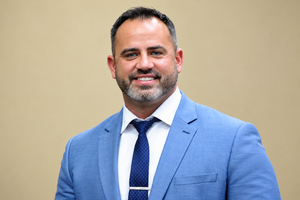
A quiet but consequential battle is unfolding inside the courthouse over how victims are identified in criminal complaints. At the center of the dispute is Judge Chad Kerkman, who has told court commissioners, including Commissioner William Michel II, that they are to dismiss all criminal charges unless the complaint lists the victim’s full name.
A criminal complaint is the charging document prosecutors file to formally start a case. It lays out the allegations, identifies the defendant, and explains why there is probable cause to bring charges. For decades, victims — especially in sexual assault cases — were typically identified only by initials or by pseudonyms such as “Jane Doe.”
DA’s Workaround
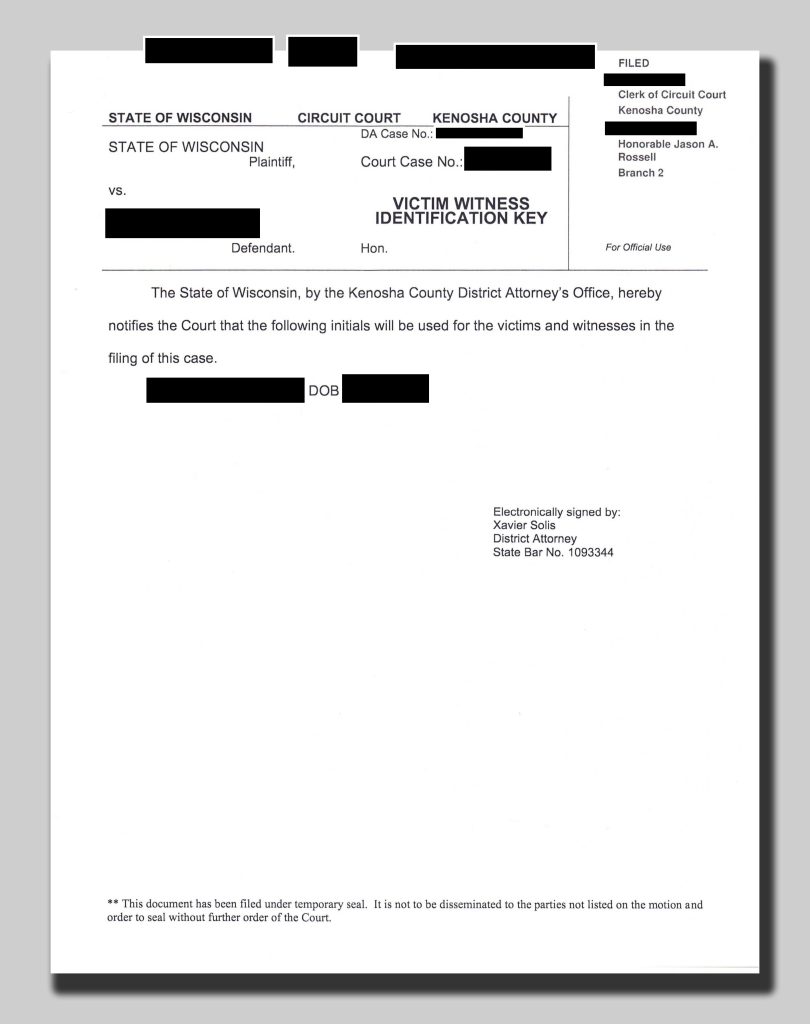
District Attorney Xavier Solis resisted Judge Kerkman’s demand, arguing that publishing the full names of victims, particularly minors and sexual assault survivors, puts them at unnecessary risk. Solis developed a system already used in other Wisconsin counties: he files a victim key alongside the criminal complaint.
In the complaint, the victim is identified by initials. The sealed victim key contains the full name and date of birth of the victim. Judges can decide whether to keep that key sealed or unseal it. Solis believed this balanced Kerkman’s directive with longstanding privacy protections.
(File Photo by Kevin Mathewson, Kenosha County Eye)
Judges Divided
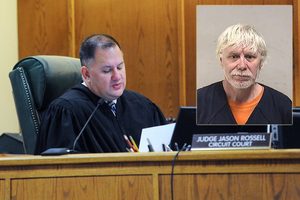
So far, three Kenosha County judges — Anthony Milisauskas, Heather Iverson, and Jodi Meier — have sealed victim keys, shielding identities from public view. But Judge Jason Rossell has taken a different approach.
Rossell has refused to seal the victim key, meaning anyone who pays the modest copying fee can obtain the full name and birth date of a sexual assault victim. This week, Kenosha County Eye obtained such a document for $1.25 at the courthouse records office in Room 204. While this media outlet will not publish the victim’s identity, the ease of access illustrates how Rossell’s stance could expose victims’ names to the public before they ever testify.
In a series of written orders, Rossell explained that Wisconsin law does not give him authority to seal such documents, noting that statutes spell out what information can be kept confidential — and victims’ names are not included. He pointed to the state’s strong tradition of open courts and public records, reasoning that any exception must be made by the Legislature, not by judges. Rossell went further, warning prosecutors that if they continue to file blanket motions to seal victim keys without citing case-specific facts, he may impose monetary sanctions against the district attorney’s office.
Some attorneys believe Rossell is legally correct, that he lacks authority to seal the keys. But others argue that Kerkman overstepped when he ordered prosecutors to include full names in charging documents in the first place.
Longstanding Practice
Under former District Attorney Michael Graveley, the office regularly filed complaints using initials or pseudonyms such as “Jane Doe” or “John Doe.” That practice continued even after Wisconsin voters approved Marsy’s Law in 2020, a constitutional amendment intended to expand victims’ rights.
Solis’s approach follows that tradition while attempting to comply with Kerkman’s order. Victims’ names remain confidential unless and until they testify in open court, at which point they are identified in public.
Stakes for Victims
The split between judges has real consequences. If a case is assigned to Judge Rossell, victims of sexual assault — including children — may find their full names and birthdays in public files. If the case goes before Judges Milisauskas, Iverson, or Meier, their information remains protected.
For now, the clash highlights an unresolved tension: balancing open courts and public records with protecting the privacy and dignity of crime victims. With judges disagreeing and the district attorney’s office forced into a workaround, Kenosha County has become ground zero in a debate that could soon test the higher courts.
.
.
.
.
.
.
.





9 Responses
How about we get the judges address and phone number ? How would they like it?
Why not the military has them all.
It’s always amusing when judges ask for extra security for their “safety” while victims are not allowed the same “safety” measures.
Here’s what’s crazy. When I tried to give a thumbs up or down on this story, I was not allowed.
Was it “crazy”? Or just a glitch in the Matrix?
I don’t understand the race to anoint these alleged victims as “victims.” If you make a complaint to law enforcement in order to plunge another person into the depths of the criminal-justice cesspool, you should expect to be named. It’s an incredibly small price to pay compared to what you’re doing to the other person. Naming the accuser in the complaint might even deter false allegations. Next the liberals are going to say that the accuser shouldn’t have to testify at the preliminary hearing or trial. It’s a long, steep, slippery slope. The only imaginable exception to naming the accuser should be for minors, as it’s often their parents, and not them, who are pushing the accusatory narrative. But I’m not even sure about that exception.
Accusers haven’t testified in preliminary hearings in Kenosha in a LONG time.
So we’ve already set foot down the slippery slope, then. It’s probably too late to recover. It seems there’s a bunch of rudderless amateurs running the criminal injustice system.
Make an allegation, get named. Otherwise, as defendants are presumed innocent unless and until convicted, let’s redact their names, too.