



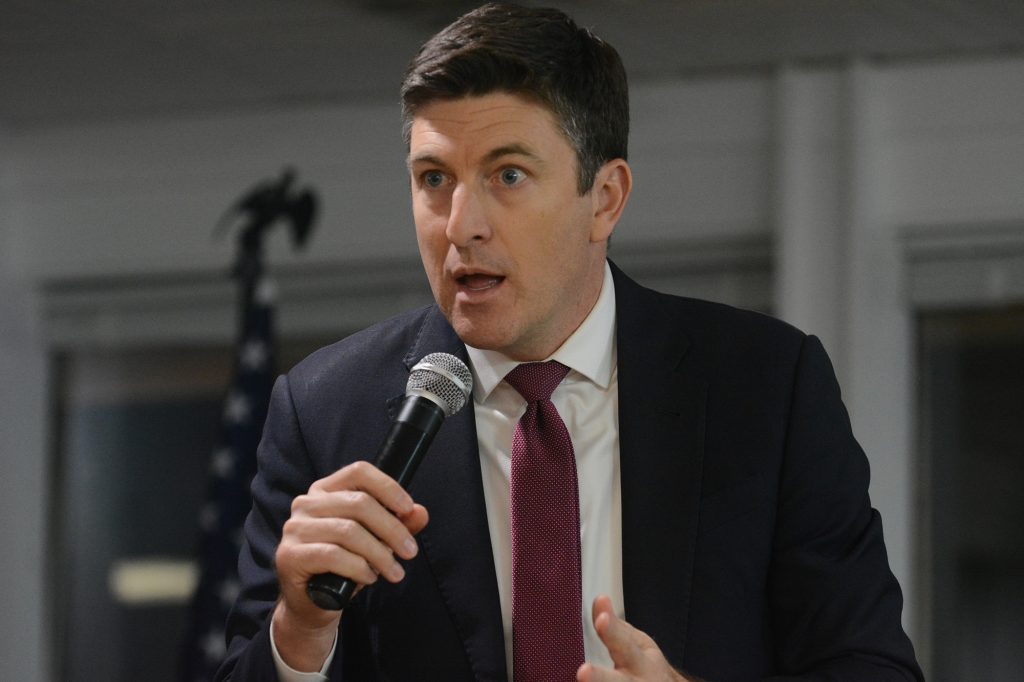
(File Photo by Kevin Mathewson, Kenosha County Eye)
WASHINGTON, D.C. — Congressman Bryan Steil and a bipartisan group of lawmakers have introduced a resolution designating May 14 as National Scam Survivor Day, an effort aimed at recognizing victims of fraud while encouraging education and prevention efforts nationwide.

The proposal comes amid growing concerns over the scale and sophistication of scams targeting Americans. According to figures cited by lawmakers backing the resolution, scammers stole more than $21 billion from Americans in 2025, affecting seniors, veterans, small business owners and younger adults.

Steil said many victims suffer not only financial losses but also embarrassment and stigma that discourage them from speaking publicly or seeking help.
“Each year, scammers exploit millions of Americans and defraud them of their hard-earned savings,” Steil said. “By sharing their experiences, scam survivors help break the stigma scam victims can face while ensuring our communities have the tools to identify, disarm, and report emerging scams.”

The legislation encourages people who have been victimized by scams to share their experiences and seeks a broader collaborative effort among government agencies, private businesses and nonprofit organizations to help identify emerging fraud schemes and support victims.

Several lawmakers from both parties signed on as original cosponsors, including Josh Harder, Dan Meuser, Jamie Raskin, Zach Nunn, Jefferson Shreve and Gabe Amo.

Harder described scams as more than an inconvenience, saying organized fraud operations are increasingly targeting ordinary families.

“Scams are more than just an annoying robocall — these organized attacks rob working families of their hard-earned savings and financial stability,” Harder said.

Nunn highlighted the impact fraud has had in Iowa, citing examples of victims who lost tens or hundreds of thousands of dollars through online relationship and investment scams. According to Nunn, Iowans lost roughly $96 million to financial fraud in 2025.
Raskin also used the proposal to emphasize the importance of reporting fraud crimes, saying victims should not feel ashamed after being targeted.
The resolution has also received support from the International Better Business Bureau.
The measure itself does not create criminal penalties or establish new programs, but supporters say formally recognizing scam survivors could help reduce stigma and raise awareness as online fraud and financial scams continue to evolve.
.
.
.
.
.
.
.
.
.
.










11 Responses
‘Scam Survivor’…….sounds like it should be awarded to taxpayers who pay for KUSD.
Is this assclown serious? All the goddamned problems we have and mini Paul Ryan is focused making a day for somebody. Scam survivors applies to everyone who survives DC.
Why don’t you run for Congressman??
This system is broken.
I’m not an assclown. That’s why I don’t run. It’s a cesspool
Lame, nothing the working people want. It’s over Brian. Paul used you as a getaway plan.
Good people have to pinch pennies to buy groceries.
“Please let me feed my.children”
God this guy is a fucking loser….
Fucking clown
The emergence of AI has brought many benefits, but when it is used for harmful purposes, it becomes a serious concern. It is increasingly being exploited by scammers, which is where we aim to help. If you or someone you know has been the victim of a scam, we encourage you to speak up and contact our organization for guidance on the appropriate next steps and to help raise awareness for others.
No benefits and never will be for working class
From the biggest scammer of all.