



(File Photo by Kevin Mathewson, Kenosha County Eye)
KENOSHA, Wis. — A Kenosha judge is set to decide Tuesday on a novel prosecution theory: Can a person be guilty of battery if the alleged victim specifically said she didn’t feel any pain?
The Case at Hand
The dispute began in May, when police were called to a Kenosha home for a reported domestic altercation. According to the criminal complaint, the accuser told officers she had been slapped during an argument. But in her initial account, she said she did not feel pain from the slap. She later added that, had she been sober, it would have hurt.
The complaint charged battery, a misdemeanor that carries up to nine months in jail and a $10,000 fine.
The Defense Argument
Defense counsel Michael D. Cicchini quickly moved to dismiss. In a filed document, he argued that speculation of possible pain, had the accuser not been drunk, doesn’t satisfy the element of actual pain that is required for battery.
The Prosecution’s Position
At the hearing Tuesday, prosecutors are expected to contend that hypothetical pain is good enough.
The Slippery Slope
Critics warn that if courts begin treating any physical contact as criminal battery, the law could slide into absurd territory. A tap on the shoulder to get someone’s attention, a congratulatory slap on the back after a big win, or even brushing past someone in a crowded hallway could suddenly be treated as crimes if such contact alone were enough.
Cicchini argues in his motion that the law has elements, and the court can’t simply ignore them under the state’s theory that, if the facts at the time had been different, it might have been a battery.
(File Photo by Kevin Mathewson, Kenosha County Eye)
What Comes Next
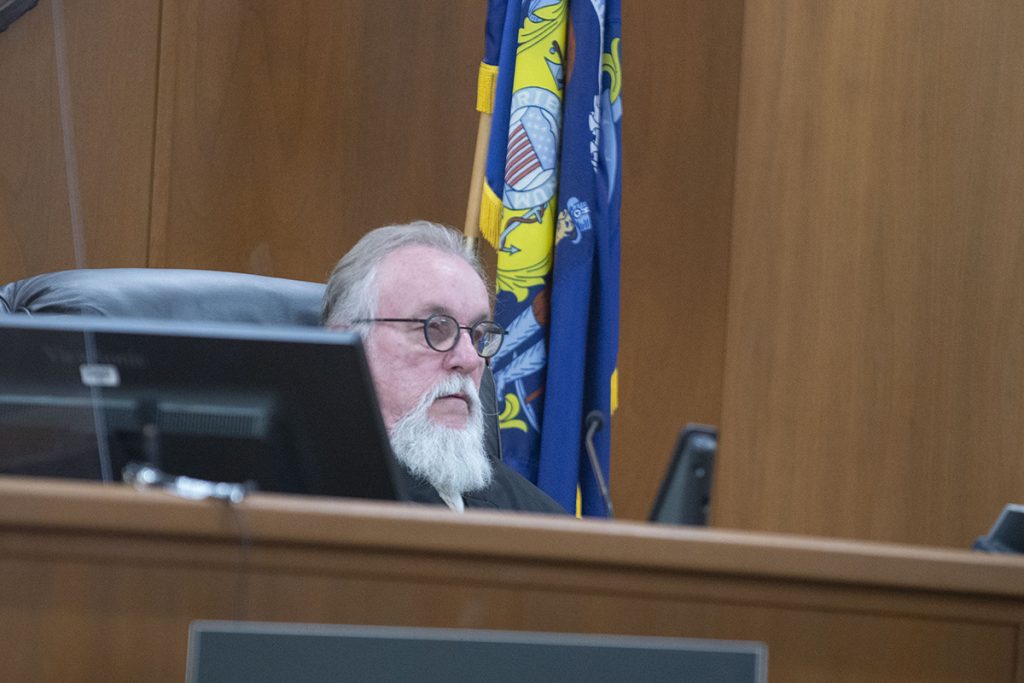
Kenosha County Circuit Court Judge Anthony Milisauskas, who is known as a no-nonsense judge, is expected to rule Tuesday on whether the case will proceed down the long road to a jury trial amid the court’s already clogged calendar, or be dismissed at this early stage for lack of probable cause. While the outcome will directly affect only this case, the ruling may also provide guidance for how courts and prosecutors approach future battery cases where, as in this case, pain is specifically said not to have occurred.

(Submitted Photo)
Defense Counsel Comments
When reached for comment, Defense Attorney Michael Cicchini said he would defer to his motion and other documents that will likely be filed on Monday. Cicchini added, “You’ve got the legal issue correct. But I’ll add this to clarify the procedural posture. My client denies the alleged slap. As the complaint even concedes, the complaining witness was angry and highly intoxicated. But this hearing doesn’t determine what really happened. It’s a very narrow hearing on a very specific legal issue, which is whether a defendant has to endure months or even years of having a criminal case hanging over his head when even the complaint, itself, specifically alleges that the accuser did not feel pain.
.
.
.
.
.
.
.
.
.























16 Responses
What a joke to see cases like this prosecuted while the stack of other far more serious cases stacks up on the desks of Solis and his severely understaffed office.
Shut it up Carli, you lost!
I think the argument is Valid. I Like it.
This could be interpreted in many other scenarios as reported.
Not a lawyer here but, I do think “intent” does come into play. This person meant to hit. It was a conscious act by the accused. Guilty.
Though that doesn’t give others leave if their “intent” was not to cause pain.
Guilty on the least charge of malicious conduct available.
Or this otherwise would open the scenario of any kind of assault with a drunk or unconscious victim.
Agree!
Spitting doesn’t cause pain but can have long-term repercussions.
I agree with Mr. Cicchini’s analysis that it’s a legal stretch. That’s why prosecutors will usually charge disorderly conduct when there’s a doubt because disorderly conduct does not require proof of intent, injury or lack of consent. Battery, however, requires proof of intent to cause bodily harm without consent of the victim. That said, if the victim did not consent and the act done was likely to cause bodily harm (which includes pain), then arguably it would be attempted battery (as well as disorderly conduct). The devil is in the detail.
It’s more than a legal stretch, it’s yet another attempt at mockery for the law and circumventing at the least the spirit of the law. They pretend they’re concerned that super tiny so-called insignificant cases may come to trial, so what? I think a reasonable person can identify assault and battery just like the famous argument about knowing pornography when you see it, whether you can quantify it or not. If indeed it is something unbelievably minor, that’s why there are sentencing guidelines but not requirements. Is there anything that would keep a judge from accepting a jury’s finding of guilt and giving a sentence of time served or a suspended sentence of 30 days or whatever? Certainly if charges like this can be filed and the situation is deemed possibly super duper minor, then it can be settled in the hallway prior to trial with the da offering a lesser charge in exchange for a guilty plea. They do it all the time now, why screw with the law and try and come up with what if scenarios regarding feeling pain or possible sedation defenses. If I pick you up from having oral surgery and ask you if you can feel anything and you say no, can I smash you in the mouth and get away with it?
If you can be a supervisor at a prison with 3 OWI in less than 8 months than anything is possible
What does that have to do with battery or even this article????
Bargain it down to DC (Disorderly conduct) and all parties can move on.
In the end, all outcomes come back to DC.
Cha-Ching! $200 fine and costs.
Actually, disorderly conduct is NOT a lesser included offense of battery. Usually a person committing a battery will also be charged with disorderly conduct. If the battery charge is not appropriate, as is argued here, then it would not be “bargained down” unless it was amended to an attempted battery, which appears to be justified, and then that amended charge is dismissed as part of a plea bargain.
I don’t know, but I can only assume this is because it was a domestic violence enhanced charge. The DV mandatory arrest was put into place to protect victims (mainly women) because they were “barefoot and pregnant”. Those times don’t exist now for a couple generations unless by choice. The DV enhancer basically says people are not smart enough to decide if they were a victim. People should have the right to decide if they were a victim.
If thats not the case, then people should be prosecuted for lying to the police on body cam either when they stated they were a victim, or when they go to the police the next day and say “ I made it all up, it didn’t hurt when he gave me the fat lip”.
Double edged sword
No, it’s not battery if no pain was caused. In that case, it’s merely assault.
In Wisconsin there’s no charge of “assault” but there is attempted battery.
Start off with the battery statutes in Wisconsin. 940.19(4) “Bodily harm” means physical pain or injury, illness, or any impairment of physical condition.
Let’s look at “bodily Harm” definition from Wisconsin State Statutes. 930.22(4) “Bodily harm” means physical pain or injury, illness, or any impairment of physical condition.
Since there is no pain or noted injury you have no battery.
If I was the patrol officer, it would be a simple DC-DV and write it up!
I wonder if the officer wrote it up as battery-his FTO needs a swift kick. If the DA made the charge (probably came from victim witness) they are messing up.
If you charge it, I’d be a juror offering a not guilty vote.
Judge’s decision?