



(Axon.com)
KENOSHA, Wis. — Patrol officers today spend a surprisingly large amount of their shifts not chasing suspects, responding to emergencies or walking neighborhoods — but writing reports. According to Kenosha Police Department command staff, patrol officers currently spend between 40 and 60 percent of their shifts documenting incidents. KPD believes that over the next year, that number could potentially be reduced to around 20 percent through new technology being implemented throughout the department.

Today, Kenosha County Eye met with Lt. Adam Jurgens and Sgt. Brian Miller of the Office of Professional Standards, Sgt. Cory Brennan of the Training Division, and briefly with Inspector Aaron Dillhoff, the department’s third in command directly below the deputy chief, for a detailed walkthrough and live demonstration of several systems being implemented by the department, including AI-assisted report drafting, automated Drone as First Responder technology, real-time body camera monitoring systems and officer performance tracking systems.

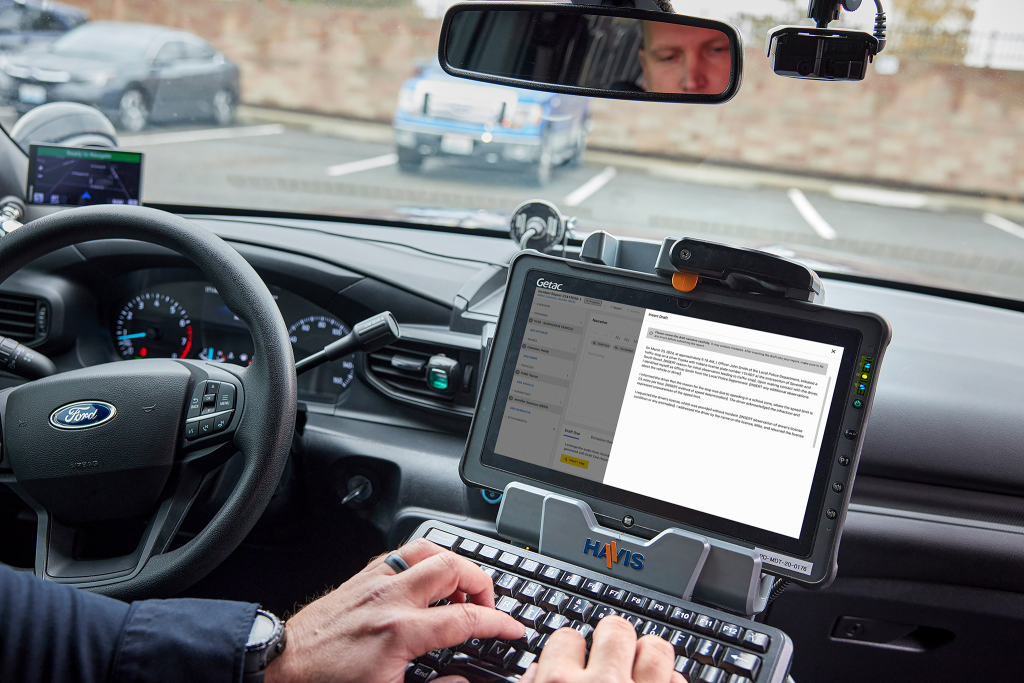
The most discussed technology — and likely the one that will create the most conversation among readers — was Axon Draft One, an artificial intelligence-assisted report drafting system that KPD personnel repeatedly stressed does not write police reports for officers.

“This isn’t AI writing reports,” was a message repeated throughout the meeting.

Instead, the system creates a first draft narrative — exactly what its name suggests — and officers remain fully responsible for reviewing, correcting, editing and ultimately signing reports under their own names.

Sgt. Cory Brennan repeatedly emphasized that significant safeguards were intentionally built into the system to ensure reports remain true and accurate. Department personnel said KPD spent months testing the system, attempting to break it and consulting with agencies already using the technology before implementation.

Department staff also said they consulted with the Kenosha County District Attorney’s Office, judges and members of the local defense bar before moving forward.

KPD officials stressed another major point: this is not ChatGPT.

The system is closed-source technology and is not operating like an open AI platform that searches the internet or pulls information from random public sources.
During the demonstration, officers explained the system uses only one “sense” — hearing.
It relies on audio from an officer’s body-worn camera and does not independently analyze visual observations, body language, smells, facial expressions or dispatch information.
It also does not automatically connect with KPD’s report-writing software.
Instead, after an officer reviews the AI-generated draft, the report must be manually copied and pasted into the department’s official report-writing system. KPD described that as another safeguard intentionally designed into the process.
Officers can also only use the software on their own body-worn camera recordings.
KPD personnel explained that officers cannot access another officer’s body camera footage and generate a report from observations they did not personally make.
That restriction prevents an officer from essentially having another officer’s observations become their own report.
During the demonstration, KCE watched as body camera footage from a domestic violence investigation was processed through the system.
Within seconds, the software produced a detailed report draft.
KPD personnel were gracious enough to provide Kenosha County Eye with a live demonstration of the system using actual body-worn camera footage from a real investigation. Due to privacy concerns involving the individuals shown in the demonstration footage, KCE did not record or publish the in-house demonstration. However, below , readers can view a public Axon-produced demonstration video showing how the Draft One system operates.
But KPD showed that the software intentionally creates traps for officers.
One example discussed involved the software inserting a statement indicating an officer discovered a “magical mirror” capable of showing future events.
The statement was intentionally false and designed to make sure officers were reading and reviewing reports rather than blindly accepting them.
If an officer missed something like that, the report would likely be kicked back by supervisors.
The software also requires officers to alter at least 20 percent of the report before submission.
KPD personnel said the software additionally inserts prompts requesting missing information such as injury descriptions, observations and other investigative details.
One unexpected collateral benefit discussed during the meeting was improved officer communication.
Because the software functions from audio, officers naturally become more detailed while speaking with witnesses, victims and suspects.
The more officers verbally clarify details, the stronger and more complete the report becomes.
Department personnel described it as a “collateral positive” of the system.
Lt. Jurgens also noted that some officers throughout the years have been exceptional street cops but occasionally struggled with report writing.
He said more uniform reports generated through the system may help those officers improve their documentation skills while still allowing them to focus on what they do best.
The potential time savings appear substantial.
KPD personnel cited outside examples of agencies already using the technology.
Toronto Police reportedly saw approximately a 30 percent reduction in report-writing time after implementation.
In Fairfax County, Virginia, officials found that before implementing the technology, approximately 65.5 percent of officers spent more than two hours each day writing reports.
After implementation, officials reported that 100 percent of officers spent less than two hours writing reports.
KPD believes similar results could dramatically impact officer availability.
Lt. Jurgens told KCE that additional time may also allow officers to spend more attention on smaller street crimes and quality-of-life issues that sometimes do not rise to the top of priority lists simply because resources are limited.
Currently, approximately 30 percent of third shift personnel have completed training on the system, along with approximately 30 percent of day shift personnel and roughly 25 percent of the detective bureau.
KPD hopes to have all department personnel trained by July 1.
(Skydio.com)
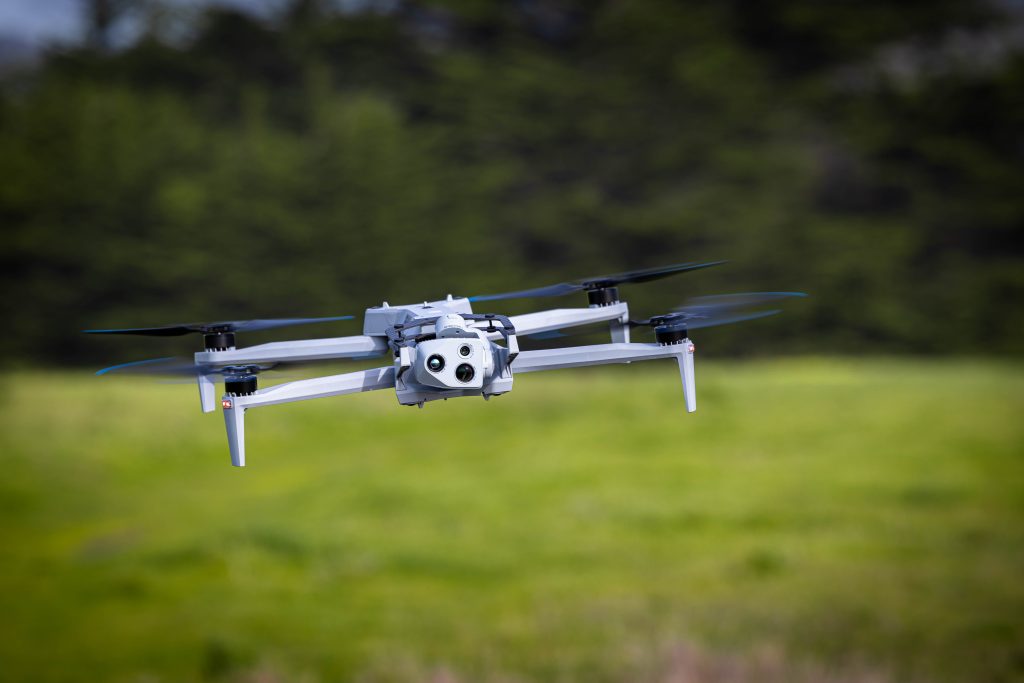
The department also discussed Drone as First Responder, or DFR, technology.
Unlike traditional drone deployments requiring officers to retrieve and launch equipment manually, DFR technology utilizes docked drones positioned strategically throughout a jurisdiction.
KPD expects to utilize three docked drones as part of the program.
The drones include infrared capability and are expected to function almost like a rapidly deployable helicopter.
The goal is to have drone operations staffed 24 hours a day.
Inspector Dillhoff said patrol officers likely will not have direct access to drone video feeds because he wants patrol officers to “be cops,” explaining that the drone operation will likely be handled by designated operators.
The system is designed to coordinate with FUSUS, KPD’s real-time command platform.
Officials explained that FUSUS allows command staff to monitor active incidents using overhead maps, GPS locations and live body camera feeds.
During major incidents such as barricaded subjects or other rapidly evolving events, command staff could potentially see officer locations in real time and coordinate resources more effectively.
KPD officials emphasized they are being careful about privacy concerns and avoiding unnecessary releases of footage involving private citizens.
Chief Patrick Patton also described a future vision involving fewer dangerous police pursuits.
Rather than initiating high-speed chases creating danger for the public and officers, Patton said future technology could allow drones to track fleeing suspects until officers can safely coordinate arrests.
The department also discussed Axon Standards, expected to be implemented by fall.
The system analyzes trends involving use-of-force incidents, vehicle pursuits and disciplinary issues in order to identify patterns before larger problems develop.
Officials described the purpose as proactive intervention rather than punishment.
Another benefit discussed involved AI-assisted redaction technology.
Department personnel said artificial intelligence may substantially reduce the amount of time needed to redact body-worn camera footage while creating additional protections for personal identifying information, medical information and other sensitive material.
That could potentially speed up release of records while requiring less manual work by staff.
Opinion
As a 41-year-old — and I hate admitting it, but I technically fall into the millennial category by a couple years — I walked away from this demonstration believing this technology is likely going to be invaluable.
I understand why some people hear “AI” and immediately become nervous.
I also understand why people worry about technology being allowed to replace human judgment.
But that honestly was not what I saw.
I saw a system designed with multiple safeguards. I saw officers still responsible for their own work. I saw supervisors still reviewing reports. I saw deliberate attempts to prevent shortcuts.
And if KPD is correct and officers can reduce report-writing from 40 to 60 percent of a shift down to around 20 percent, that is a huge deal.
That means more time responding to calls.
More time in neighborhoods.
More time investigating smaller crimes.
Lt. Jurgens told Kenosha County Eye that additional time could also allow officers to spend more attention on quality-of-life issues and smaller street crimes that do not always rise to the top of priority lists. He also mentioned community engagement opportunities and joked that maybe Officer Diaz can spend more time shooting hoops with neighborhood kids instead of sitting in a squad car spending hours writing reports.
Potentially stronger prosecutions.
Potentially fewer errors.
And if drones eventually allow officers to avoid dangerous pursuits and save lives, that is a win.
There are absolutely legitimate concerns, and people should continue asking questions.
But after seeing the systems firsthand and hearing the safeguards built around them, this appears much less like replacing police work and much more like improving it.
Kenosha County Eye would also like to thank Chief Patrick Patton, Lt. Adam Jurgens, Sgt. Brian Miller and Sgt. Cory Brennan for opening their doors and allowing KCE into their house to see these systems firsthand. Rather than simply issuing talking points, department personnel took the time to answer questions, explain concerns and provide a live demonstration. That level of access and transparency was appreciated.














9 Responses
Just don’t violate my fourth amendment rights with the drones And use the drones professionaly without the immaturity some police departments are known to have inside them, Thank you
They wont…
Power that corrupts, corrupts absolutely.
Exactly. Just like “they won’t” drink and drive?
Have drone follow car in high speed pursuit.
Shoot missile when safe
AI = garbage in, garbage out
Meaning you only get out of it what is put into it. Lowest bid software means the most garbage.
Not a good idea. Perhaps refresher courses in writing reports would be better? You can’t cross examine a body cam in court.
You can ask the officer though about the bodycam footage and verify the accuracy of any video vs any report.
AI, smart phones, Apple Watches… all the mark of the Beast. Technology mostly did not make our lives better, it stole our privacy and robbed the us of a more leisurely pace of how to go about our days. And it will only get worse. And I say this on a smartphone, I get the hypocrisy. Just be aware,
Newer, is not always better. The Smartphone is smart, but doesn’t mean the user is smart. And we don’t need a chip implant, that’s what our phones are for.
Sounds like our taxes are going to go up.