



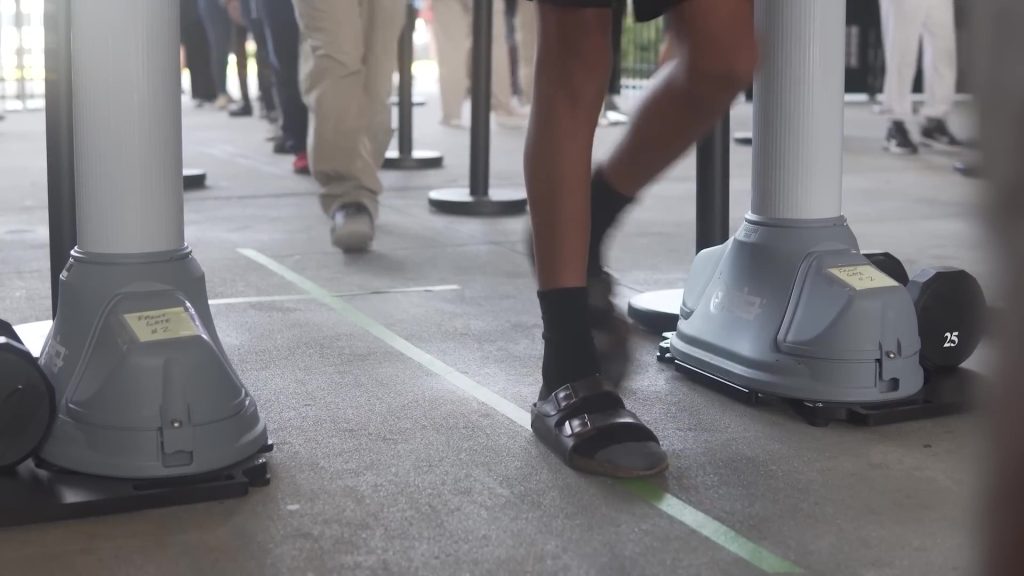
KENOSHA, Wis. — Kenosha Unified School District officials are giving students and families a much clearer picture of what daily life will look like once metal detectors are installed at the district’s six high schools.

District leaders say the new screening systems are expected to become part of the daily routine at Bradford, Tremper, Indian Trail, LakeView, Harborside/Reuther and Hillcrest. Officials say the goal is to improve safety while keeping students moving into school buildings as quickly as possible.

Superintendent Dr. Jeff Weiss said the district plans to use portable walk-through weapon detection systems at all high schools as part of an expanded effort to improve student and staff safety. Weiss said the systems are similar to the types of security devices people already encounter at concerts, sporting events and festivals.


District officials say students will still be allowed to bring backpacks, purses and bags into school without having to empty them before entering. Common items such as books, notebooks, folders, cell phones, water bottles, planners, keys and other everyday school supplies can stay inside a student’s backpack while they walk through the detector.

However, several items will need to be removed from backpacks before students reach the entrance. Officials said students will be expected to hand staff their Chromebooks, laptops, tablets, three-ring binders, collapsible umbrellas, metal lunch boxes, metal pencil cases and metal glasses cases before walking through the detector. Once the student clears the system, staff will immediately hand those items back.

KUSD is also encouraging students to clean out their backpacks before coming to school and to avoid carrying unnecessary metal objects that could trigger alerts. District officials said students should consider replacing metal containers and cases with plastic or cloth versions to reduce delays and keep lines moving.

At Indian Trail High School and Academy, officials said all students will be required to enter through Door 1, the school’s main entrance, beginning at 6:30 a.m. each school day. Multiple screening lanes will be available, and officials are warning students not to crowd into one entrance lane if another is moving faster. Students who attempt to enter through other doors or assist others in doing so could face disciplinary action.

District officials emphasized that preparation before reaching the detector line will be critical. Students are being told not to wait until they are standing in line to remove laptops, binders and other restricted items from their bags because doing so could create backups and delays for everyone behind them. Tables are expected to be placed outside entrances so students have a place to organize their belongings before reaching the detectors.

Students also are being instructed on exactly how to carry their belongings while passing through the screening lanes. Backpacks must be worn squarely on the front or back of the body and not hanging off one shoulder or carried to the side. If a student has two bags, one is supposed to be worn on the back and the other on the front. Phones, water bottles and other handheld items should be held directly in front of the body rather than to the side while walking through the detector. Officials said carrying bags or other objects to the side is more likely to trigger nuisance alarms.
KUSD officials are also telling students to keep moving once they enter the building. Students are not supposed to stop immediately after clearing the detector to put their Chromebooks or binders back into their bags. Instead, they are expected to continue into the commons area and reorganize there so they do not slow down the line behind them. Officials said students should simply walk through the screening area the same way they would walk through any normal doorway.
If a detector turns red or alerts on a student, staff members will direct that student to a secondary screening area for a quick search. If a prohibited item is found, law enforcement will be contacted. Officials stressed that students who prepare properly and limit unnecessary metal items in their bags should be able to move through the screening process quickly and without problems.
District leaders also said the screening process will not be limited to the morning rush. Students who leave campus for appointments, return later in the day, leave for release periods or come back after extracurricular activities will still be required to go through the detectors. Visitors entering school buildings will also be screened.
KUSD also addressed concerns involving students with disabilities and medical devices. Students using wheelchairs or crutches will be directed to alternate screening areas. Officials also said students with pacemakers, hearing aids and insulin pumps can safely walk through the metal detectors because the systems have been tested for use with common medical devices.
The district recently approved the purchase of 18 CEIA OpenGate walk-through metal detector systems and 15 handheld wands for approximately $473,000. Bradford and Tremper are each expected to receive four walk-through units, Indian Trail will receive five, Harborside/Reuther and LakeView will each receive two, and Hillcrest will receive one.
Each walk-through lane can screen approximately 300 people every 15 minutes, according to district documents. Administrators said the district selected the CEIA OpenGate system in part because it is lighter, easier to move for sporting events and significantly less expensive than some competing systems that require yearly subscription fees.
District leaders have not yet announced exactly when the detectors will officially be put into use, but staff are expected to make the rollout a priority, particularly considering the amount of guns and other weapons that have recently been found in schools.
There are still some unanswered questions, however, particularly involving what happens if a student triggers the detector but refuses to allow staff to search a backpack or bag.
KUSD’s policy says administrators can conduct searches when there is “reasonable suspicion” that a student may possess a weapon or violate school rules. The policy also says police can be called immediately if a student refuses to comply with a search when there is reasonable suspicion of a weapon.
But the policy does not appear to clearly spell out whether a positive alert from a metal detector alone automatically creates enough legal justification to search a student’s backpack under the Fourth Amendment. In other words, if a student walks through the detector, triggers an alert and refuses consent to search a bag, it remains unclear exactly what steps school staff and police would take next.
That issue may become especially important because many ordinary items — laptops, metal lunch boxes, umbrellas and binders — are already expected to trigger alerts. Until the district provides more guidance, there appears to be at least some uncertainty over where the line will be drawn between a harmless nuisance alarm and a search that could potentially raise constitutional questions.
.
.
.
.
.
























20 Responses
If the kid refuses a search, they should be turned out the door and sent home. Period.
the slippery slope starts
No one seems to be able to provide documentation to show that the metal detectors are indeed safe for students with medical devices like pacemakers and insulin pumps. We were told they were “presumed” to be safe. Has anyone seen documentation or data about testing? Anything?
KUSD admin has- ask them for the manufacturer info….. do a little research if you’re so concerned
What a strange response. I have called the district twice and also emailed to no avail.
Are you okay?
No one seems to be anything but fucking lazy. Do your own research.
My kid said at Bradford it took until almost 9 am for all students to enter.
Remember, education is not the objective. Moving bodies through ‘the system’ keeps the dollars flowing. They care not how the day is spent, classtime means work.
Waste of money, as usual.
You must not have kids.
I have 3 😉
” How Students Will Enter Schools Once Metal Detectors Are Installed”
My guess is they will enter the metal detectors by walking through them.
” How Students Will Enter Schools Once Metal Detectors Are Installed”
My guess is they will enter the metal detectors by walking through them.
” How Students Will Enter Schools Once Metal Detectors Are Installed”
My guess is they will enter the metal detectors by walking through them.
” How Students Will Enter Schools Once Metal Detectors Are Installed”
My guess is they will enter the metal detectors by walking through them.
Thank GOD you were around! What would we have done without you..
What a mess.
And they’re gonna do this every day. …..Little story for ya. I’ve operated metal detectors for over 35 years. Ever see what a worm does when you scan a VLF coil over them multiple times?? God help these kids…..
what about soda cans