



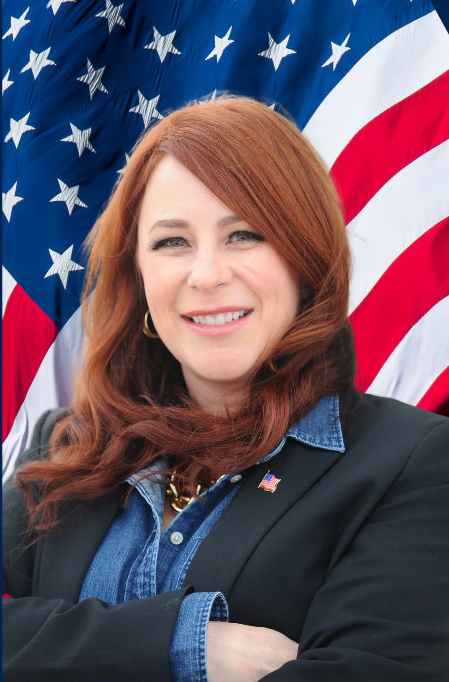
(File Photo by Kevin Mathewson, Kenosha County Eye)
KENOSHA, Wis. — Representative Amanda Nedweski (R-Pleasant Prairie) has introduced legislation to make “grooming” a standalone felony in Wisconsin, saying the bill will close long-standing gaps that have allowed predatory adults to escape punishment until a physical act of abuse occurs.

Nedweski announced the proposal alongside Senator Jesse James (R-Thorp), a former law-enforcement officer who will carry the bill in the Senate. The measure — drafted as LRB-5392/1 and LRB-5397/1 — defines grooming as a course of conduct, pattern of behavior, or series of acts intended to condition, seduce, or entice a child for the purpose of sexual activity or exploitation.

“Parents place extraordinary trust in the people who care for their children,” Nedweski said in her statement. “When that trust is betrayed and those adults prey on our children’s innocence, the consequences should be severe and certain. Grooming behavior is the first step in an abuser’s process — and our statutes must recognize and punish it before more children are harmed.”

Filling a Gap in Wisconsin Law
Under current Wisconsin statutes, prosecutors often rely on generic child-enticement or sexual-assault provisions. Nedweski said those laws are inadequate because they require an overt act, leaving prosecutors unable to charge adults who intentionally “prepare or manipulate” children for sexual exploitation.

“This bill gives our partners in law enforcement the clear legal tools necessary to prosecute these predators and to provide victims and families with the justice they deserve,” Nedweski added.

The bill classifies grooming as a Class G felony, punishable by up to 10 years in prison and a $25,000 fine. Offenders would also be required to register as sex offenders. Penalties increase if the perpetrator holds a position of authority — such as a teacher, coach, counselor, or clergy member — or if the victim has a disability or is otherwise vulnerable.

Senator James said his experience as a police officer shaped his decision to co-author the legislation. “I’ve seen firsthand how grooming destroys lives. It’s time Wisconsin recognizes this conduct for what it is — a deliberate, predatory act that must be punished on its own,” he said.

Rooted in Recent Cases
The legislation’s supporting memo from the Wisconsin Legislative Reference Bureau references a series of recent grooming incidents across the state, including the 2024 Christian Enwright case in Kenosha County. Kenosha County Eye reporting on that case, which involved a former teacher accused of inappropriate communications with a student, was cited in the legislative materials as an example of the gap the bill seeks to close.
Nedweski said she wants the new law to ensure that adults in positions of trust can be held accountable for manipulative behavior before it escalates. “Our children deserve to be protected from predators long before an assault occurs,” she said. “The signs of grooming are clear — and when adults abuse their influence, the law must be just as clear.”
Broad Scope of Protection
Beyond schools, the bill applies to any adult who uses authority, mentorship, or supervision to build emotional dependence or sexual familiarity with a minor. It also covers online conduct, social-media interactions, and repeated boundary violations designed to desensitize a child to sexual activity.
The legislation directs courts to consider grooming as an aggravating factor in sentencing for related crimes and gives law enforcement the ability to intervene earlier in the process. Prosecutors and victim-advocacy organizations consulted on the bill praised it as a “missing tool” for prevention.
If enacted, Wisconsin would join states such as Florida, Texas, and Illinois that have already codified grooming as a separate felony offense. The bill will now be referred to the Assembly Committee on Criminal Justice and Public Safety, where hearings are expected later this month.
.
.
.
.
.
.
.
.






















4 Responses
Why bother? Wasn’t that one guy convicted of umpteen disorderly conducts for alleged “grooming”? If the crime is already covered by a statute, why double-up? I mean, other than for political showmanship, of course. Now we have to give prosecutors the discretion to charge a felony for what they deem to be “grooming”? I suspect this new law will be as all-encompassing as the disorderly conduct statute; it’ll be easier to list what ISN’T grooming than what is.
This would make it a felony, which is better for the victims.
Because Grooming is such a passive crime, it starts as something that may be difficult to see yet is planned by the perpetrator to their own fantasy conclusion.
Punishment for any crime, after the perpetrator goes to jail, serves as a deterrent to any others that might be contemplating similar actions. Extended Jail time is key to what can happen to them.
And even at that, if we don’t have a media that reports on these crimes, then no one will know.
The KUSD is about to lose most of its teachers.