



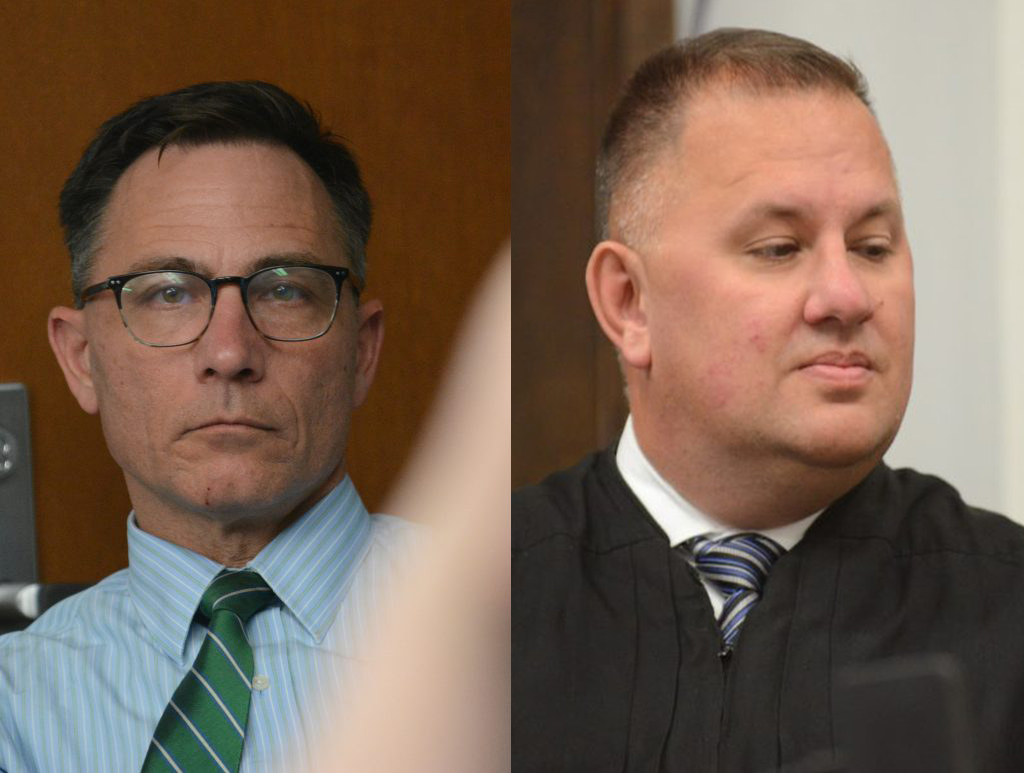
(File Photos by Kevin Mathewson, Kenosha County Eye)
KENOSHA, Wis. — In February 2021, Illinois Gov. JB Pritzker signed the SAFE-T Act into law, a sweeping criminal justice reform bill that eventually led to Illinois becoming the first state in the nation to eliminate cash bail as a condition of release in criminal cases. Supporters argued it would create a fairer system by focusing on whether someone poses a danger rather than whether they can afford to pay money. Critics argued it would make it easier for dangerous people to avoid detention and could put public safety at risk.
If you are reading this, ask yourself a simple question: Do you want that to happen in Kenosha County?
Based on what I have seen, what I have reported and what courthouse sources have told Kenosha County Eye, I believe there is a deliberate push inside the Kenosha County courthouse to issue fewer warrants, set fewer cash bails and move Kenosha closer to the type of no-cash bail system now associated with Illinois.
At the center of that concern is Kenosha County Circuit Court Judge Chad Kerkman, who holds the title of deputy chief judge for the Second Judicial District. That title may sound powerful to the public, but the authority of a deputy chief judge is administrative. It does not give Kerkman the ability to overrule other judges’ decisions from the bench, tell elected judges how to rule in individual cases or dictate whether a particular criminal defendant should be brought before the court on a warrant or mailed a summons.
Still, according to a source who was present at a recent judges meeting, judges were told or encouraged not to sign felony warrants without separate affidavits explaining why a warrant was needed. In my opinion, that is an improper and sloppy interpretation of the law, and it risks creating a dangerous new practice in Kenosha County.
A criminal complaint is already a sworn document. It contains a complainant, is signed under oath and is “second-signed,” meaning it is notarized or sworn before the proper authority. Requiring a separate affidavit on top of that, especially in serious felony cases, appears unnecessary and creates one more procedural hurdle before police can arrest someone accused of a serious crime.
That is not just a theoretical concern.
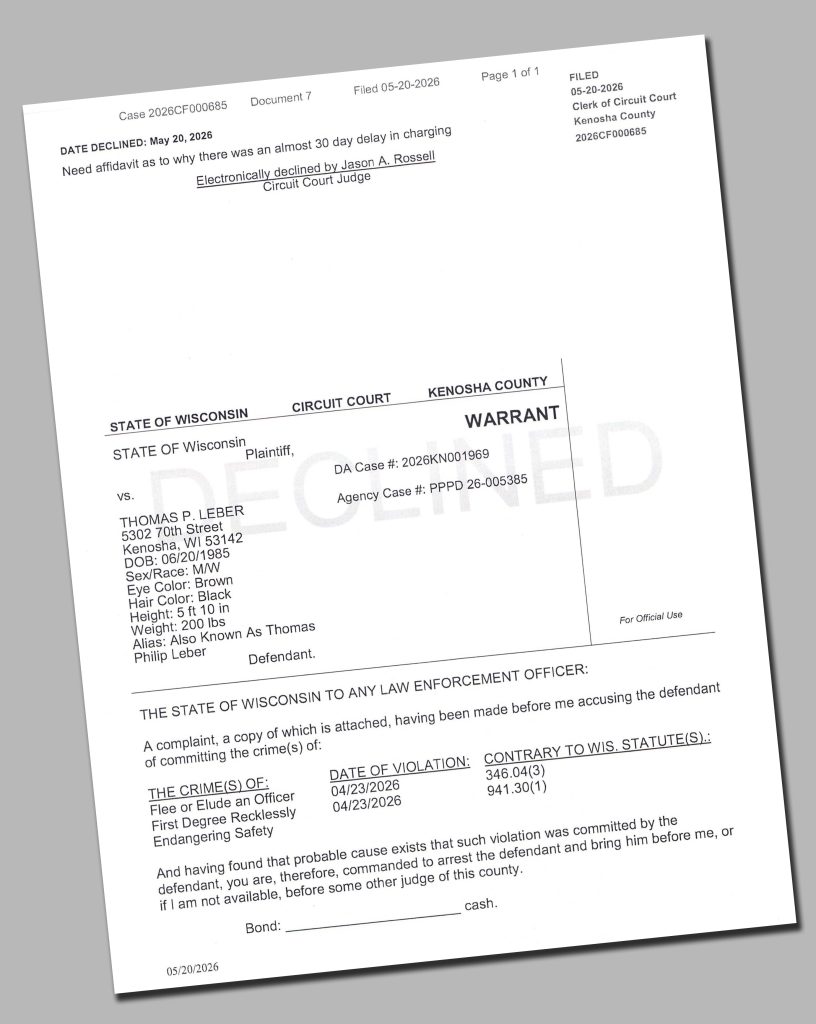
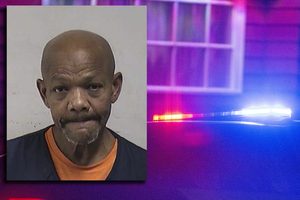
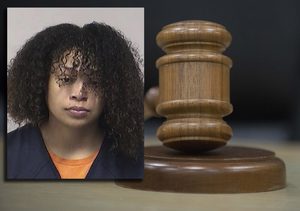
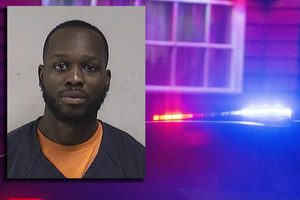
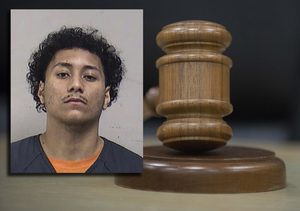
On Wednesday, Judge Jason Rossell declined to sign a warrant in a felony case involving a man charged with fleeing police and recklessly endangering safety. Instead of allowing police to arrest the man and bring him to jail, Rossell’s decision means police will have to track him down and serve him with a summons. That means he may not be booked, fingerprinted or photographed unless and until he appears in court.
Rossell is closely aligned politically with Kerkman. Both are Democrats, and both appear to be moving in a direction that critics inside the courthouse believe is softening Kenosha County’s approach to warrants and bail.
In my opinion, what we are seeing looks like an attempt to make Kenosha County more like Illinois. No one is saying every violent criminal will automatically be released. But the pattern is becoming harder to ignore: fewer warrants, more no-cash bail and more serious defendants walking out of court without paying a penny.
Over the last several days alone, Kenosha County Eye has reported on multiple serious cases in which fill-in court commissioners set no-cash bail or low bail in cases that many people in the community would reasonably view as serious public-safety matters.
Liberal Activist Supplemental Court Commissioner Tracey “Low Bail” Braun set no-cash bail for a father charged in connection with the deaths of his three children. Braun also set no-cash bail in a domestic disturbance case involving alleged death threats. Liberal Activist Supplemental Court Commissioner Aileen “Half-Off” Henry also made a series of low-bail and no-cash bail decisions in serious cases.
Those are not isolated concerns. They fit into a larger courthouse conversation that prosecutors, court staff, defense attorneys, legal observers and others have been having behind the scenes. The concern is that Kerkman, despite holding only administrative authority, is attempting to shape the courthouse culture on warrants and bail.
Many people criticized former Court Commissioner William “Bargain Bail Billy” Michel II for his low bail decisions, and often deservedly so. But even Michel would sometimes set appropriate cash bail in serious cases.
Judge Jodi Meier appears to be one of the few judges willing to push back against what many courthouse observers believe is a broader trend. In one recent case involving a Wilmot man accused of child pornography offenses, Judge Chad Kerkman initially released the defendant on no-cash bail. At the defendant’s subsequent initial appearance, Court Commissioner William “Bargain Bail Billy” Michel II allowed the no-cash bail to remain in place. Later, when the matter came before Judge Jodi Meier, she took a dramatically different approach. Meier raised the bail to $25,000 cash and imposed a prohibition on entering school property. To critics of recent no-cash decisions, Meier’s ruling served as a direct contrast and demonstrated that judges still retain independent authority to make their own determinations based on the facts before them.
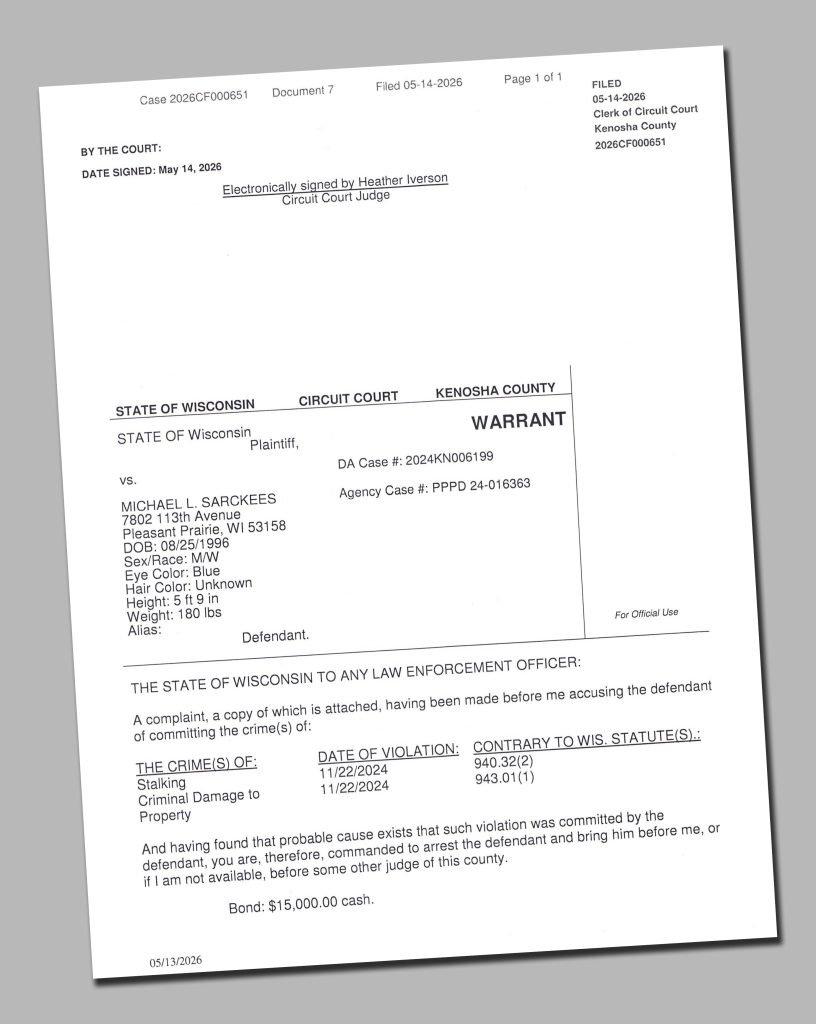
Separately, Judge Haather Iverson recently signed a warrant, against Kerkman’s wishes for a man accused of stalking.
That is the point: each judge is independently elected and each judge has the authority to make his or her own decisions from the bench. Kenosha County’s Chief Judge is Wynne P. Laufenberg, although she serves as a Racine County Circuit Court judge. Like other chief judges, her authority is administrative in nature and includes matters such as scheduling, assignments and court administration. The position does not allow a chief judge to dictate how another judge rules in an individual case. Likewise, Deputy Chief Judge Chad Kerkman’s authority is administrative and does not permit him to direct another judge’s judicial decisions.
Kenosha County Eye is aware of only two misdemeanor warrants being denied in recent history before this recent felony-warrant controversy. Both involved defendant Jacqueline Niccolai. The first was denied by William “Bargain Bail Billy” Michel II at Kerkman’s direction, and the second was denied by Judge David Hughes. Those examples were unusual. What appears to be happening now is different and broader.
The public-safety consequences are obvious. When a warrant is issued, police can arrest the defendant, book the defendant, take fingerprints, take a mugshot and bring the defendant before the court. When a summons is issued instead, the government is essentially mailing the defendant a letter telling him to show up.
That may be appropriate in some low-level cases. It is much harder to justify in serious felony cases involving fleeing police, reckless endangerment, violence, child pornography allegations or deaths.
In my opinion, Kenosha County residents should be paying close attention. This appears to be more than a few isolated decisions. It appears to be a philosophical shift inside the courthouse, pushed by judges who seem to prefer fewer warrants and fewer cash bails.
Maybe Kerkman and Rossell disagree with that characterization. If they do, they are welcome to explain it. But based on the cases Kenosha County Eye has reported, the courthouse sources who have spoken to us and the pattern now unfolding in public, I believe Kenosha County is being nudged toward an Illinois-style system without voters ever being asked whether they want that.
The Kenosha community, the legal community, prosecutors, court staff, police officers and elected officials are watching closely.
They should be.









28 Responses
Lordy!
Who wants to live there?
I guess only those who must or don’t realize yet what is happening around them?.
The Kerkmans, both, are nearly repulsive.
Typical Blue State blues. Solution for the fed up productive civil citizen: move to a warm Red State with a high concentration of conservative Protestant churches, low taxes where the tax funds are spent on an effective jackhammer justice system, free of Democrat homosexual and soft-headed judges, psychologically warped alpha-crazy activist “chicks” and beta-eunuch light in the loafer crank jobs. And with a deep Red statutory death penalty that is regularly imposed by rational judges.
We do NOT what to be anything like Illinois! Period! Kerkman needs to go as well as Rossell! So sick of our Judicial system in Kenosha!
Too late….FIBs have getting a piece of Kenosha since the 1930s.
We need decent lawyers to step up and run against these idiots. If you are decent you will get elected!!
There are no decent lawyers in town. 25 years ago there were some good ones. However, they all have aged out or no longer practice. Business is dry. Why do you think so many of the shitty ass lawyers ran for judge (and won)? It’s a steady income.
Every single one of these current judges were mediocre as fuck attorneys in private practice or in their positions with other places.
Wrong. Many decent ones have. And they have regularly lost. Consequently, they have retired. The fault lies with the low quality electorate. And it is getting exactly what it deserves. Wise to restrain any empathy and compassion when hearing or reading about a terrible victim situation. Reserve it only for any children left behind. There’s a 90+% probability the victim voted for (or was too lazy to vote) the Democrat or flim-flam RINO trash whose policies and judicial decisioning killed them.
This seems to be an incomplete story and without solid information from the courthouse it will probably remain so. All we can glean from the document is that the judge wants an explanation on why it took the DA’s office a month to issue a charge. The argument might be that if this defendant was so dangerous why wasn’t he just arrested without a warrant and held for an initial appearance. Given that Leber is a Kenosha resident he could theoretically be arrested without a warrant. But what does the law say?
Sec. 968.02(2): “After a complaint has been issued, it shall be filed with a judge and either a warrant or summons shall be issued or the complaint shall be dismissed, pursuant to s. 968.03. Such filing commences the action.”
Sec. 968.03: “(1) If the judge does not find probable cause to believe that an offense has been committed or that the accused has committed it, the judge shall endorse such finding on the complaint and file the complaint with the clerk. (2) An unserved warrant or summons shall, at the request of the district attorney, be returned to the judge who may dismiss the action. Such request shall be in writing, it shall state the reasons therefor in writing and shall be filed with the clerk.”
Sec. 968.04: “(1) WARRANTS. If it appears from the complaint, or from an affidavit or affidavits filed with the complaint or after an examination under oath of the complainant or witnesses, when the judge determines that this is necessary, that there is probable cause to believe that an offense has been committed and that the accused has committed it, the judge shall issue a warrant for the arrest of the defendant or a summons in lieu thereof. The warrant or summons shall be delivered forthwith to a law enforcement officer for service. (a) When an accused has been arrested without a warrant and is in custody or appears voluntarily before a judge, no warrant shall be issued and the complaint shall be filed forthwith with a judge.”
“(2) SUMMONS. (a) In any case the district attorney, after the issuance of a complaint, may issue a summons in lieu of requesting the issuance of a warrant. The complaint shall then be filed with the clerk.
(b) In misdemeanor actions where the maximum imprisonment does not exceed 6 months, the judge shall issue a summons instead of a warrant unless the judge believes that the defendant will not appear in response to a summons.
(c) If a person summoned fails to appear in response to a summons issued by a district attorney, the district attorney may proceed to file the complaint as provided in s. 968.02 and, in addition to endorsing his or her approval on the complaint, shall endorse upon the complaint the fact that the accused failed to respond to a summons.”
There you have it. The law. The one that says the only time there is a presumption in the law against issuing a warrant is when it’s a misdemeanor punishable by less than six months imprisonment if convicted. A routine disorderly conduct crime is one example. The crimes Leber is accused of committing are prison level felonies.
Thank you for this explanation. It is super helpful. Not sure if you know the answer or maybe someone else does. In this case above, it looks like it’s from Pleasant Prairie PD. Does the pleasant prairie pd submit the charges or request for warrant to the judge or do they submit it to the DAs office and then the DAs office submits the charges or request for warrant to the judge?
Typically the police submit the police reports and witness statements to the DA’s office that decides on whether to issue a criminal complaint. Once a complaint is issued they can summons the defendant into court or ask a judge for an arrest warrant.
I’m wondering what the ‘down voter’ here is objecting to:
-disagrees with the law?
-doesn’t believe you should be informing people of the law?
-is a libtard and just down voting to object to something on a conservative-leaning site?
Probably 3, libtards are just that- retarded
The No Bail system isn’t being used properly in Illinois. It is effective if not turned into a political game.
Instead of “jobless” drug dealers getting low bonds they can easily pay, the system would hold them in jail. Same with multiple OWIs who have a lawyer on call to get them back out boozing.
We currently have a shortage of lawyers available for the large mass of incarcerated idiots, so many are getting sweet deals. If they ask for a Speedy Trial, it frequently cannot be accommodated, so they get a deal.
The judges also cannot be the easily influenced and paid off excuses we currently have. They all have to use No Bail based on danger to public, possibly of continued crime and chance of fleeing.
This is the stupidest thing I’ve heard all day. Congrats
Kenosha exposed is so obsessed they did a post on this post. The same person who says “don’t read his garbage or go to his page” goes to his page on the daily. What a insane and obsessed wack
Jacquie’s already taken care of one judge… only seven more to please, plus two extra to charm in the most personal way possible. At this point, she will rule this county’s courts with power and influence behind the scenes from the darkest corners of this area.
That nutjob watches everything I do. EVERY day.
How does she survive a living. Constantly on Facebook. When someone comments on her dumb page she responds immediately. Wish I had that much time
If it Walks like a Duck, Quacks like a Duck, & Smells like a Duck, then it must be a Duck!
Only a Loony Liberal would call it something else.
The catch-and-release revolving door policy, hatched by these two wannabe superior-being clowns, demoralizes our law enforcement officers and tears apart society at large. Meanwhile, the already elevated levels of criminality—courtesy of an ineffective and inefficient court system presided over, guess by whom, during the last five years—continue to spiral out of control because of this reckless insanity. While these two wield the power of life or death over our communities, they shamelessly humiliate and betray those who serve them. Let’s see how they feel about their precious policy of letting everyone walk free on signature bond, influenced by Illinois’ JB Pritzker’s dangerous doctrine, the day they or their own families personally suffer the brutal violence of the very same criminals they set loose on our streets.
It’s ok to be gay Chad .
It’s not rocket science, folks. Yes, it is an imperfect science meaning that occasionally something can slip between the cracks but setting bail is a risk assessment. The commissioner must assess the likelihood of a person showing up in court and, if a serious or violent crime, what bail might serve to protect the community. This takes into account prior record of offenses and missed court appearances. (The Kenosha DA’s office when it went “paperless” a few years ago stopped being able to accurately document missed court appearances as opposed to when they brought paper files to court and had a history to look at!). In setting bail the commissioner will look at the severity of the crime charged, past record and things like ties to the community and then hopefully make the right call. Not everyone can or should be held on high cash bond but those are mostly low risk offenders charged with nonviolent crimes. With the frequent flyers or serious criminals it should be a no brainer.
You’re a retard
Any asshole who calls someone else a “retard” needs to understand that being cognitively disabled is not a choice but being an asshole is.
Wait , are you saying Bill Michel is no longer a court Commissioner?
Yup, he’s vanished pursuant to Imperial Decree—or Redacted Memo 571/26. That’s why this hippopotamus-faced official is letting the person responsible for three kids’ deaths stroll free on a signature bond. I wonder who hand-picked this genius. Oh, but she teaches cops how to read Miranda rights at Gateway. No doubt they’re deliberately picking the biggest dummies—the dumber, the better.
Rossell sucks. Just remember all these complaints next time he’s up for election
Is there any truth that Jason Rosselli is a descendent of Alphonse Capone?